Graphene – The One-Atom-Thick Revolution
From the Laboratories of Project Clean Up (09/12/2025)
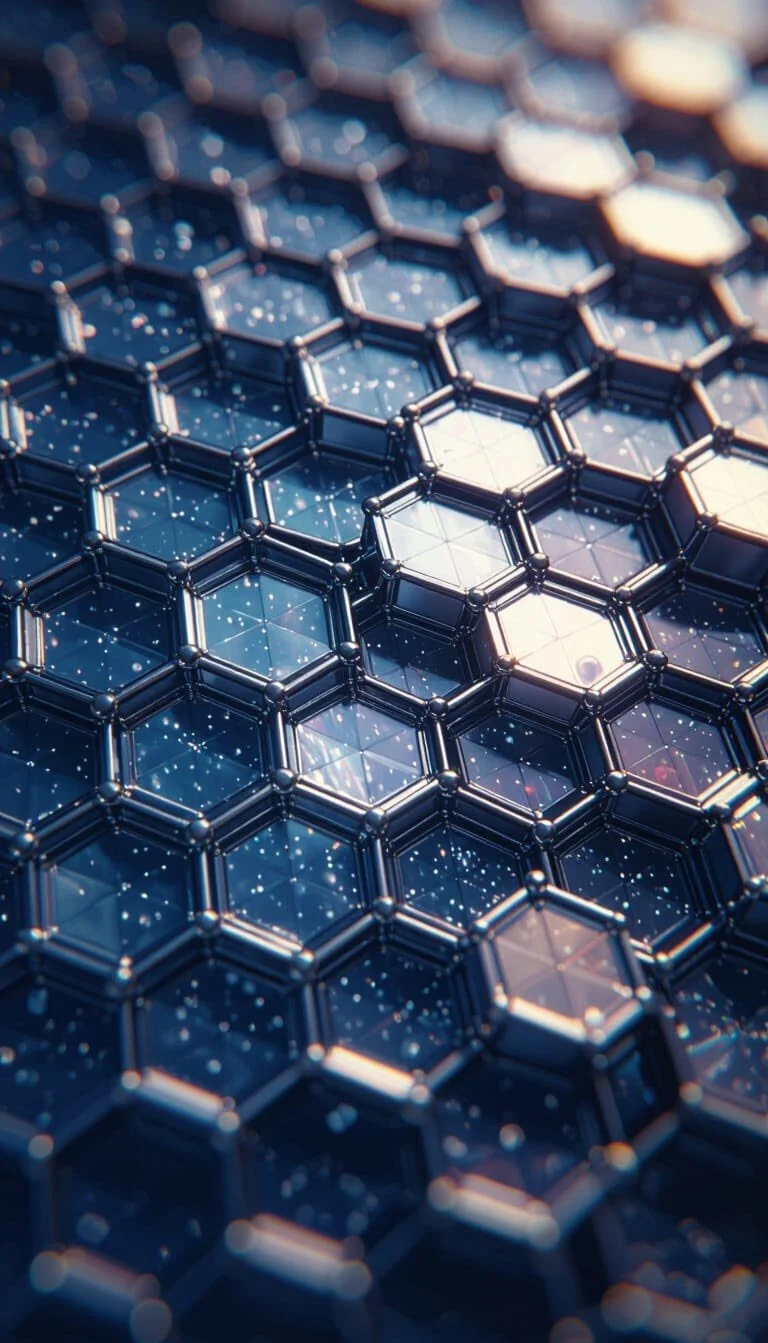
The discovery of graphene, a single atomic layer of carbon atoms arranged in a hexagonal lattice, sparked a revolution in materials science. It is the thinnest material known to mankind, yet its two-dimensional structure gives it a combination of properties previously thought to be impossible. It is exceptionally strong, incredibly lightweight, remarkably flexible, and a superb conductor of both electricity and heat. Graphene's unique electronic properties allow electrons to move through it at near-light speed, making it a game-changer for next-generation electronics, faster computing, and highly efficient energy storage. Its simplicity and elegance have made it the subject of intense research, with applications poised to transform industries from aerospace to medicine.
The Graphene Promise: Unlocking Environmental Solutions
The potential for graphene in environmental applications is immense. Its large surface area and unique electronic properties make it a powerful adsorbent for removing pollutants from water, including heavy metals, dyes, and organic contaminants. Graphene oxide, a derivative of graphene, can be used to create highly efficient filters for desalination and water purification. Furthermore, graphene can serve as a catalyst support, enabling more efficient and greener chemical reactions for industrial processes. Its potential to improve battery performance and enable supercapacitors also contributes to a more sustainable energy infrastructure. At Project Clean Up (PCU), while our core mission focuses on the challenging task of breaking down existing persistent "forever chemicals," we are deeply invested in materials like graphene that proactively contribute to a cleaner, more resource-efficient world. They embody the type of forward-thinking material design that aligns with our vision for a truly circular and sustainable economy.
Beyond the Hype: The End-of-Life Challenge
While graphene offers incredible promise, its widespread adoption also raises questions about its eventual end-of-life management. Although a single-element material (carbon), the form factor and chemical modifications required for specific applications can make it difficult to recycle or safely degrade. The tiny size of some graphene nanoparticles also raises concerns about their potential to persist in the environment if not properly contained. This is where the core expertise of PCU Laboratories becomes vital. Our ongoing research into breaking down complex material architectures, including the nanoscale structures found in advanced materials like graphene, will be crucial in ensuring that these cutting-edge materials can be safely and responsibly managed. Our commitment to a truly circular future means we are thinking not just about the creation of amazing new materials, but also about the responsible pathways for their full lifecycle. As always, the critical first step in any material's journey towards a clean end-of-life is proper disposal. Learn more about our vision for a sustainable materials future at projectcleanup.com.