Vitrimers – The Self-Healing Skin of the 2026 Frontier
From the Laboratories of Project Clean Up (03/27/2026)
As we move toward the final days of March 2026, the Ludwik Leibler concept of "malleable thermosets" has finally scaled for aerospace. It is vital to note: while Vitrimers are being integrated into high-end carbon-fiber composites and cryogenic seals, they are not yet available "off the shelf" for consumer items like food storage or household plumbing.
Why Vitrimers? Ductility in the Void
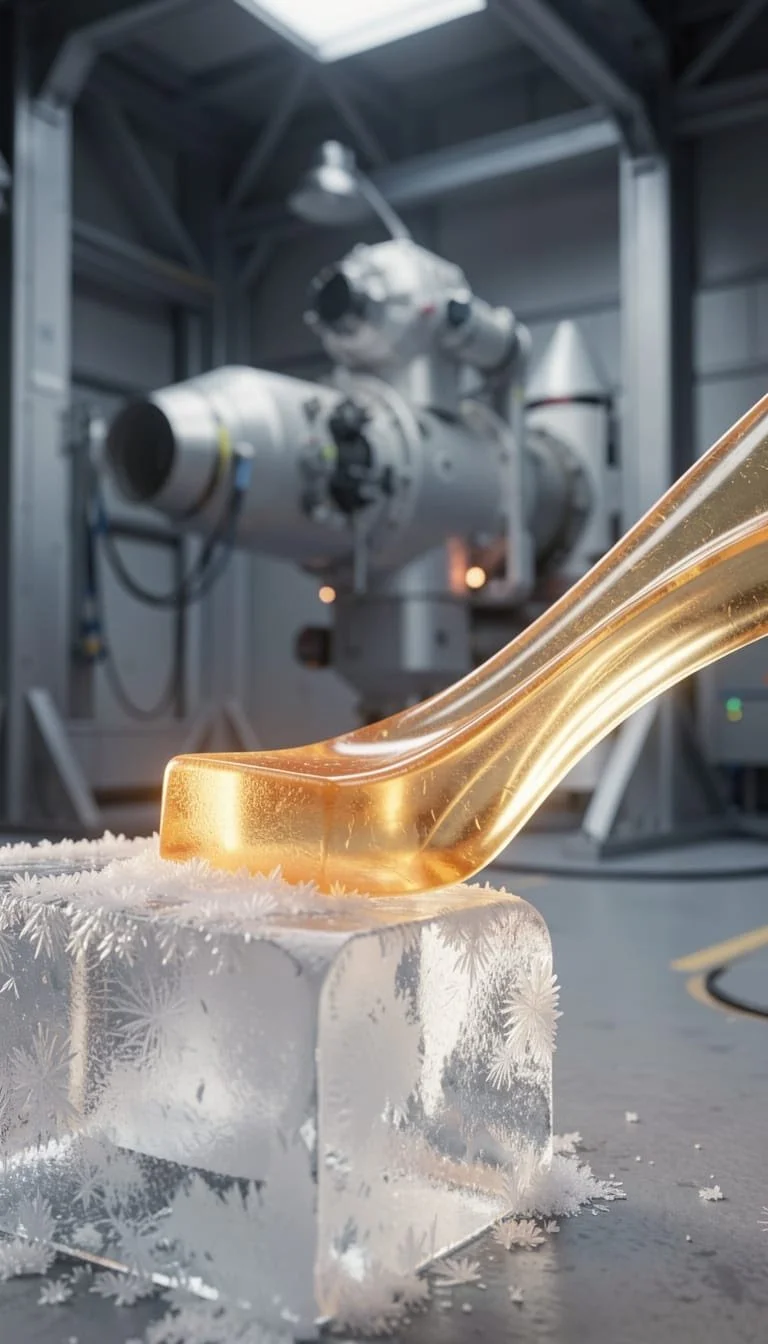
Traditional polymers fail in the cold because their chains are either locked in place (thermosets) or slide too easily until they freeze (thermoplastics). Vitrimers use Dynamic Covalent Chemistry. Think of it as a room full of people holding hands; in a Vitrimer, they can let go of one hand and grab a new neighbor without ever breaking the overall integrity of the group. On the Martian surface, where the temperature swings can be violent, this "molecular handshake" allows the material to relax internal stresses that would otherwise cause a rupture.
The Lifecycle Standard: Catalytic Depolymerization
Under the PCU Lifecycle Standard, we've verified the Solvolysis Reset for these extreme plastics:
The Challenge: High-performance "space plastics" (like polyimides) are usually impossible to recycle; they must be burned or buried, creating a "forever" footprint in orbit or on the tundra.
The PCU Solution: Catalytic Unzipping. Because Vitrimers are held together by exchangeable bonds (like silyl ethers or esters), we can "turn off" the handshake.
By placing the discarded seal or habitat liner into a specialized Nexus bath, the catalyst triggers a total breakdown of the network. The material doesn't just melt; it reverts to its original liquid monomers. We can then re-filter these monomers to "grow" a brand-new part. This is Circular Cryogenics.
The 2026 Vision: The Living Habitat
At Project Clean Up (PCU), we are imagining the 2026 "Martian Greenhouse." The transparent Vitrimer skin keeps the warmth in and the cold out, self-healing any micro-punctures from dust storms. But when the mission is over, the habitat doesn't become a ghost town of plastic waste. It is "unzipped," the resins are bottled, and the material is ready for the next crew. We have mastered Structural Immortality through Molecular Change. Learn more about "Dynamic Seals" at projectcleanup.com.