Meet the Heavy Metal Extractor, Indian Mustard (Brassica juncea)
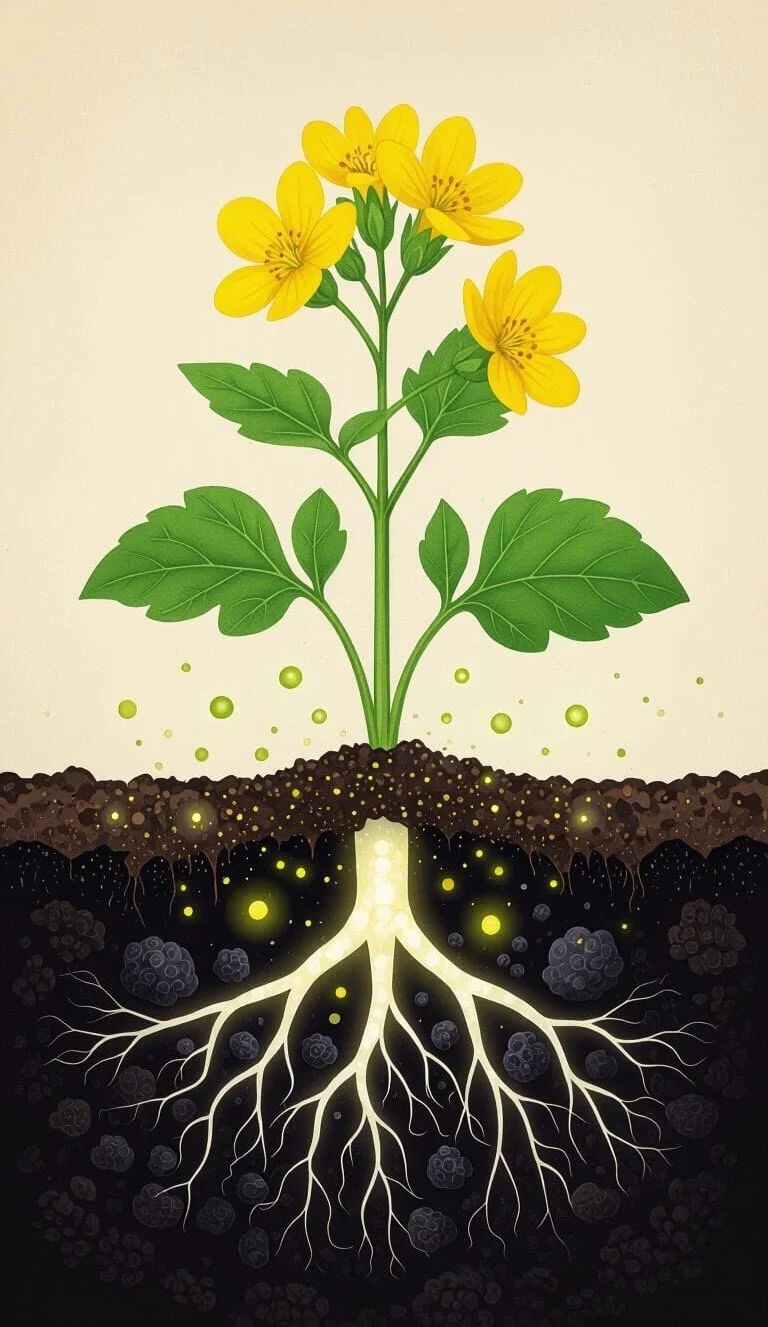
Our first two All-Stars were microscopic, but this week's hero is one you can see, grow, and touch. The Indian Mustard plant (Brassica juncea) is a common agricultural crop, but it possesses an uncommon and powerful talent: it's a hyperaccumulator. This means it has the natural ability to absorb and concentrate toxic heavy metals from the soil into its own tissues at levels far higher than other plants. (10/03/2025)
The Hero's Story
For centuries, farmers have known that Indian Mustard is a hardy and fast-growing plant. What scientists discovered in recent decades is why it's so tough. It evolved a highly efficient root system that can actively seek out and absorb certain metals and minerals from the soil, including toxic ones like lead, arsenic, cadmium, selenium, and zinc. Instead of being poisoned, the plant safely transports these metals up through its stem and stores them in its leaves and shoots, effectively mining the pollution from the ground.
Bioremediation Superpower: Phytoextraction
Indian Mustard's superpower is phytoextraction, a key type of phytoremediation. It's a green, solar-powered cleanup technology. At a contaminated site, like an old industrial lot or a field with lead-contaminated soil, fields of Indian Mustard are planted. As the plants grow, their roots act like millions of tiny straws, sucking the dissolved heavy metals out of the soil.
At the end of the growing season, the plants are harvested. This is the crucial step: the harvested biomass, now laden with the concentrated heavy metals, is carefully removed from the site. This process physically extracts the toxic metals, leaving the soil cleaner with each planting cycle. It’s an elegant, low-cost, and visually appealing way to heal wounded landscapes.