Myth #2: "Microbes Can Eat Anything"
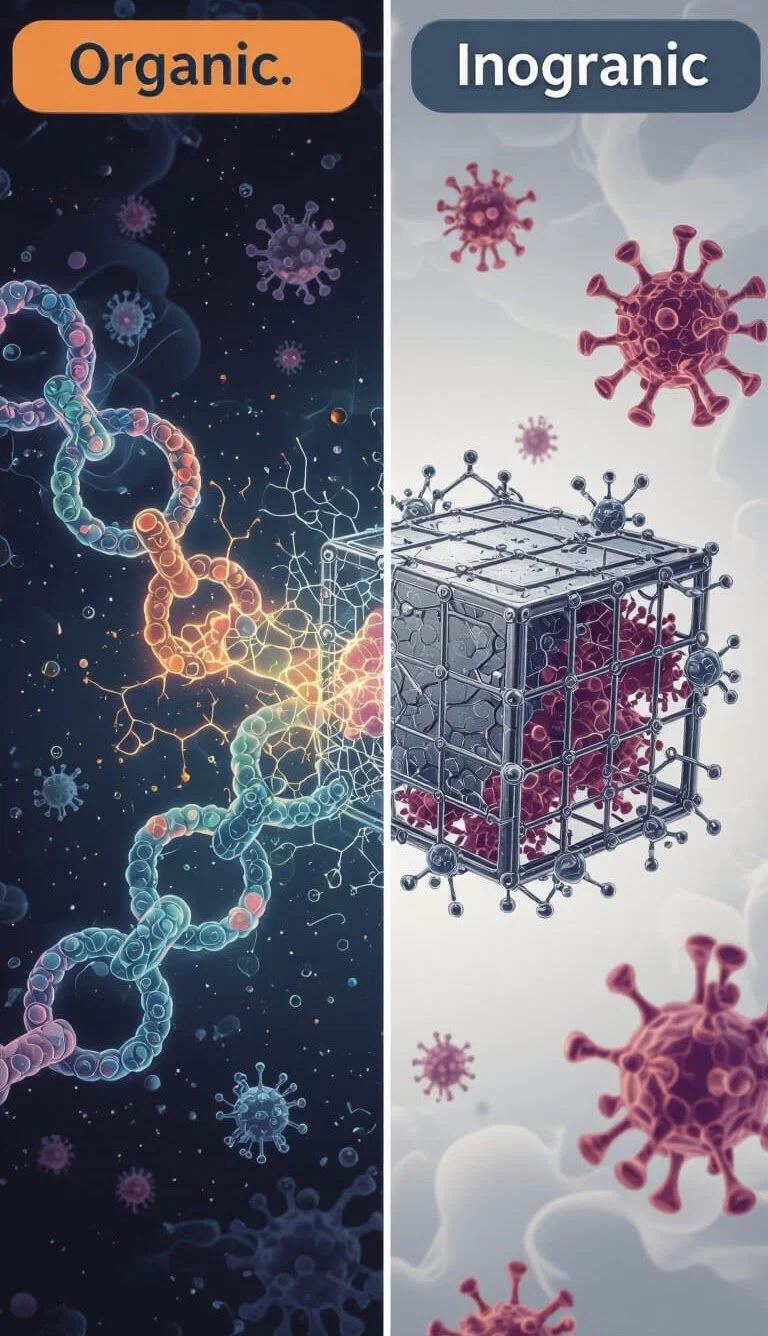
The Myth: There is a belief that if we just find the right "super-bug," we can biodegrade any pollutant on Earth. The assumption is that bioremediation is a universal eraser that can make any toxic material vanish into thin air. (12/12/2025)
The Reality: Biology has a hard limit: Microbes cannot destroy elements.
Why It Busted: Bioremediation relies on metabolism—microbes breaking chemical bonds to extract energy. This works wonderfully for organic compounds (like oil, plastic, or solvents) because they are complex molecules made of carbon, hydrogen, and oxygen. The microbes break these chains apart, eventually turning them into simple gases.
However, heavy metals—like lead, mercury, cadmium, and arsenic—are fundamental elements on the periodic table. You cannot "break down" an atom of lead. No matter how hungry a microbe is, it cannot turn lead into nothing. An atom of lead will always be an atom of lead.
The Real Science: So, how do we use bioremediation for metals if we can't destroy them? We don't try to make them disappear; we try to immobilize them.
Bio-precipitation: Certain microbes can change the electrical charge of dissolved metals, turning them from a liquid form (which spreads in groundwater) into a solid form (which drops out of the water and stays put).
Phytostabilization: Plants can trap metals in their roots to stop them from blowing away in the dust.
In these cases, the pollution isn't gone—it’s just locked up in a "biological jail" so it can't hurt anyone. It’s a strategy of containment, not destruction.