Myth #4: "Plants Make Pollution Vanish"
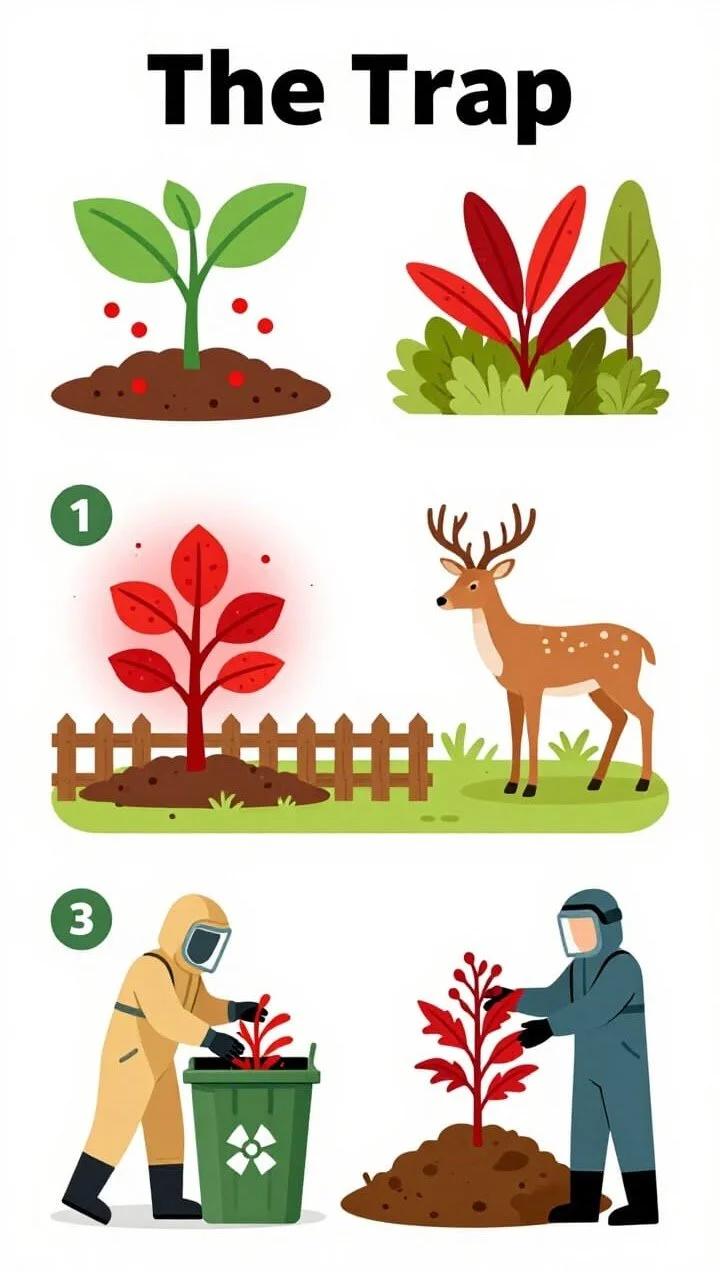
The Myth: When people hear about phytoremediation (using plants to clean soil), they often imagine a beautiful field of sunflowers or mustard plants that suck up toxins and magically convert them into harmless plant tissue. The assumption is that once the plants grow, the problem is gone, and you can simply mow the lawn or let the leaves fall naturally. (12/26/2025)
The Reality: For many contaminants, plants do not destroy the pollution; they simply move it. The plant itself becomes hazardous waste.
Why It Busted: This specific process is called phytoextraction. The plant acts like a solar-powered vacuum, pulling heavy metals like lead or cadmium out of the soil and storing them in its leaves and stems.
The Danger: If you let those leaves fall in autumn, the metals go right back into the soil.
The Risk: If a deer, a cow, or an insect eats that "cleaning" plant, the toxins enter the food chain.
The Result: You haven't cleaned the environment; you've just moved the poison from the dirt into a salad.
The Real Science: Successful phytoremediation requires a strict harvest and disposal cycle. The plants must be grown in a controlled, often fenced-off area to keep wildlife out. Once they are fully grown and saturated with metals, they must be harvested, collected, and treated as toxic waste.
The End Game: Usually, these plants are incinerated in a specialized facility. The ash, which is now highly concentrated with metals, is then disposed of in a hazardous waste landfill. Alternatively, in a process called phytomining, valuable metals (like nickel or gold) can sometimes be recovered from the ash and recycled.
It is a powerful technique, but it is not a "plant it and forget it" solution. It is a slow-motion mining operation.