Nature's Demolition Crew: How Fungi Are Cleaning Our Toughest Messes
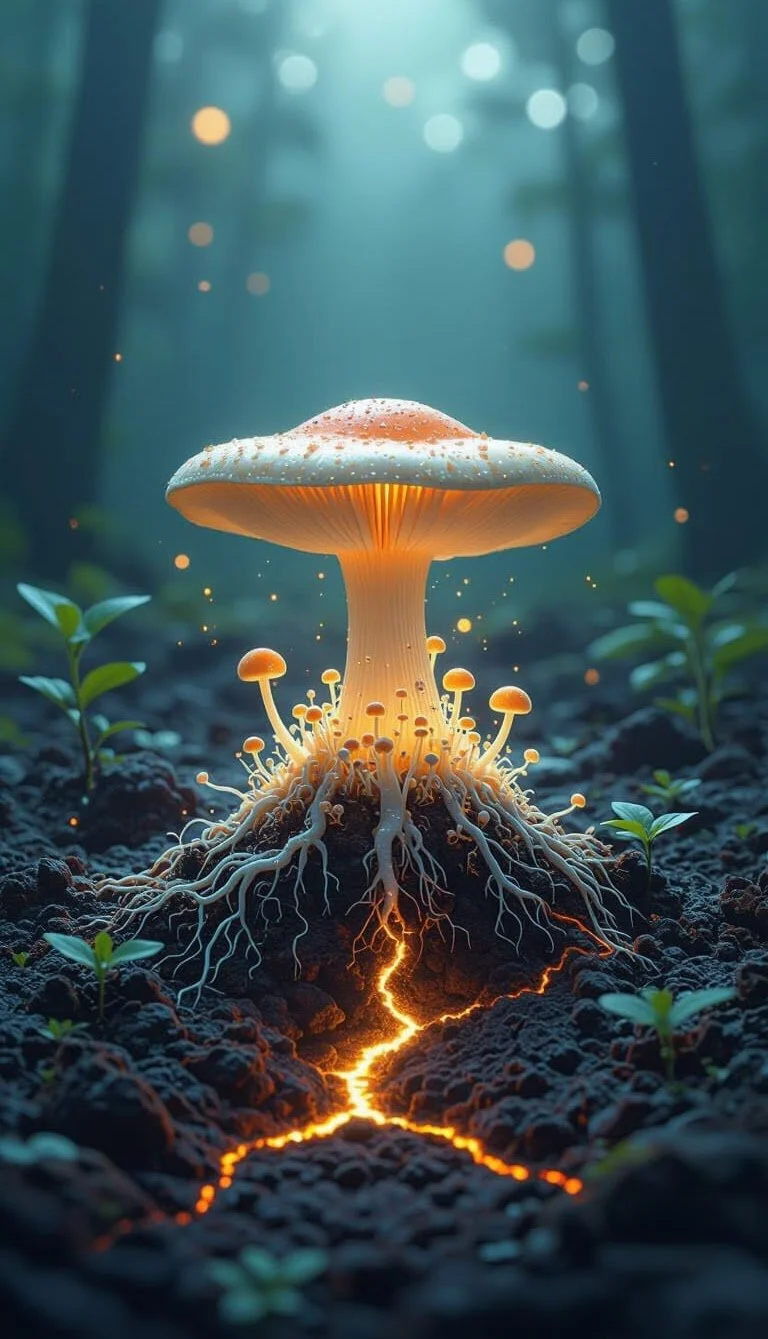
In our ongoing quest to heal the planet, we often look for complex, high-tech solutions. But what if one of the most powerful tools for cleaning our worst pollutants was quietly growing beneath our feet? At Project Clean Up, we're exploring the incredible potential of fungi, the master decomposers of the natural world, in an advanced technique called mycoremediation. (06/06/2025)
The Problem: "Indigestible" Pollutants
Our modern world has created materials that nature struggles to break down. Petroleum hydrocarbons—the sticky, toxic compounds in oil and diesel—contaminate soil and water from spills. At the same time, stubborn plastic polymers are accumulating in our ecosystems, creating a persistent environmental crisis. These complex, long-chain molecules are like a locked puzzle box for most organisms, leaving them to poison our environment for decades, if not centuries.
The Hero: The Humble Oyster Mushroom (Pleurotus ostreatus)
Enter the Oyster Mushroom. While you may know it as a culinary delicacy, its true power lies in what it does out of sight. The mushroom itself is just the fruiting body of a vast, intricate underground network of fine white threads called mycelium. This mycelial network is the fungus's primary body, acting as a digestive and nervous system. It constantly forages for food, and its "appetite" is astonishingly diverse.
The Advanced Technique: A Chemical Master Key
So, how does a fungus "eat" oil or plastic? The secret is in the powerful cocktail of enzymes it produces. When the mycelium encounters a complex pollutant like a hydrocarbon, it doesn't recognize it as a threat but as a potential food source—a tough, but crackable, nut.
It secretes a class of potent enzymes, primarily peroxidases and laccases. These enzymes act as a kind of chemical master key, doing something remarkable: they break the strong, complex chemical bonds that hold hydrocarbons and certain plastic polymers together. By unlocking these bonds, the fungus breaks the large, indigestible molecules down into smaller, simpler, and less toxic components that it can then absorb as food.
In essence, the fungus isn't just moving the pollution around; it's dismantling it at a molecular level, transforming a hazardous waste product into nutrients for its own growth.
The Big Picture: From Digestion to Filtration
The potential applications are breathtaking. Researchers have demonstrated that soil contaminated with diesel fuel can be almost completely cleaned by oyster mushroom mycelium in a matter of weeks. The mycelium essentially becomes a living, self-sustaining remediation system within the soil itself.
Beyond just "digesting" pollutants in the soil, this technology is being adapted for water filtration. In a process called mycofiltration, contaminated water is passed through a substrate (like wood chips) inoculated with mycelium. The dense network of fungal threads physically traps sediments and pathogens while its enzymes go to work breaking down chemical pollutants, offering a living filter that can help restore our waterways.
Mycoremediation shows us that sometimes the most advanced solutions are biological ones, perfected over millions of years. It represents a powerful, natural, and low-cost strategy in our global cleanup effort.