


From Dust to Domes: Building the City with Local Resources
Greetings. In our journey so far, we have designed the city’s life-giving systems: its water, waste, food, and energy loops. We have created a metabolic, breathing organism. But this organism needs a skeleton and a skin. What are the walls, habitats, and tools of our city made from?
Our current world is defined by global supply chains that ship materials thousands of miles, a model that is both brittle and energy-intensive. The closed-loop city rejects this. It builds itself from two abundant, local sources: its own recycled past and the very ground it stands on. This is the principle of In-Situ Resource Utilization (ISRU).

The City's Heartbeat: Designing the Regenerative Energy Grid
Welcome back. Over the past few weeks, we have designed the intricate systems that handle our city's water, metabolize its waste, and produce its food. We have created a circulatory system, a digestive tract, and a pantry. But for any of it to function, the city needs a heart—a powerful, reliable, and enduring source of energy.
Energy is the great enabler. Without it, the water pumps stop, the vertical farms go dark, and the recycling systems fall silent. In a closed-loop city, the energy grid is not a simple utility pulled from a distant power plant; it is a deeply integrated, multi-faceted, and intelligent organ that powers the city's life support.
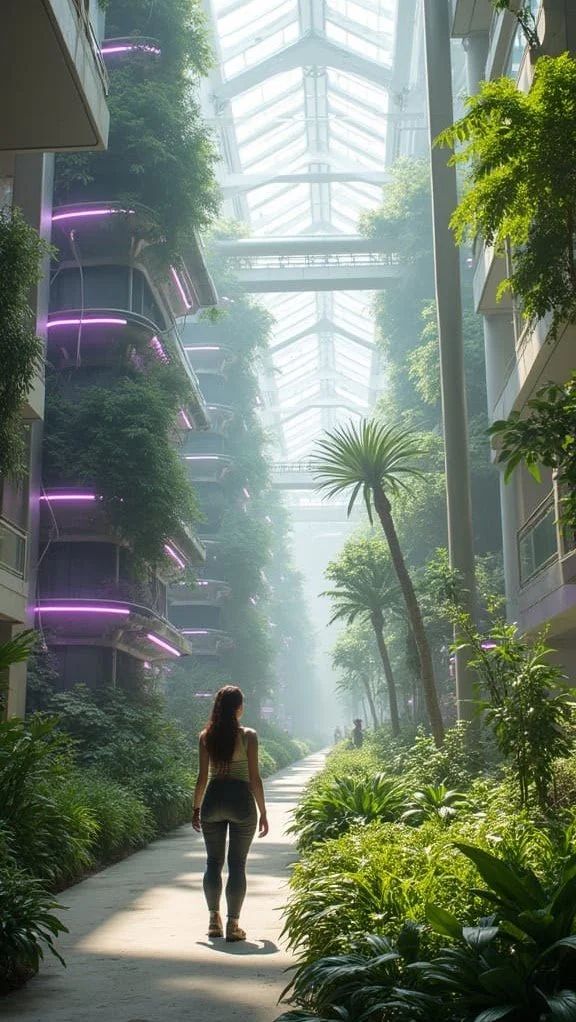
The Urban Harvest: Food, Freedom, and Automation in the Closed-Loop City
Welcome back to our journey. We have followed the flow of water and materials through our city, witnessing how "waste" is transformed into wealth—clean water, fresh soil, and recovered nutrients. Today, we use those building blocks to address the most vital function of any society: providing nourishment. This is the story of the Urban Harvest.
As we design this system, we face a new, crucial challenge: balancing the cold efficiency of automation, which guarantees survival, with the warmth of human autonomy, which makes survival worthwhile. A city that feeds its people from a perfectly efficient, sterile food factory might keep them alive, but it would starve the soul. Our food system, therefore, is designed in layers, creating a hybrid of machine precision and human touch.