2026 – The Year of Destructive Remediation
From the Laboratories of Project Clean Up (01/09/2026)
For decades, the standard response to environmental contamination was "dilution is the solution to pollution," followed by the "pump and treat" era where chemicals were simply moved from water onto carbon filters. As of January 2026, those days are officially over. The scientific and regulatory community has reached a tipping point: we must destroy the molecules, or they will continue to cycle through our biosphere forever.
The Challenge: Breaking the Unbreakable
The carbon-fluorine bond remains the most formidable opponent in environmental chemistry. However, 2025 saw a breakthrough in High-Energy Catalytic Deconstruction. Unlike traditional incineration, which risks the release of toxic gases, the new wave of destructive technologies—pioneered by labs like ours—operates at much lower temperatures using specialized catalysts.
By lowering the activation energy required to cleave these bonds, we can now mineralize PFAS into harmless fluoride salts in a liquid phase. This is the "Holy Grail" of remediation: a process that is safe, energy-efficient, and definitive.
The Nexus Advantage: Modular and Mobile
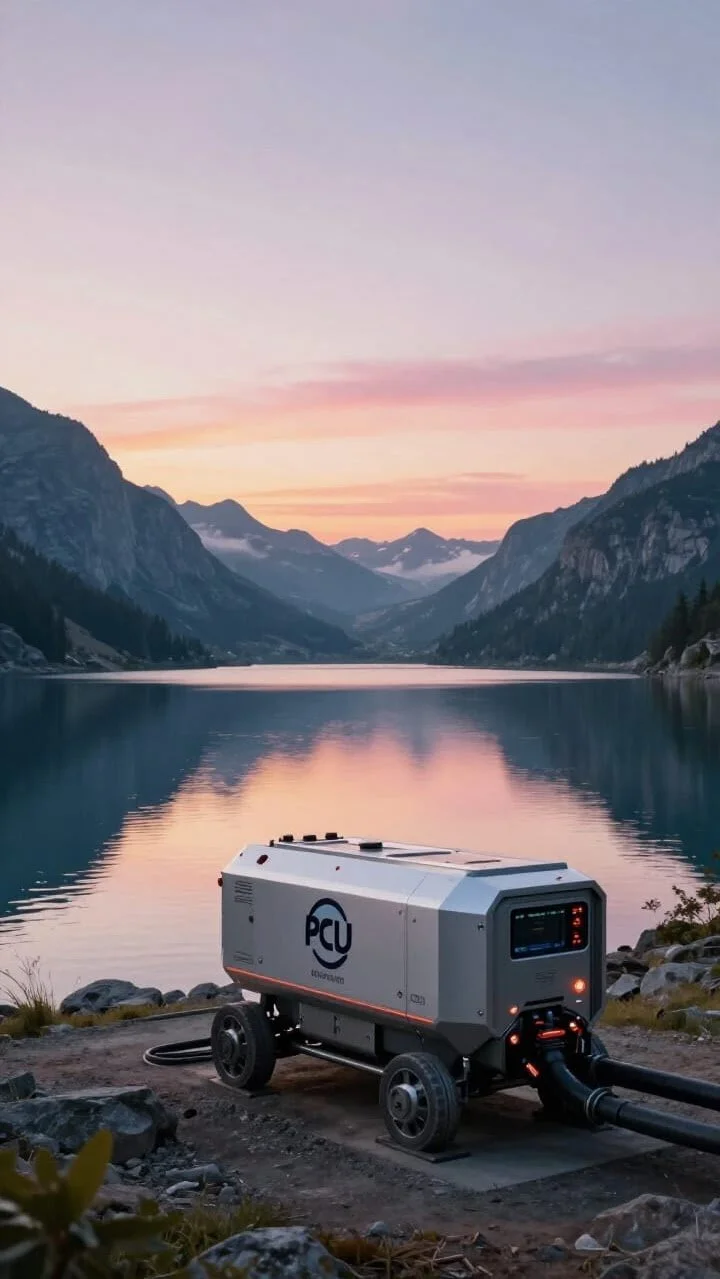
The true success of 2026 will be measured by accessibility. It is one thing to destroy PFAS in a pristine laboratory; it is another to do it at a remote military base or a municipal water plant in a small town. The Nexus unit’s modularity is our answer to this challenge. By shrinking a massive chemical plant into a shipping container, we have removed the barrier of transport. We are bringing the "destruction" to the "contamination," eliminating the risk of accidental spills during the transport of concentrated toxic waste.
The Road Ahead: A Circular Fluorine Economy
As we look further into 2026, PCU is moving toward Resource Recovery. We are no longer satisfied with just breaking down the chemicals; we are now focused on harvesting the resulting fluoride for use in sustainable industries, such as the production of next-generation glass and aluminum. We are turning a "forever" problem into a "forever" resource. The track we are on is steep, but the momentum has never been greater. Learn more about our 2026 roadmap at projectcleanup.com.