DAC Sorbents – The Chemical Magnets Reversing Emissions
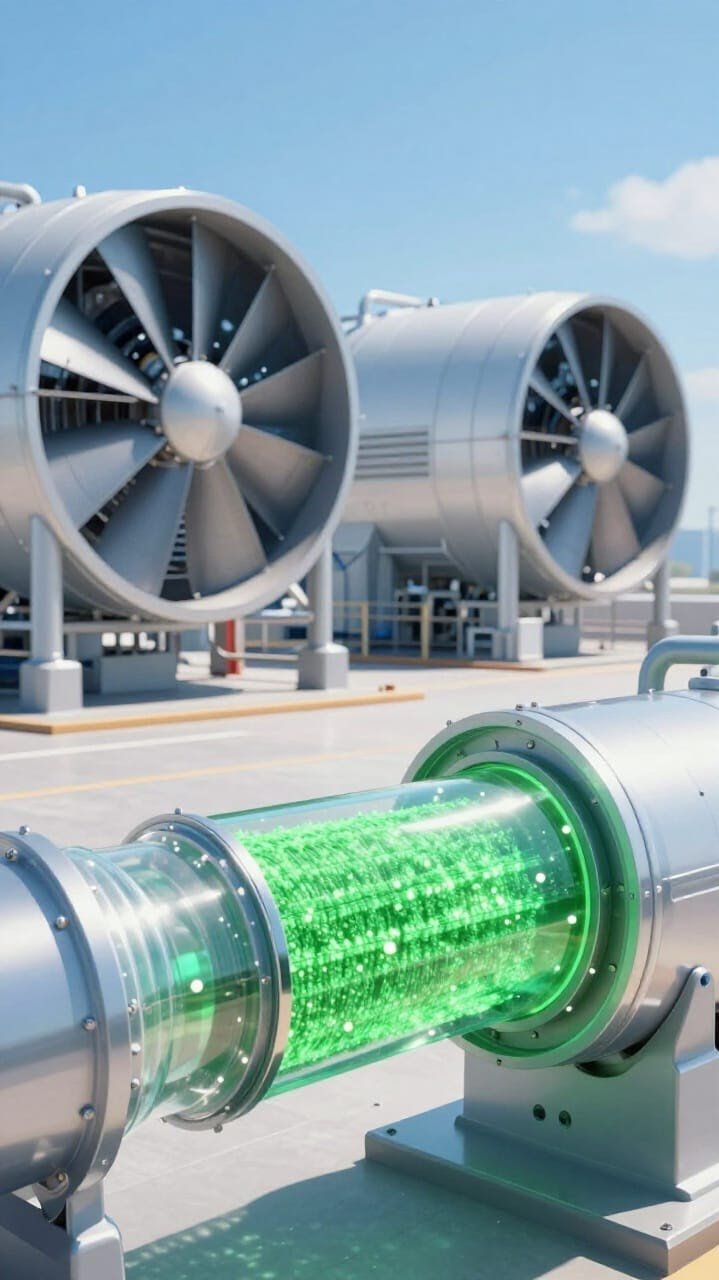
From the Laboratories of Project Clean Up (01/16/2026)
As we move deeper into 2026, the technology behind Direct Air Capture (DAC) has moved from the fringes of science to a cornerstone of global climate policy. At the heart of this technology are sorbents—specialized materials designed to capture carbon dioxide (CO2) directly from the ambient air, where it exists at a concentration of roughly 420 parts per million. Unlike flue-gas capture at power plants, DAC must be incredibly selective and efficient to grab these relatively sparse molecules.
The Chemistry of Capture: Amines and Frameworks
The most successful DAC sorbents today generally fall into two categories: solid amine-functionalized materials and advanced Metal-Organic Frameworks (MOFs).
Amine sorbents work through a chemical reaction where CO2 forms a carbamate bond with the nitrogen atoms on the material's surface. MOFs, as we discussed in earlier issues, use their high internal surface area to physically trap CO2 within their pores. The innovation in 2026 has been in Moisture-Swing Adsorption, where materials are engineered to capture CO2 when dry and release it when exposed to moisture, drastically reducing the energy required for the "release" phase of the cycle.
The Sustainability Loop: From Air to Resource
The goal of DAC is not just to capture carbon, but to turn it into a resource. The pure CO2 harvested by these sorbents is now being used to create carbon-neutral aviation fuels, "green" concrete, and even carbon-fiber composites. At Project Clean Up (PCU), we are inspired by this circularity. Much like our efforts to recover fluoride from PFAS, the DAC industry is proving that environmental waste is merely a resource in the wrong place.
A Shared Vision: Engineering a Persistent-Free World
Whether we are scrubbing CO2 from the sky or PFAS from the water, the fundamental challenge is the same: managing the lifecycle of our chemical footprint. As we develop more robust sorbents, we must also ensure these materials themselves are durable and recyclable. Our research at PCU into complex polymer and mineral architectures ensures that the tools we use to save the environment don't become part of the waste problem. We are committed to a 2026 where technology acts as a restorative force. Learn more about our vision for atmospheric and aquatic health at projectcleanup.com.