FOSA – The Missing Link in Global Contamination
From the Laboratories of Project Clean Up (01/23/2026)
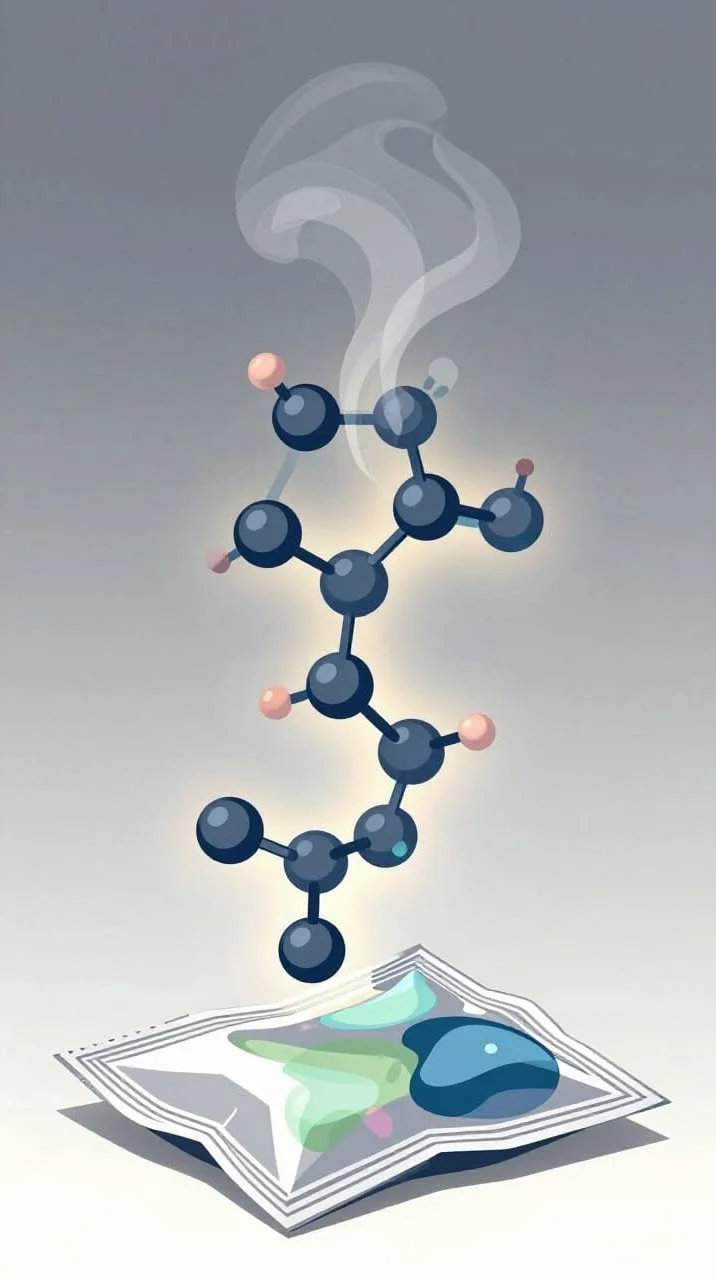
While the public is now well-aware of "forever chemicals" in their drinking water, the scientific community is increasingly focused on the precursors that put them there. FOSA (Perfluorooctane Sulfonamide) is perhaps the most significant of these. Used for decades as a surface treatment for everything from fast-food wrappers to carpets, FOSA was once considered a "safer" or "intermediate" chemical. However, its ability to move between air and water makes it one of the most effective delivery systems for long-term environmental damage.
The Persistence of Transformation
The true danger of FOSA lies in its fate. In the environment—and particularly in the human body—FOSA undergoes a process called biotransformation. The sulfonamide group is cleaved away, leaving behind the highly stable and toxic PFOS. This means that exposure to FOSA is, in many ways, an indirect exposure to PFOS. Because FOSA is more lipid-soluble than its descendants, it can pass through biological membranes more easily, accumulating in the blood and liver of wildlife and humans at an alarming rate.
Stopping the Cycle: The PCU Catalytic Strategy
At Project Clean Up (PCU), we are tackling FOSA by breaking the chain before the transformation can occur. Our Nexus units utilize a dual-stage process: first, the volatile FOSA is captured using our new high-affinity resins; second, it is fed directly into our Lewis acid-mediated reactor. Here, we don't just wait for it to turn into PFOS—we use our iron-complex catalysts to dismantle the entire eight-carbon fluorinated chain. By destroying the precursor, we eliminate the source of future PFOS contamination.
A 2026 Perspective: Total Molecular Management
The FOSA challenge reminds us that "remediation" cannot be limited to a single medium. As we deploy more Nexus units across the globe in 2026, we are implementing Total Molecular Management. This means monitoring the air, the water, and the soil at every industrial site. By using the cross-application insights from the carbon capture industry, we are building a more sensitive and powerful defense against the spread of these persistent molecules. We are committed to a world where "forever" is no longer an option for chemical waste. Learn more about our atmospheric capture research at projectcleanup.com.