From the Laboratories of Project Clean Up (11/13/2026)
Spider silk is a holy grail of materials science. It is stronger than steel, tougher than Kevlar, and highly elastic. However, you cannot farm spiders like silkworms; they are highly territorial and cannibalistic.
For decades, the challenge was how to mass-produce this biological marvel without the biology of the spider. In 2026, the answer is fermentation.
1. The Biological Brewery
We do not harvest silk; we brew it.
Through recombinant DNA technology, scientists have successfully mapped the specific genes responsible for producing spidroin—the main protein in spider silk. By inserting this genetic sequence into the DNA of specialized yeast or bacteria, we turn these microorganisms into microscopic silk factories.
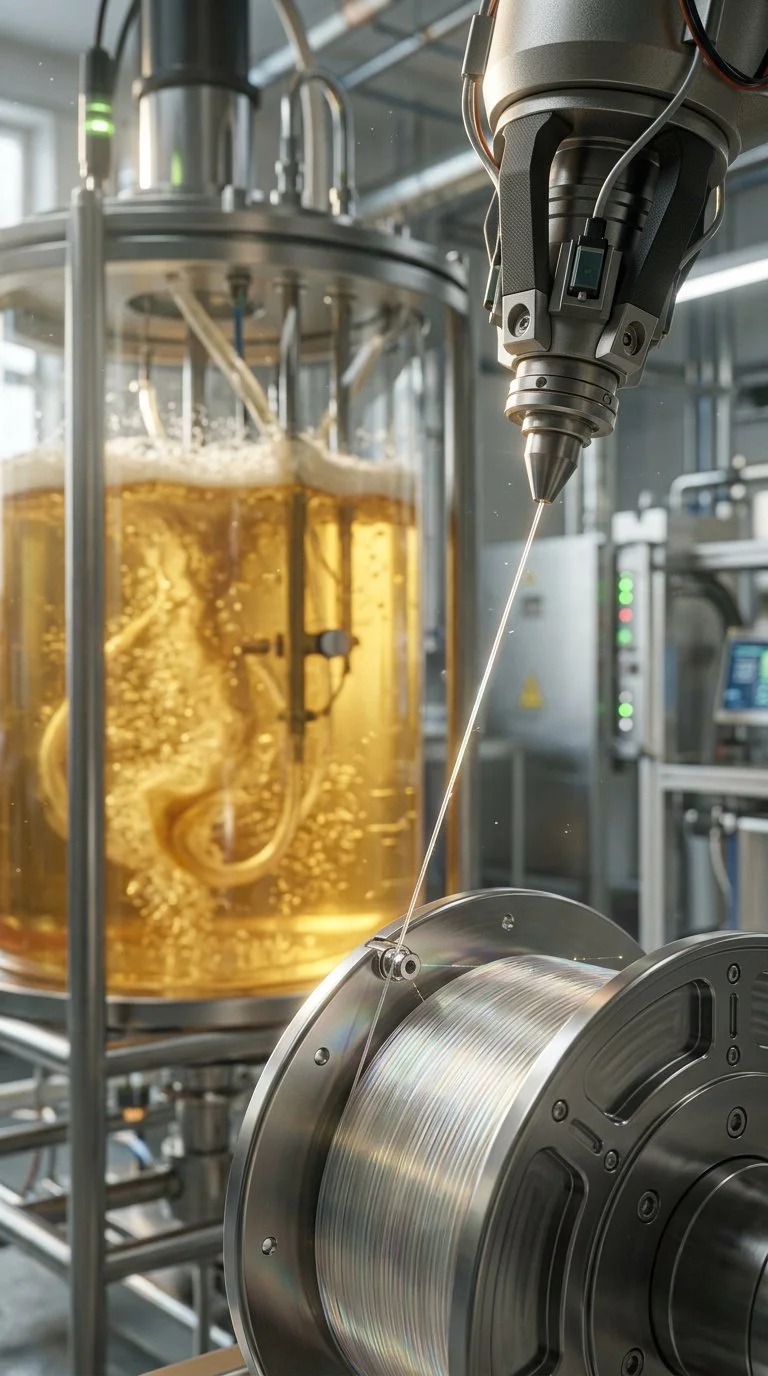
Inside massive, stainless-steel fermentation vats (identical to those used in commercial breweries), the yeast is fed simple sugars and water. As the yeast metabolizes the sugar, it naturally excretes the raw spider silk protein into a liquid broth. The protein is then purified, dried into a powder, and dissolved into a spinning solution. Finally, it is pushed through a mechanical spinneret—mimicking the physical extrusion of a spider’s spinneret—to align the protein molecules into a solid, continuous, ultra-strong thread.
2. Replacing the Petrochemical Wardrobe
The applications for synthetic spider silk extend far beyond bulletproof vests and parachute cords. It is fundamentally rewriting consumer textiles.
Traditional performance wear (like yoga pants, running shirts, and outdoor jackets) relies on petroleum-derived elastane and nylon. Every time you wash these garments, thousands of microscopic plastic threads break off and flush into the municipal water system, ultimately ending up in the ocean and the human bloodstream.
By weaving performance wear out of recombinant silk, we achieve the exact same elasticity, breathability, and durability as nylon, but without a single drop of petroleum. It is a hyper-performance fabric born from sugar and water.
3. The Lifecycle Standard: The Protein Loop
Under the PCU Lifecycle Standard, the true value of recombinant silk is not how it is made, but how it dies.
The Legacy Flaw: A torn nylon backpack or a frayed Kevlar vest is a permanent ecological liability. It cannot be easily melted down or composted. It will sit in a landfill for over 200 years, slowly degrading into toxic fragments.
The PCU Solution: Programmed Digestion.
Because recombinant spider silk is made entirely of amino acids—the fundamental building blocks of all biological life—it is completely biocompatible and biodegradable.
When a synthetic silk jacket or an industrial silk cable reaches the end of its life, it does not require a high-heat smelter or toxic solvents to recycle. It can be thrown directly into an industrial anaerobic digester or a municipal compost facility. Natural proteases (enzymes that break down proteins) will rapidly digest the silk, breaking the tough material back down into raw nitrogen and carbon. It safely returns to the soil as high-grade fertilizer.
The 2026 Vision: The Woven Ecosystem
At Project Clean Up (PCU), we are ending humanity’s reliance on permanent, toxic plastics for structural strength. By mimicking the elegance of the spider and harnessing the power of microbial fermentation, we are proving that the most advanced, durable materials on Earth can be grown, worn, and safely digested. We are building a world where our strongest armors and everyday fabrics are completely indistinguishable from nature.
Learn more about synthetic spider silk! Synthetic Spider Silk – Nature's Super Material, Engineered for Sustainability