MXenes – The 2D Revolution in Connectivity
From the Laboratories of Project Clean Up (02/06/2026)
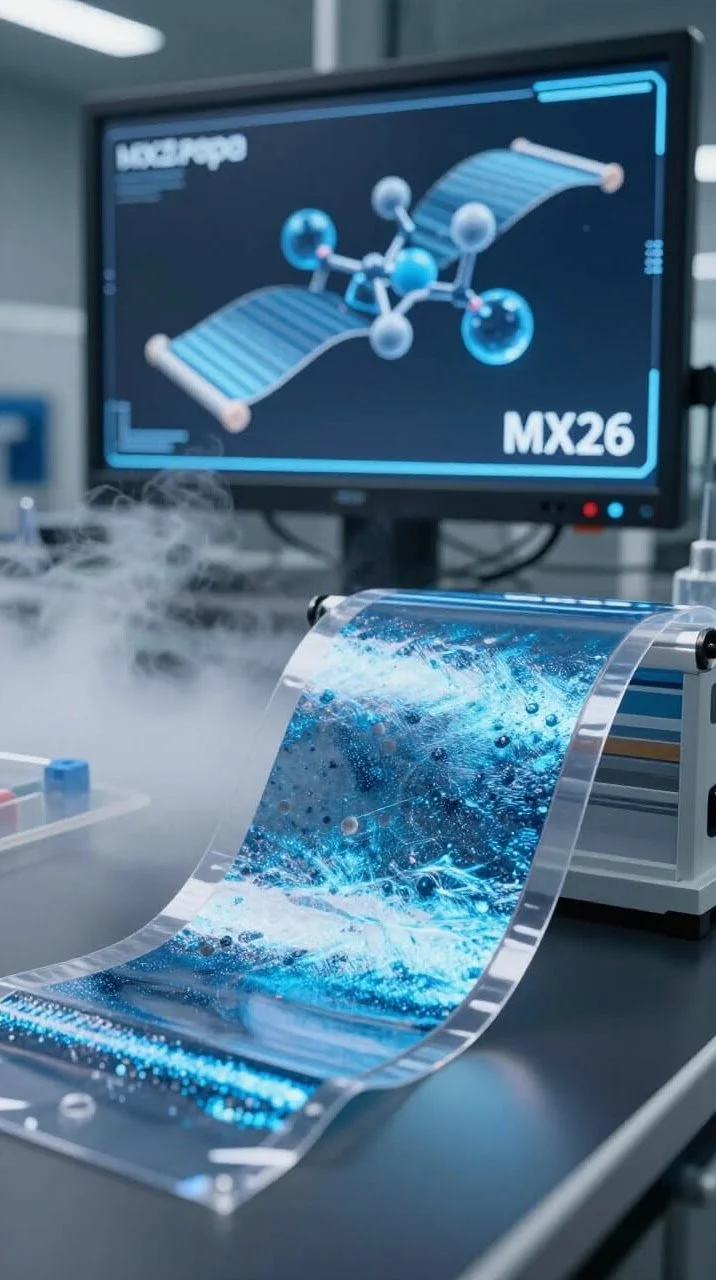
As we move toward the high-frequency demands of 6G and fusion-grid monitoring in 2026, silver is proving too bulky and expensive for effective shielding. Enter MXenes. These materials are made by selectively etching a layered bulk crystal to leave behind 2D sheets that are only a few atoms thick. While they are currently confined to pilot labs and high-end aerospace prototypes, they are the leading candidate to replace silver and gold in flexible electronics.
Why MXenes? Superiority Without the Weight
MXenes possess an incredible "hydrophilic" nature, meaning they can be processed into conductive inks using simple water-based solutions, eliminating the need for the toxic organic solvents required for metal inks. They offer better electromagnetic shielding than silver at a fraction of the thickness. This allows for thinner, lighter devices that can operate at much higher frequencies without signal loss.
The Lifecycle Standard: Designing for Deconstruction
In line with the PCU mission, we are addressing the disposal of MXenes before they reach the consumer market. Unlike legacy electronics that require acid leaching and smelting to recover gold or silver, MXenes are designed for Phase-Resetting.
The Challenge: While MXenes are more "earth-friendly" than heavy metals, their nanoscale 2D structure could potentially disrupt microbial life if allowed to accumulate in soil.
The PCU Solution: We have developed a Low-Energy Mineralization pathway. By exposing MXene waste to a specific pH-triggered oxidant, we can trigger a rapid "unzipping" of the 2D sheets. This collapses the material into non-toxic minerals like titanium ore and carbon dioxide.
The 2026 Vision: Closing the Loop Early
At Project Clean Up (PCU), we believe the only way to avoid another "forever chemical" disaster is to verify the deconstruction pathway during the material's development phase. By pairing MXene innovation with our Reset Protocol, we are proving that we can have fusion-level performance and high-speed chips without leaving a legacy of persistent waste. We are building the future, and we are building the way back. Learn more about the Lifecycle Standard at projectcleanup.com.