Nano-Desiccants – Arresting Decay Without the Cord
From the Laboratories of Project Clean Up (04/24/2026)
For the innovators answering the Point-of-Origin Challenge, the first hurdle is biological stabilization. How do you take an apple core or leftover vegetables in a sealed apartment drawer and stop them from rotting without plugging a loud, hot appliance into the wall?
The answer lies in manipulating Water Activity. Microorganisms require available water to survive and multiply. By dropping the water activity of organic output below a critical threshold, you effectively hit the "pause" button on biological decay, rendering the material inert, odorless, and vastly reduced in volume.
The Post-Silica Era: Tunable Sorption
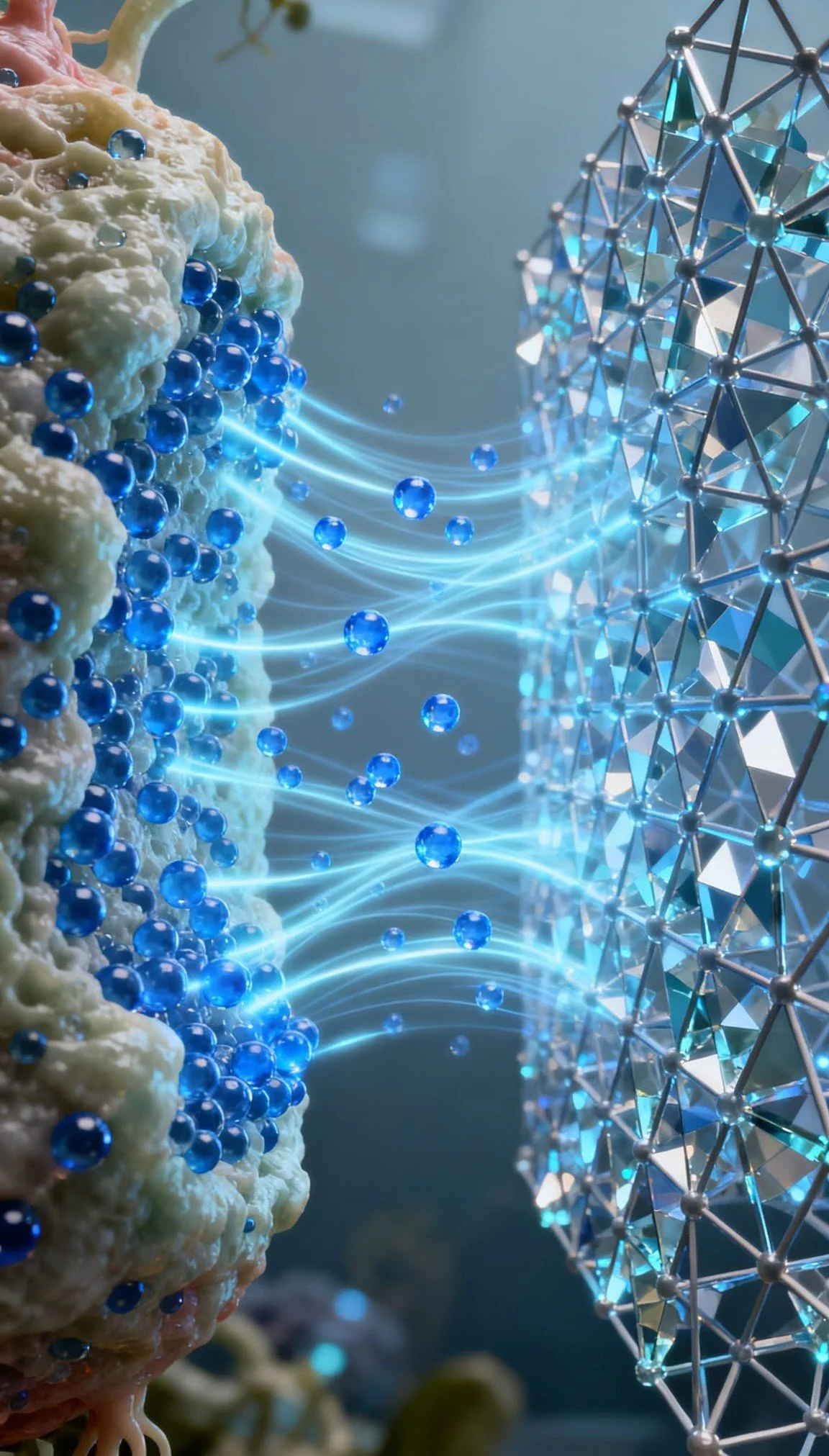
We are all familiar with the little silica gel packets found in shoe boxes. But materials science has evolved far beyond silica. We are now looking at Advanced Hygroscopic Polymers and highly specific Metal-Organic Frameworks (MOFs) optimized for water capture.
These materials act as aggressive, silent molecular sponges. When integrated into the architecture of a domestic receptacle—perhaps as a replaceable liner or a regenerative cartridge—they alter the micro-climate of the space. They draw the moisture out of the organic matter at room temperature. The output doesn't rot; it silently mummifies, shrinking into a dry, stable fraction of its original size.
The Lifecycle Standard: The Regenerative Cycle
Under the PCU Lifecycle Standard, a desiccant must not become waste itself.
The Challenge: Single-use desiccants quickly saturate and must be thrown away, adding to the synthetic waste stream.
The PCU Solution: Low-Gradient Regeneration. The ideal nano-desiccant for the Point-of-Origin challenge is designed with a specific "release trigger."
Once the sorption matrix is full of water, it requires a reset. Instead of high-heat baking, these advanced materials are engineered to release their captured water under very mild shifts in humidity or low-grade ambient heat (such as the waste heat naturally generated by a nearby refrigerator compressor). The purified water is quietly vented or routed to the apartment's drain, and the matrix is ready to absorb again.
The 2026 Vision: The Silent Drawer
At Project Clean Up (PCU), we envision the Apartment Void being filled by chemistry, not just machinery and computing. The tenant places their biological output into a sleek, integrated drawer. There is no grinding, no heating, and no noise. The nano-desiccant matrix simply takes over, pulling the moisture from the matter over 24 hours. What is left is a dry, odorless, inert husk that takes up a fraction of the space and can be safely discarded at the tenant's convenience—without the pressure of impending decay. This is how we design frictionless living. projectcleanup.com.