Perfluorodecanoic Acid (PFDA) – The Bioaccumulative Threat of C10
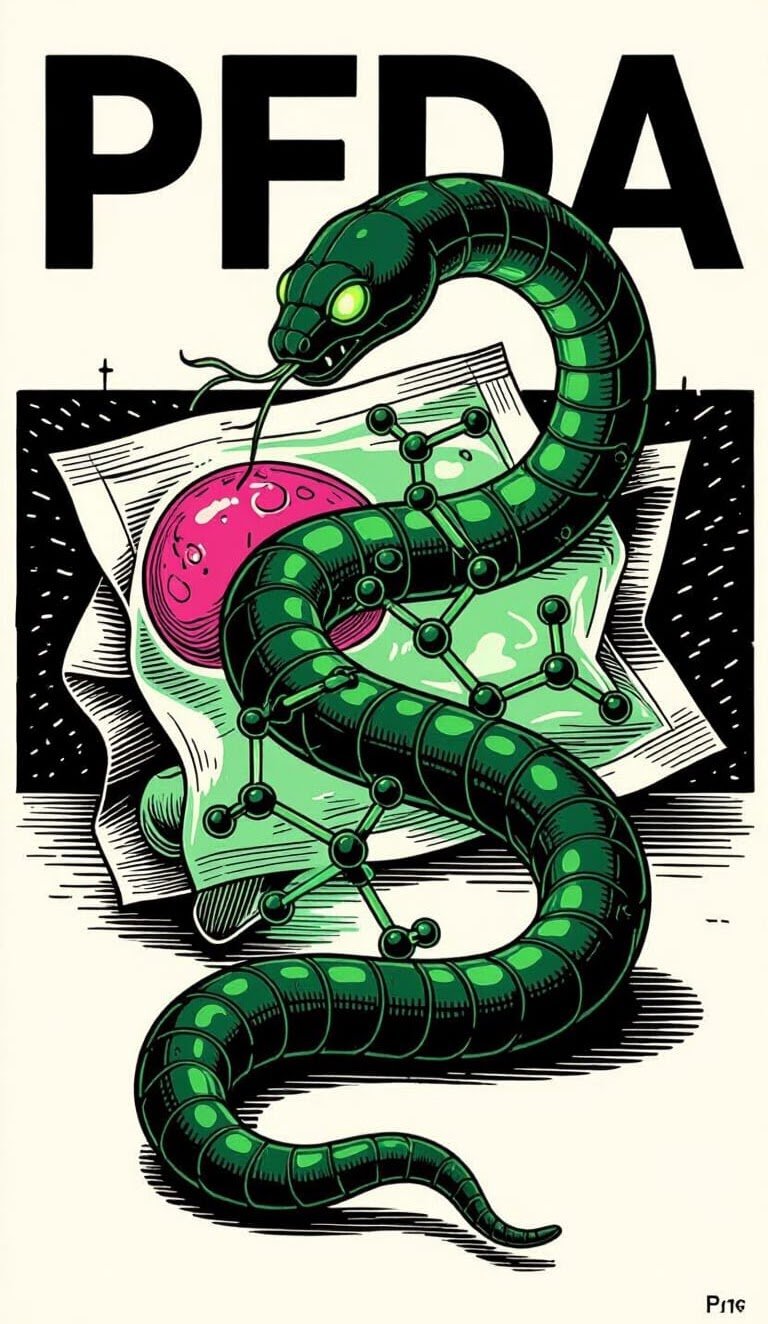
From the Laboratories of Project Clean Up (11/21/2025)
Perfluorodecanoic Acid (PFDA) is a significant member of the PFAS family, notable for its long carbon chain (C10) terminating in a carboxylic acid group. Its unique chemical structure provides exceptional resistance to heat, oil, and water, cementing its use as a fluorosurfactant in specialized applications such as stain and greaseproof coatings for carpets, furniture, and paper-based food containers. PFDA's high performance and chemical inertness made it a desirable compound in high-end industrial and consumer products for decades. However, its long carbon chain ensures that its legacy is far more complicated than its utility suggests.
The Persistence Problem: Extreme Bioaccumulation
PFDA is classified as highly persistent, chemically inert, and, critically, highly bioaccumulative. Due to its C10 chain, PFDA has a longer serum half-life in humans—meaning it takes years for the body to eliminate even half of the ingested amount. This high bioaccumulation potential leads to detectable levels in human blood, wildlife, and remote ecosystems globally. Studies have shown that PFDA can disrupt vital biological functions, including mitochondrial activity and lipid metabolism, leading to significant health concerns such as liver damage and immune system disruption. The environmental presence of PFDA, detected frequently in surface water and soil near industrial sites, demands targeted and highly effective remediation solutions.
Degrading PFDA: PCU’s Universal Approach to Long-Chain Cleavage
The long, linear C10 chain of PFDA presents a significant challenge: traditional oxidation methods often fail to completely break the robust carbon-fluorine (C-F) backbone, sometimes only converting it into smaller, yet still persistent, shorter-chain PFAS. At Project Clean Up (PCU), our methodology is specifically engineered to overcome this. Our advanced catalytic systems, including our powerful Lewis acid-mediated defluorination and innovative iron complex chemistry, target the fundamental energy required to cleave the C-F bonds simultaneously across the entire chain. Our goal is complete mineralization—turning the toxic fluorocarbon into simple, safe fluoride ions and carbon dioxide. Proving the effectiveness of our Nexus technology against long-chain, bioaccumulative compounds like PFDA is essential to establishing a global, definitive solution for the most environmentally hazardous PFAS.
A Holistic Solution: Managing Toxicity from Source to Sink
The story of PFDA highlights the necessity of chemical stewardship that prioritizes safety over persistence. While many legacy uses of PFDA have been phased out, the existing contamination remains a global health threat. Our dedication at PCU is to provide the scientific tools for degradation, but effective environmental protection requires vigilance in waste management. Ensuring that contaminated materials and wastewater are directed to specialized treatment facilities like our Nexus unit is crucial for breaking the cycle of contamination and safeguarding public health from highly toxic and bioaccumulative "forever chemicals." Learn more about our vision for a sustainable future and how you can contribute at projectcleanup.com.