PFOA – From Non-Stick Marvel to Environmental Challenge
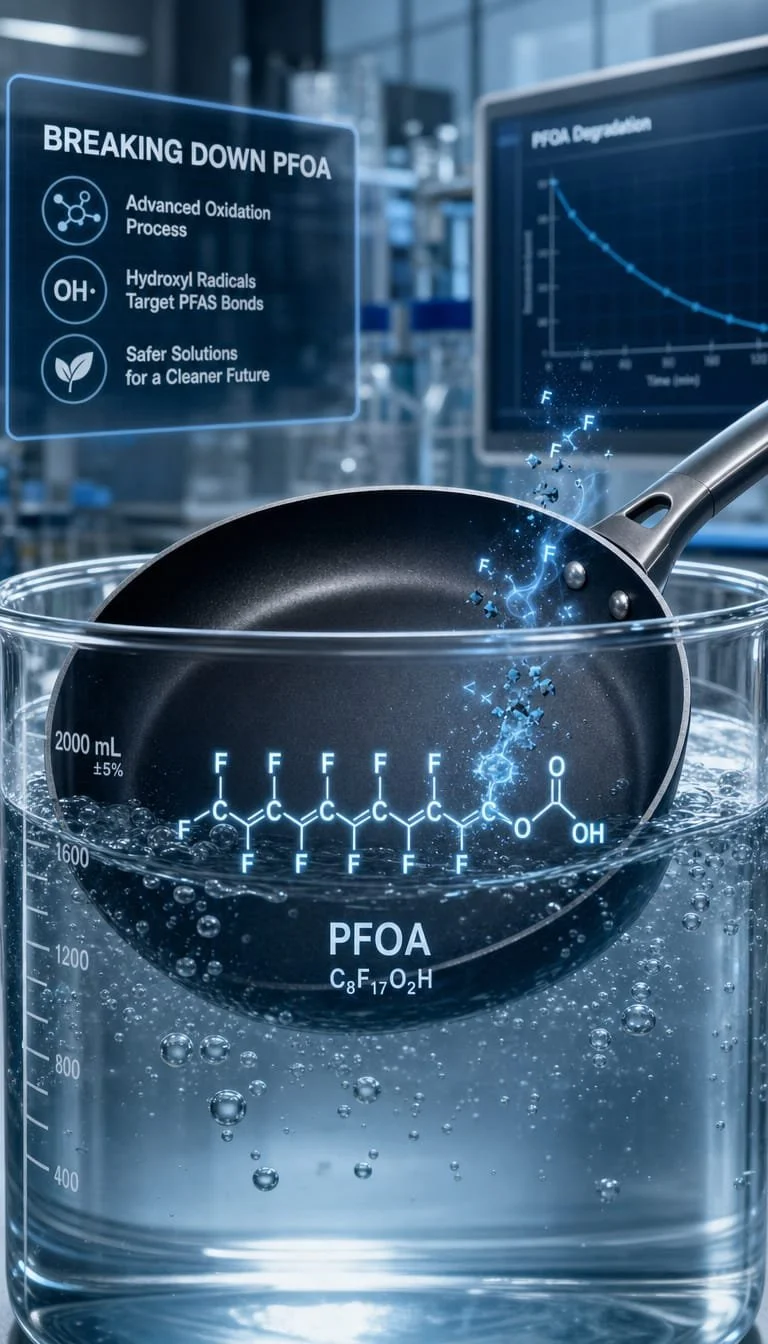
From the Laboratories of Project Clean Up (06/13/2025)
For decades, perfluorooctanoic acid, or PFOA, was a staple in homes and industries worldwide, most famously as a key ingredient in non-stick cookware. Its extraordinary ability to create incredibly durable, water-repellent, and stain-resistant surfaces made everyday tasks easier and products more robust. Beyond kitchenware, PFOA was instrumental in producing specialized coatings, electrical insulation, and even components for the aerospace industry. It offered a level of performance that was, for a long time, unmatched, making products more convenient and long-lasting for consumers.
Degrading PFOA: Unlocking the Future of Persistent Chemicals
The same highly stable carbon-fluorine (C-F) bonds that gave PFOA its remarkable properties also contributed to its designation as a "forever chemical." PFOA resists degradation in natural environments, accumulating in soil, water, and even human bodies globally. Concerns over its persistence and potential health impacts led to its phase-out in many applications, yet its widespread historical use means it remains a persistent environmental contaminant. At Project Clean Up (PCU), we are actively developing advanced chemical strategies to break down PFOA. Our cutting-edge research at PCU Laboratories focuses on disrupting these robust C-F bonds using innovative catalytic systems, including highly effective Lewis acid approaches and novel oxidation methods. We are transforming PFOA into less harmful, manageable compounds, moving beyond the notion that these chemicals are an unsolvable problem.
Ensuring PFOA's Legacy is Clean: The Role of Proper Disposal
While PFOA's primary use has diminished, legacy contamination exists, and some products may still contain traces from historical manufacturing. Our mission at PCU is to provide the scientific tools for complete degradation, but their application hinges on access to these materials. The responsible management of any product containing persistent chemistries is paramount. Proper disposal through designated hazardous waste channels is not merely a suggestion; it's a critical step that enables us to intervene and remediate. By ensuring these chemicals enter the correct waste streams, we empower our scientific solutions to clean up existing contamination and prevent future environmental burdens. Visit projectcleanup.com for more detailed information on our work and guidance on chemical waste management.