GenX – The Next Generation of Persistent Challenge
From the Laboratories of Project Clean Up (06/20/2025)
When concerns about legacy "forever chemicals" like PFOA emerged, the chemical industry sought alternatives. One prominent example developed to replace PFOA in fluoropolymer manufacturing is GenX. This compound, specifically the ammonium salt of hexafluoropropylene oxide dimer acid (HFPO-DA), was engineered to be a shorter-chain PFAS, theoretically leading to less bioaccumulation in organisms and faster elimination from the body. It can be used as a processing aid in creating high-performance fluoropolymers for products ranging from non-stick coatings and specialized cables to semiconductors, delivering the same valuable properties of durability and repellency that consumers and industries relied upon.
Degrading GenX: Unlocking the Future of Persistent Chemicals
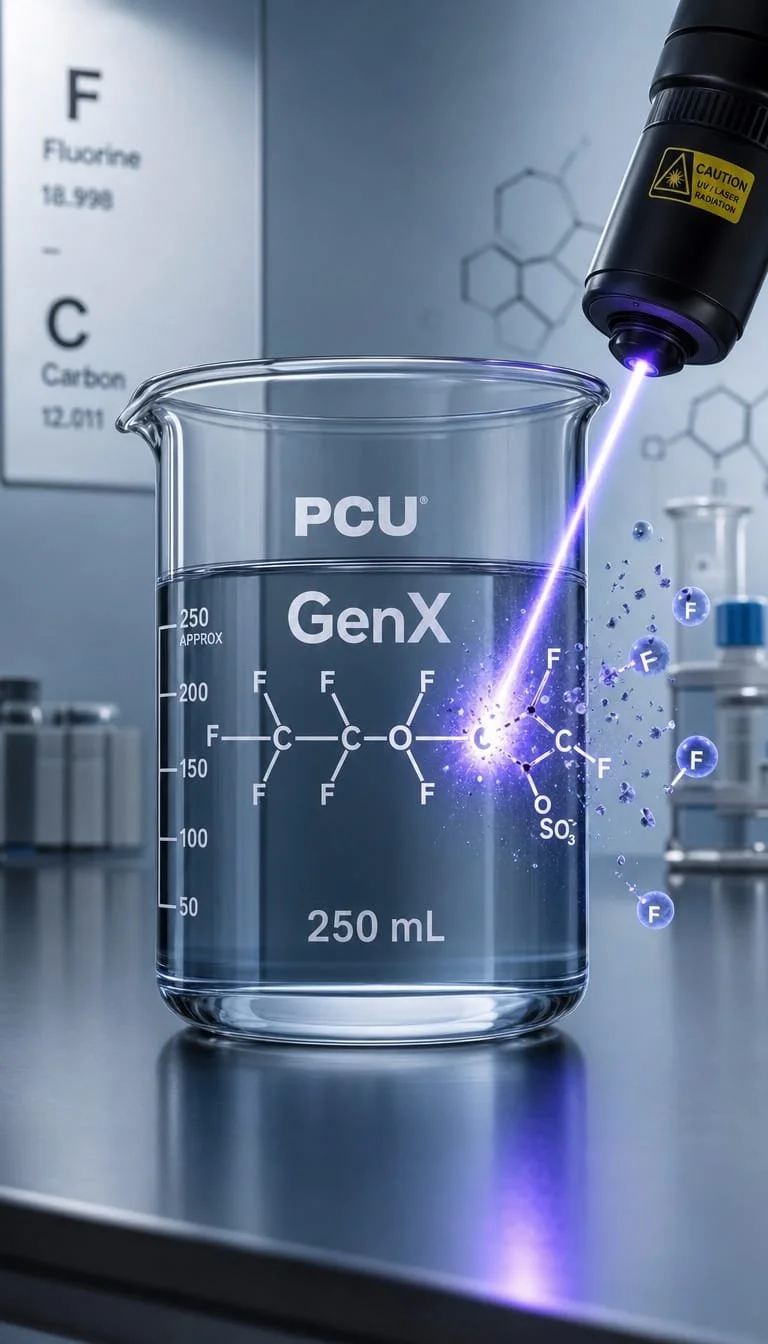
Despite its design as a "safer" alternative, GenX, like its predecessors, still possesses the incredibly strong carbon-fluorine (C-F) bonds that render it highly persistent in the environment. Its increased water solubility, in some cases, even makes it more mobile than PFOA, leading to widespread detection in drinking water sources far from industrial release points. This persistence, coupled with growing toxicological concerns, highlights the challenge of "regrettable substitutions" within the PFAS family. At Project Clean Up (PCU), we are tackling GenX directly. Our cutting-edge research at PCU Laboratories is developing advanced chemical strategies to break down this molecule. We are applying and adapting our innovative catalytic systems, including our powerful Lewis acid-mediated defluorination and iron complex chemistry, to cleave the stubborn C-F bonds in GenX, transforming it into benign or readily manageable components. Our goal is to ensure that even "next-generation" persistent chemicals have a definitive end-of-life solution.
Proactive Solutions: The Imperative for a Clean Future
The story of GenX teaches a vital lesson: simply replacing one persistent chemical with another that shares the same fundamental persistence is not a sustainable long-term strategy. True environmental responsibility demands proactive research and the development of robust degradation methods for all persistent chemicals, from legacy compounds to their modern replacements. At PCU, we are committed to providing these essential scientific tools. Our work aims to break the cycle of environmental persistence, but this crucial effort begins with responsible waste management. Ensuring that materials containing persistent chemistries are properly collected and directed to the right channels is the first and most critical step in allowing our science to protect our planet. Visit projectcleanup.com for more detailed information on our work and guidance on chemical waste management.