Self-Healing Concrete – The Future of Durable and Sustainable Infrastructure
From the Laboratories of Project Clean Up (10/03/2025)
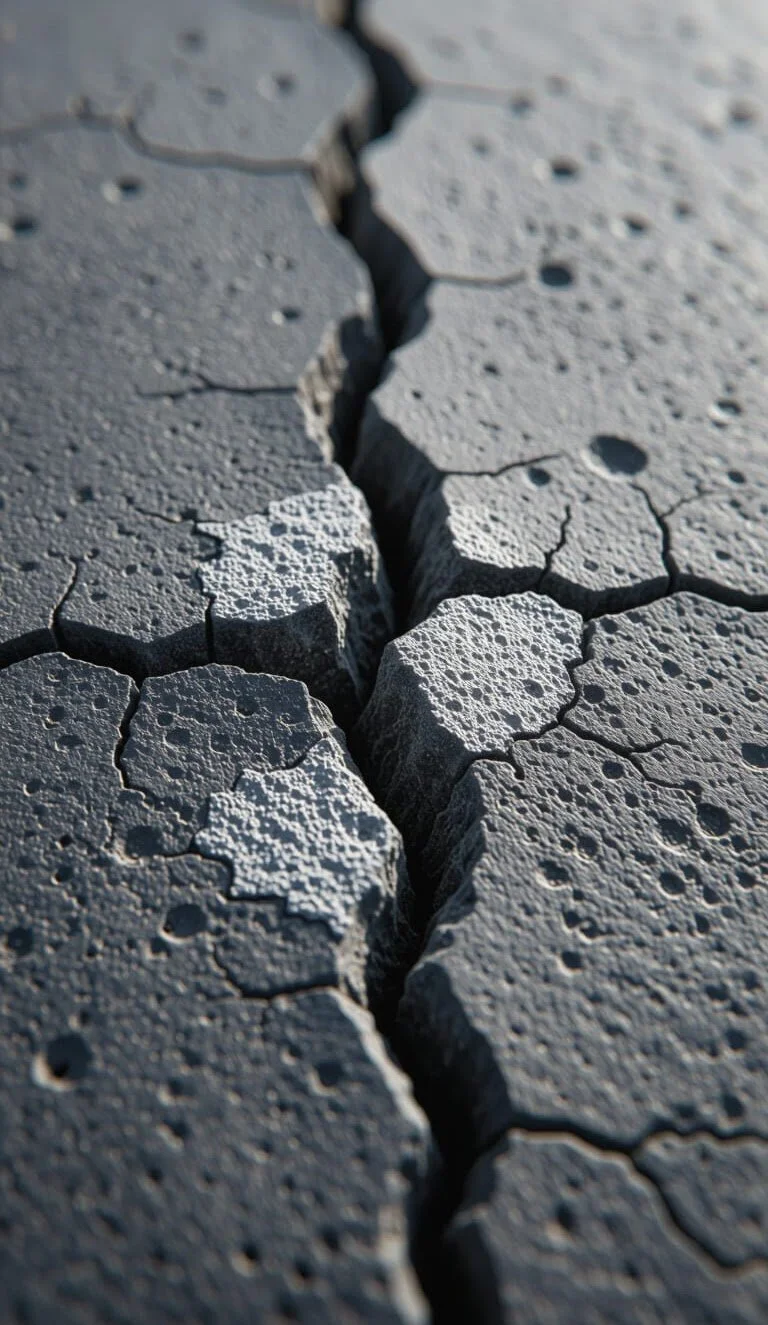
As the foundation of our modern world, concrete is indispensable. Its durability, however, is compromised by inevitable cracking caused by environmental stress, traffic loads, and temperature fluctuations. These micro-cracks allow water, oxygen, and corrosive agents to penetrate, leading to the decay of internal steel reinforcement and, eventually, structural failure. Self-healing concrete offers an ingenious solution: a material engineered to autonomously repair its own damage. This is often achieved through bio-mineralization, where specialized, dormant bacteria, embedded within the concrete, activate upon contact with water and oxygen in a new crack, producing calcium carbonate (limestone) to seal the flaw. This process arrests deterioration, extends the life of the structure, and prevents costly repairs.
The Concrete Promise: Sustainability Through Longevity
The environmental implications of self-healing concrete are profound. The production of cement, a key component of concrete, is responsible for a significant percentage of global industrial carbon dioxide emissions. By increasing the functional lifespan of bridges, roads, and buildings by decades, self-healing concrete dramatically reduces the need for constant maintenance, repair, and replacement. This translates directly into massive savings in materials, energy, and, critically, CO2 emissions. It is a fundamental shift toward sustainable construction, prioritizing longevity and resilience over the traditional cycle of repair and demolish. This dedication to extending a material's functional life aligns perfectly with the core principles of a circular economy.
Beyond Durability: Ensuring a Clean Deconstruction
While self-healing concrete represents a major leap in longevity, its complex composition raises questions about its eventual end-of-life management. The inclusion of new organic materials (like encapsulated bacteria or polymers) and specialized additives, while functional, must be scrutinized to ensure they do not complicate future recycling efforts when the structure is finally demolished. This is where the core expertise of PCU Laboratories remains vital. Our research into breaking down complex material architectures and managing diverse organic/inorganic mixtures is crucial. We must ensure that the very mechanisms designed to make concrete last longer do not inadvertently introduce new persistent compounds into the waste stream. Our commitment to a truly circular future demands that even materials designed for maximum longevity have a clear, clean pathway for deconstruction and resource recovery. As always, proper waste management is the first critical step. Learn more about our vision for a sustainable future and how you can contribute at projectcleanup.com.