Case Study 1: The Exxon Valdez Oil Spill and the Power of Fertilizer
(02/20/2026)
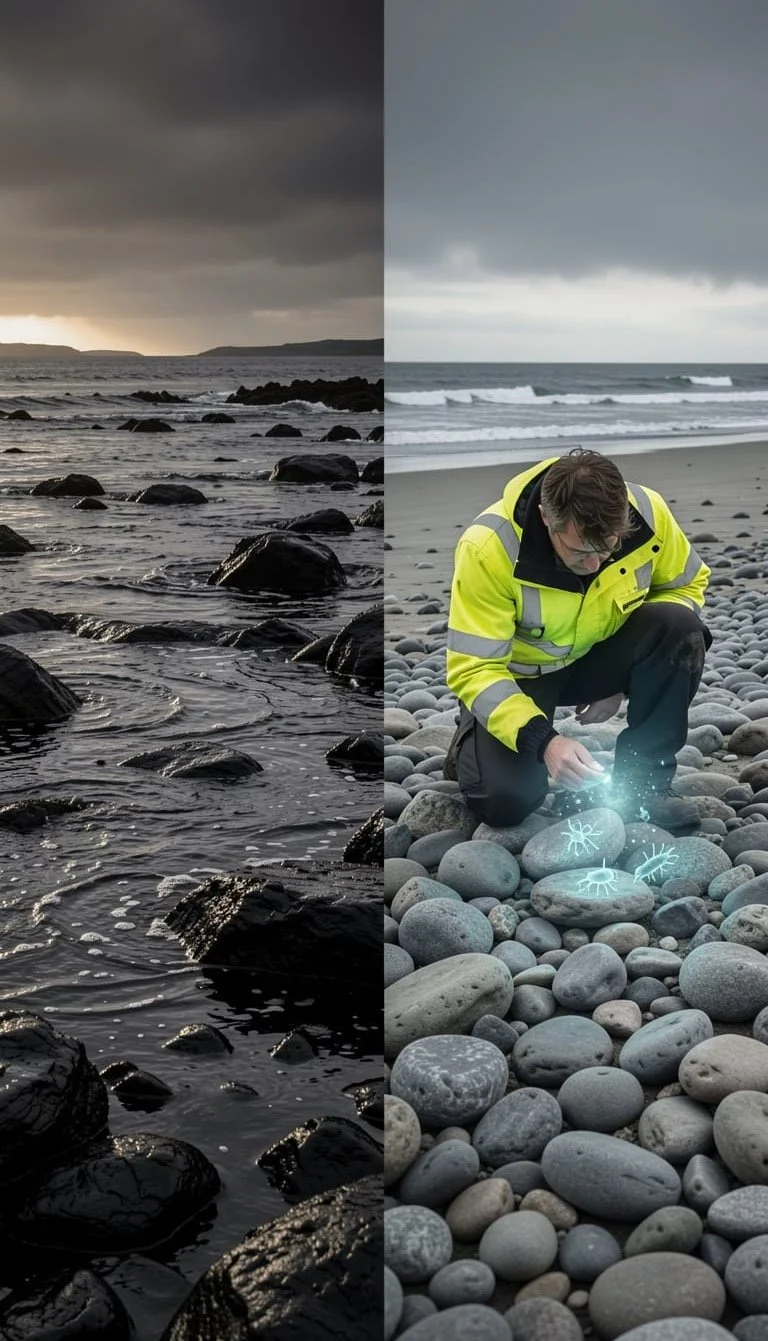
The Disaster: In March 1989, the Exxon Valdez supertanker struck a reef in Prince William Sound, Alaska. It spilled an estimated 11 million gallons of heavy crude oil into one of the most pristine and rugged marine environments on Earth, coating roughly 1,300 miles of coastline.
The Challenge: The physical cleanup was a nightmare. High-pressure hot water washing was initially used to blast the oil off the rocks, but scientists quickly realized this was essentially boiling the beach, killing the surviving marine life (like barnacles and clams) that the oil had missed. They needed a way to remove the oil without destroying the habitat. Furthermore, the freezing Alaskan temperatures meant natural biological breakdown would take decades.
The Biological Solution: Massive Biostimulation Scientists from the EPA made a crucial discovery: the beaches already contained native, cold-tolerant bacteria capable of eating the crude oil. However, these microbes were facing the exact problem we discussed in our "Myth-Busting" series. They had millions of gallons of carbon (the oil) to eat, but they were starving for nitrogen and phosphorus. They couldn't multiply.
The Execution: Feeding the Fleet The solution was biostimulation on an unprecedented scale. Engineers couldn't just spray regular garden fertilizer, as it would instantly wash away with the next tide. Instead, they used a specialized, oleophilic (oil-loving) liquid fertilizer called Inipol EAP22, alongside a slow-release granular fertilizer called Customblen. Because these fertilizers chemically clung to the oil, they stayed exactly where the microbes needed them, even underwater.
The Result: The results were staggering. Within weeks of applying the fertilizer, the treated beaches showed a dramatic visible difference. The population of oil-eating bacteria exploded. Data showed that the biological degradation of the oil occurred up to five times faster on the fertilized beaches compared to the unfertilized control areas.
While it didn't erase the tragedy of the spill, the Exxon Valdez cleanup became the largest and most successful bioremediation project in history at the time. It proved to the world that when human engineering supports natural biology, we can accelerate the healing of our most devastating mistakes.