Level 5: The Indoor Ecosystem – Vermicomposting
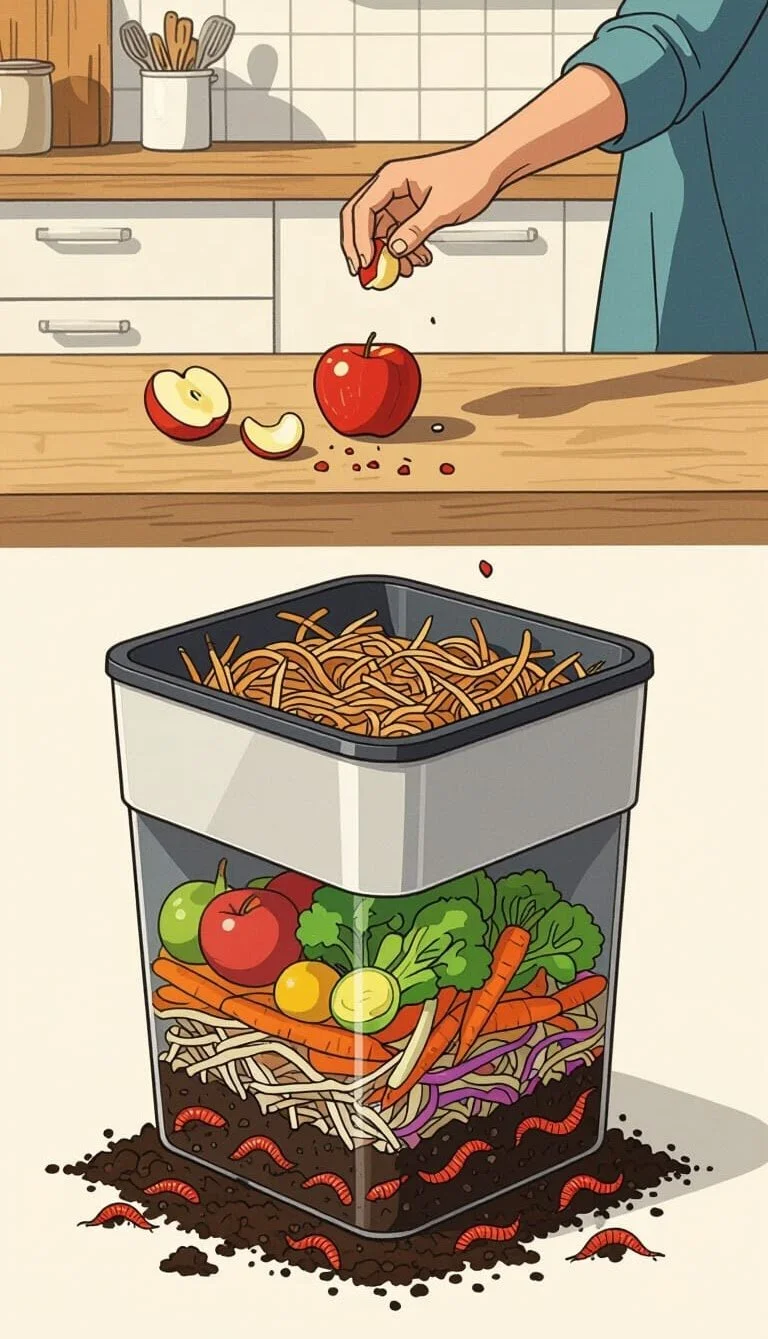
The Mission: Your kitchen produces a constant stream of high-value organic waste—coffee grounds, apple cores, and vegetable peels. Throwing them in the trash creates methane in a landfill. Trekking out to a frozen compost pile in the middle of a Montana winter isn't always appealing. Your mission is to process this waste directly inside your home, odor-free, to create the most microbially dense fertilizer on the planet. (02/13/2026)
The Science: Biological Incubation We are employing a specific worker for this job: Eisenia fetida, commonly known as the Red Wiggler worm.
Unlike the earthworms in your garden that tunnel deep into the soil, Red Wigglers are surface dwellers that thrive in dense, rotting organic matter. But here is the real science: the worms aren't just eating the food. Their digestive tracts are highly specialized bioreactors. As organic matter passes through them, it is ground up and heavily inoculated with a unique suite of beneficial bacteria, enzymes, and hormones.
The end product—worm castings (poop)—is not just fertilizer; it is a concentrated microbial inoculant that actively suppresses plant diseases.
The Protocol: The "Worm Bin" Method You are building a contained, aerobic habitat.
The Reactor: Use a dark, opaque plastic or wooden bin. Worms hate light. Drill small holes in the upper sides for ventilation—remember, this is an aerobic process. Without oxygen, it will smell. With oxygen, it smells like a forest floor after a rain.
The Bedding (Carbon Base): Fill the bin halfway with damp, shredded cardboard, newspaper, or coconut coir. This is their home and their slow-burning carbon fuel. It must be as damp as a wrung-out sponge.
The Inoculation: Add a pound of Red Wigglers. (You can order them online or get a scoop from a neighbor's bin).
The Feed (Nitrogen Fuel): Bury small amounts of your kitchen scraps under the bedding. Stick to fruits, vegetables, and coffee grounds. Strictly avoid meat, dairy, oils, and heavy citrus, as these will rot anaerobically and attract pests.
The Result: Over a few months, the worms will consume the bedding and the food scraps, converting the entire mass into dark, crumbly, rich castings. You have successfully created a closed-loop system: your kitchen waste feeds the worms, the worms produce microbial gold, and you use that gold to feed your indoor houseplants or your spring garden seedlings.