Engineering Your Inner Soil: Prebiotics and Fermentation
(07/10/2026)
The Concept: In environmental remediation, when a patch of soil is completely dead from a chemical spill, you don't just throw down some grass seed and hope for the best. You have to meticulously rebuild the soil architecture. You add compost to provide a physical structure, you inoculate it with beneficial bacteria (bioaugmentation), and you add specific nutrients to feed those bacteria (biostimulation).
Your gut is no different, especially after a round of antibiotics or years of eating highly processed, sterile food. You are the site manager of your internal bioreactor. To rebuild your ecosystem, you have to engineer the soil.
The Science: The Difference Between Probiotics and Prebiotics The health and wellness industry throws around the word "probiotic" constantly, usually attached to expensive pills. But true microbial engineering requires a two-pronged approach.
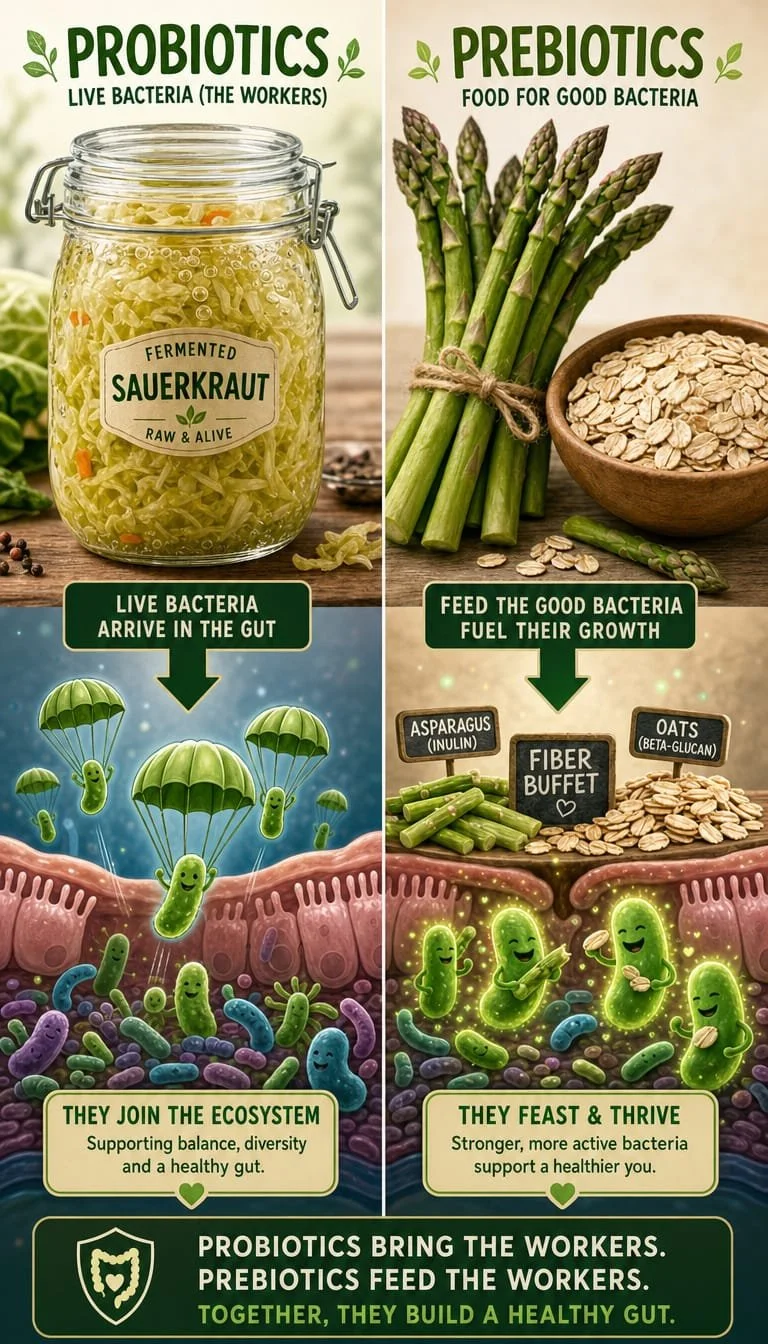
1. Probiotics (The Workers): Probiotics are the actual, living microbes. When you consume them, you are performing bioaugmentation—adding fresh workers to the site. While pills exist, the most effective and historically proven way to introduce these workers is through fermented foods. Long before refrigeration, humans preserved food by letting controlled bacteria eat the sugars and produce acid. Foods like unpasteurized sauerkraut, kimchi, kefir, and traditional yogurt are teeming with billions of live, highly adapted Lactobacillus and Bifidobacterium strains. When you eat them, you are dropping paratroopers directly into the gut.
2. Prebiotics (The Fertilizer): Dropping workers into a barren wasteland doesn't work if they have nothing to eat. This is where prebiotics come in. Prebiotics are strictly defined as food that you cannot digest, but your microbes can.
Specifically, this means Dietary Fiber. The human stomach and small intestine lack the enzymes to break down the complex carbohydrate structures found in the cell walls of plants (like beans, oats, asparagus, and garlic). So, this fiber passes intact all the way down into your large intestine.
Here, your microbial workforce attacks it. They ferment the fiber, and in doing so, they excrete Short-Chain Fatty Acids (SCFAs), particularly one called butyrate. Butyrate is the magic molecule of the gut. It reduces inflammation, repairs the intestinal lining, and acts as the primary energy source for your human colon cells. By eating fiber, you aren't feeding yourself; you are feeding the microbes that keep your physical barrier intact.
The Protocol: The 30-Plant Rule If you want a highly diverse, robust ecosystem, you have to provide a highly diverse food source. Different bacteria thrive on different types of plant fibers.
The gold standard protocol for engineering a resilient microbiome is the "30-Plant Rule." The goal is to consume 30 different types of plants every single week. This includes vegetables, fruits, nuts, seeds, whole grains, and legumes.
Eating three apples a day is great for you, but it only feeds one specific population of microbes.
Eating an apple, a handful of almonds, some black beans, and a scoop of quinoa feeds four entirely different bacterial tribes, encouraging a massive, competitive, and protective ecosystem.
The Result: By treating your diet not as calories for your human cells, but as fertilizer for your microbial workforce, you shift from being a passive passenger to an active ecological engineer. You build a biological shield that protects your mood, your immunity, and your long-term health.