Growing Our Cities: The Rise of Bio-Concrete
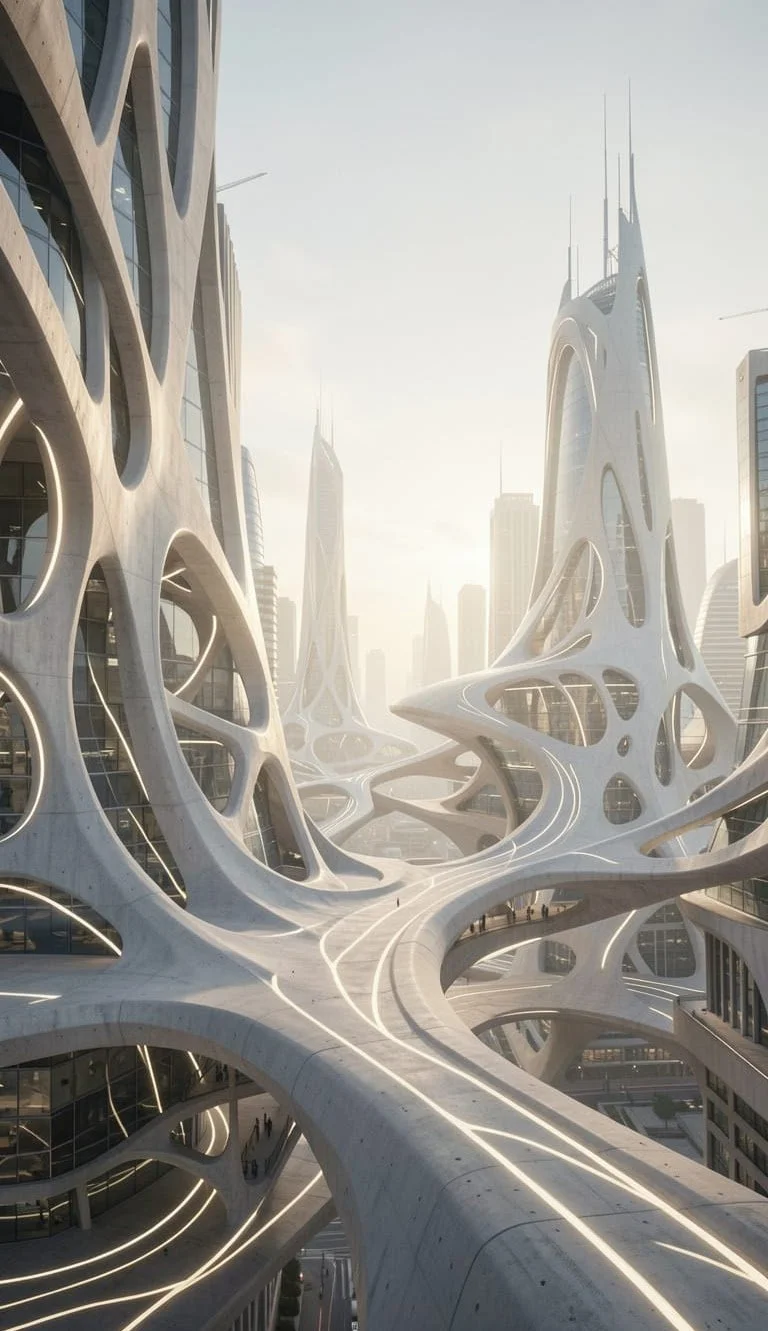
(05/01/2026)
The Concept: Concrete is the most widely used human-made material on Earth. It is the backbone of our bridges, dams, skyscrapers, and sidewalks. But traditional concrete has two massive problems: it is responsible for roughly 8% of global carbon dioxide emissions, and eventually, no matter how well it is poured, it cracks.
Water inevitably finds its way into these microscopic cracks. When that water freezes, it expands, widening the crack. If the water reaches the inner steel rebar, it causes rust, which expands and literally blows the concrete apart from the inside. Traditionally, the only solution to failing concrete is to tear it down and pour more concrete, restarting the massive carbon emission cycle.
But what if concrete could bleed, scab, and heal itself, just like human skin?
The Science: The Dormant Construction Crew Engineers are now treating concrete not as a dead material, but as a living host. During the initial mixing process at the cement plant, scientists introduce two crucial biological ingredients:
The Workers: Specialized, highly resilient bacteria (usually from the genus Bacillus). These bacteria are capable of forming incredibly tough "spores"—a dormant, shielded state that allows them to survive the extreme alkalinity and crushing pressure of mixing concrete.
The Rations: A food source, typically a biodegradable capsule containing calcium lactate (a type of sugar attached to calcium) or a specialized starch.
While the concrete remains solid and dry, the bacteria stay entirely asleep inside their microscopic bunkers. They can survive in this suspended animation for decades.
The Protocol: The Healing Trigger The magic happens only when the concrete fails.
The Breach: A crack forms in the wall, and rainwater seeps in.
The Awakening: The water dissolves the protective capsules. The sudden presence of moisture and food acts as an alarm clock. The Bacillus spores wake up, germinate into active bacteria, and immediately begin to feed on the calcium lactate.
The Secretion: As the bacteria digest the food and consume the oxygen in the water, a chemical reaction occurs. They excrete calcium carbonate—which is, fundamentally, limestone.
The Seal: The bacteria multiply rapidly, packing the crack with fresh, solid limestone from the inside out. Once the crack is completely sealed, the water supply is cut off. The bacteria recognize the dry environment, form spores again, and go back to sleep, waiting for the next crack.
The Result: By embedding this biological factory into our building materials, we create structures with drastically extended lifespans. It reduces maintenance costs, prevents catastrophic structural failures, and significantly lowers the environmental burden of the construction industry. We are no longer just building cities; we are growing them.