The End of Chlorine: Enzymatic Paper Bleaching
(05/08/2026)
The Concept: Take a look at a piece of standard printer paper. It is perfectly, brilliantly white. But paper comes from wood, and wood is brown. To get from a brown tree to a white sheet of paper, the pulp must be bleached.
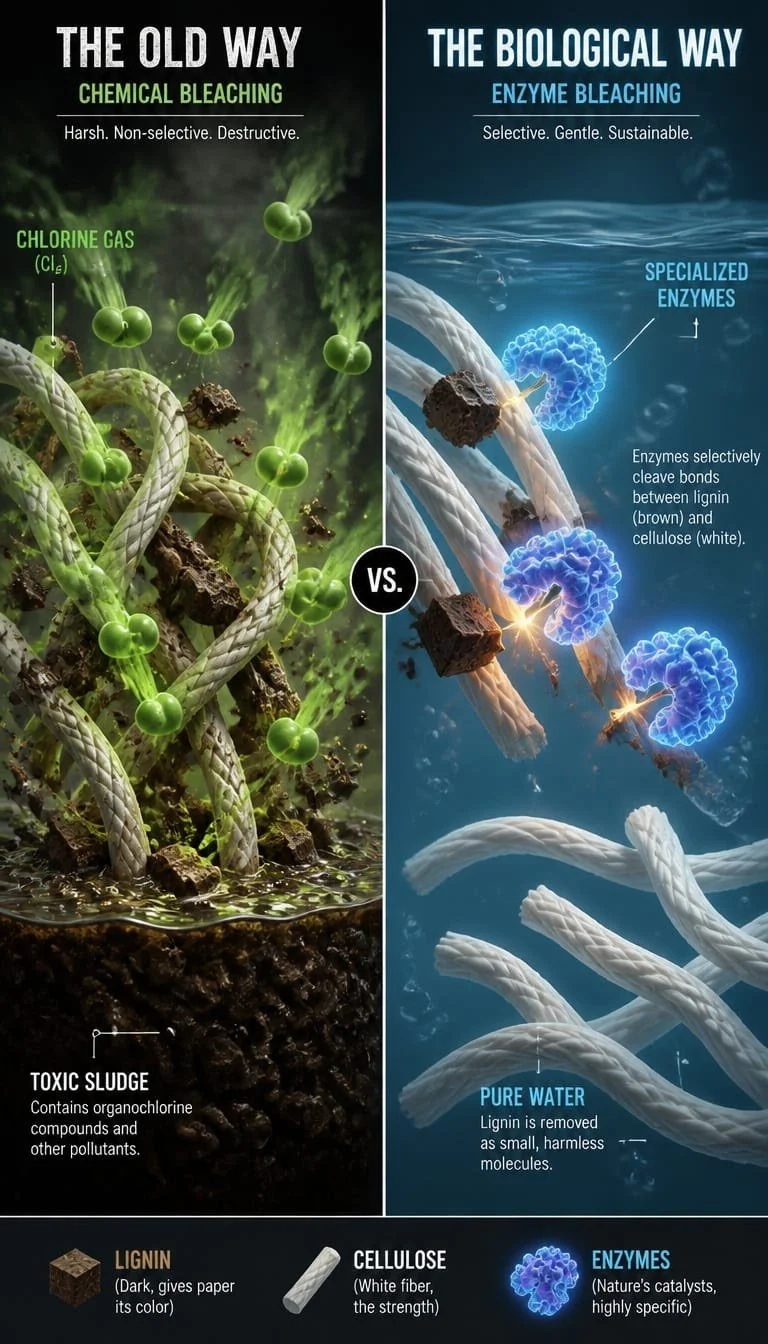
Historically, the pulp and paper industry relied heavily on elemental chlorine gas to achieve this. While chlorine is an incredibly effective bleach, it comes with a devastating environmental cost. When chlorine reacts with the organic compounds in wood pulp, it creates highly toxic byproducts, including dioxins. For decades, paper mills dumped millions of gallons of this chlorinated wastewater into rivers, causing massive dead zones and severe mutations in aquatic ecosystems. We needed a way to whiten paper without poisoning the water.
The Science: The Lignin Problem To understand the biological solution, we have to understand why wood is brown. Wood is primarily made of two things: cellulose (the white, fibrous structural material we want for paper) and lignin (a dark, tough organic polymer that acts like glue, binding the cellulose together).
To make white paper, you have to separate the lignin from the cellulose. Chlorine does this via brute force chemical burning. Biology does it with surgical precision.
The Protocol: The Xylanase Scissor Do you remember our discussion on White-Rot Fungi and how they break down cardboard? Industrial scientists looked at those exact same fungi and isolated their biological tools.
Instead of dumping toxic chemicals into the pulp, modern mills now use an enzyme called xylanase.
The Bath: The raw, brown wood pulp is pumped into a massive bioreactor tank and dosed with a concentrated solution of xylanase enzymes.
The Precision Cut: The xylanase doesn't attack the whole mixture. It specifically targets and breaks down a hemicellulose network that binds the dark lignin to the white cellulose. Think of it like using a highly specific chemical scissor to cut the biological staples holding the dark material in place.
The Wash: Because the lignin has been structurally detached by the enzymes, it can simply be washed away with water and far milder, oxygen-based brighteners (like hydrogen peroxide), rather than harsh chlorine.
The Result: This biological substitution has revolutionized the industry. It has led to the rise of TCF (Totally Chlorine Free) and ECF (Elemental Chlorine Free) paper. By replacing a toxic industrial chemical with a biodegradable fungal enzyme, mills have drastically reduced the toxicity of their wastewater, lowered their energy consumption, and saved countless downstream aquatic habitats.