The "Bioplastic" Loophole: What Does Compostable Really Mean?
(04/03/2026)
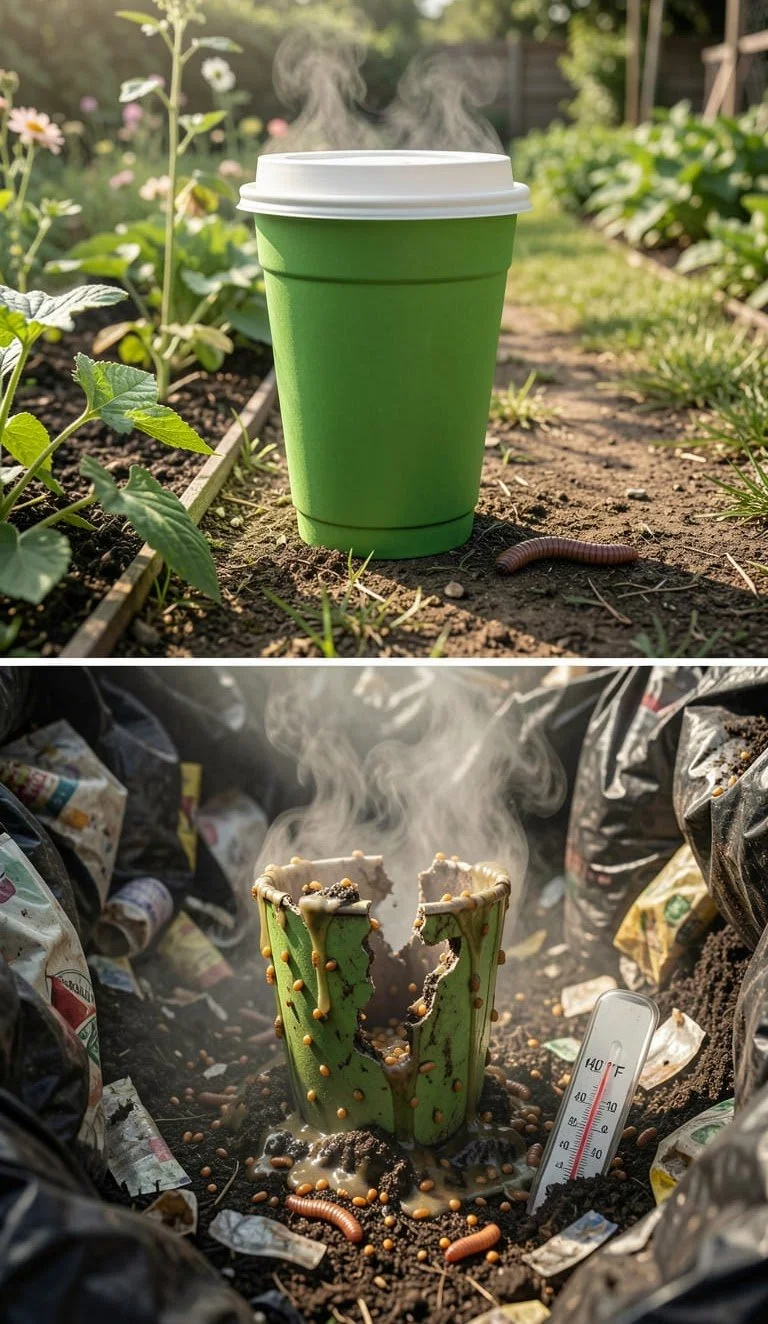
The Concept: You are at a coffee shop and you are handed an iced coffee in a clear cup that says "100% Compostable" or "Made from Plants" in bright green letters. It feels like a win. The natural assumption is that if this cup blows out of your car window or gets tossed into your backyard garden, it will harmlessly dissolve into dirt just like an apple core.
Unfortunately, this is one of the biggest misunderstandings in modern waste management. Dropping a "compostable" cup in a forest is still littering, and it might sit there for decades.
The Science: The PLA Problem Most clear bioplastics are made of PLA (Polylactic Acid). Instead of being synthesized from petroleum like traditional plastic, PLA is synthesized from the fermented sugars of corn or sugarcane. This is why it is called a "bioplastic."
However, the final chemical structure of a PLA cup is incredibly strong and stable. The microbes in the soil, the ocean, or your standard backyard compost pile simply cannot break the chemical bonds of PLA under normal conditions.
The Industrial Requirement: Heat and Hydrolysis To actually compost PLA, you need to trigger a chemical reaction called hydrolysis—using water to break chemical bonds. But for PLA, hydrolysis only initiates under very specific, extreme conditions:
Temperature: Sustained heat of at least 140°F (60°C).
Humidity: High, controlled moisture levels.
Time: These conditions must be maintained continuously for 60 to 90 days.
Your backyard compost pile (the one we built in our DIY series) might briefly hit 140°F in the dead of summer, but it won't hold that temperature for three months. The ocean, lakes, and forests certainly won't.
The only place these exact conditions exist is inside a massive, tightly controlled Commercial Composting Facility.
The Reality Check: This creates a massive loophole. When a company labels a cup "Compostable," what they legally mean is "Commercially Compostable."
If you put a PLA cup in a standard recycling bin, it melts at the wrong temperature and contaminates the entire batch of traditional plastic, ruining it.
If you throw it in the trash, it goes to an anaerobic landfill (which we covered in Article 1) where it will essentially last forever.
It only fulfills its biological destiny if your city has a dedicated organic waste collection program that trucks it to an industrial facility.
Bioplastics are a brilliant step away from fossil fuels, but until municipal waste infrastructure catches up, they are a biological lock waiting for a key that most cities don't have.