

The Carbon Harvesters: Scrubbing the Sky
(09/25/2026)
The Concept: Over the past month, we have deployed our designer enzymes against physical, localized pollution—plastics in a recycling vat, PFAS in a water treatment plant, and chemical spills on a highway. But our greatest environmental threat is an invisible, diffuse gas floating in the atmosphere: carbon dioxide (CO2).
We desperately need to pull CO2 out of the air. Traditional Direct Air Capture (DAC) facilities do this by using giant fans to blow air over harsh liquid chemical solvents. While effective, this process requires massive amounts of heat and energy to run, which ironically often generates more carbon emissions.
To solve this, we are looking at how the human body handles CO2. Every time you exhale, you are using a biological carbon-capture mechanism. Now, scientists are extracting that exact mechanism, upgrading it with AI, and scaling it up to an industrial level.
The Science: Ruggedizing the World's Fastest Enzyme Inside your red blood cells is an enzyme called carbonic anhydrase. It is one of the fastest-acting enzymes ever discovered by science. Its sole job is to grab dissolved CO2 in your tissue, convert it into a safe, transportable molecule (bicarbonate), and send it to your lungs to be exhaled. A single molecule of carbonic anhydrase can process up to a million molecules of CO2 per second.
It is a miracle of nature, but it has a fatal flaw for industrial use: it is a fragile biological protein. If you put human carbonic anhydrase into a hot, highly alkaline industrial smokestack, it denatures and falls apart instantly.
Once again, AI-driven "rational design" is the solution. Using the blueprints of the natural enzyme, synthetic biologists used AI to redesign the amino acid structure, creating a hyper-rugged, synthetic version of carbonic anhydrase. This designer enzyme retains the staggering speed of the natural version but can survive boiling temperatures, extreme pH levels, and harsh industrial solvents.
The Application: From Thin Air to Solid Stone These ruggedized enzymes are now being deployed in next-generation carbon capture facilities and industrial smokestacks around the world.
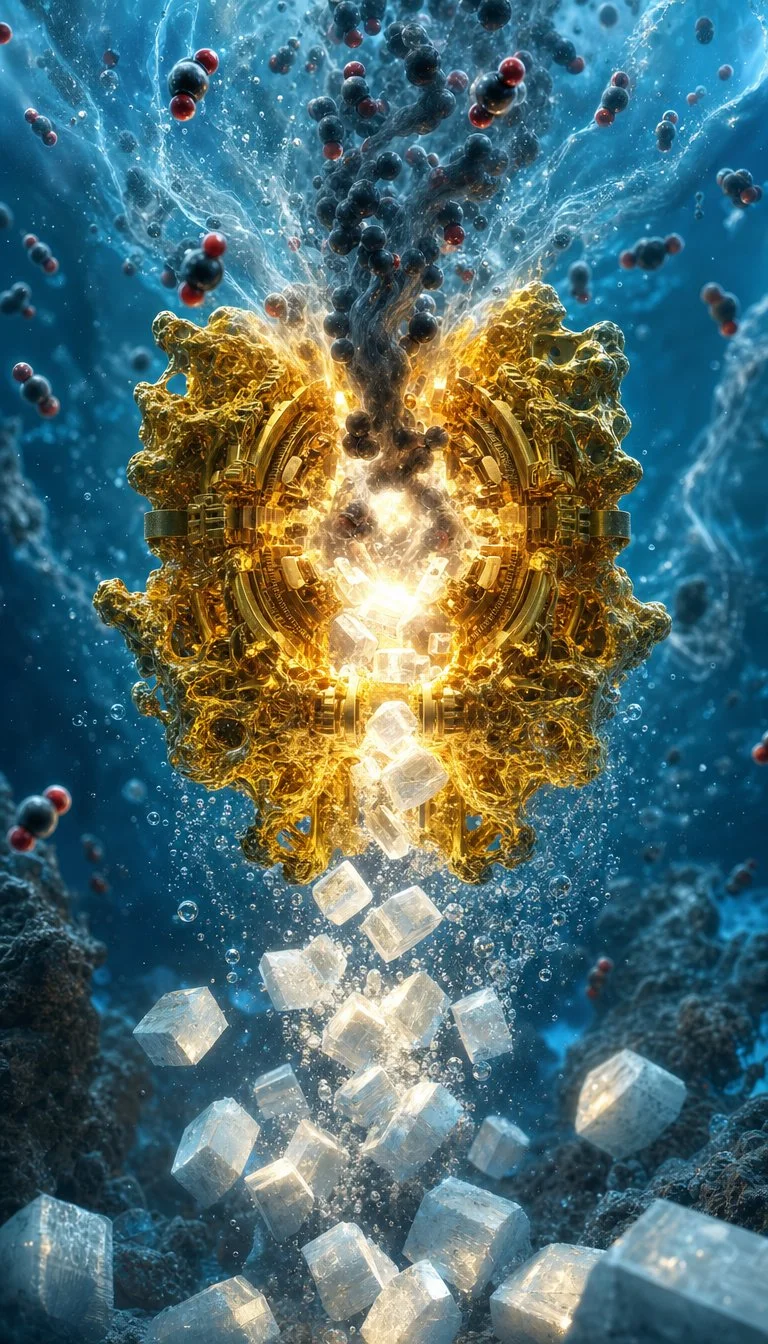
Instead of relying on extreme heat and toxic chemicals, exhaust gas is bubbled through a cool, water-based bio-reactor filled with our designer enzymes. The moment the CO2 touches the water, the enzymes snap it up at lightning speed and convert it into liquid bicarbonate.
But we don't just want to trap it; we want to lock it away forever. By introducing calcium to the mixture, the liquid bicarbonate instantly crystallizes into pure calcium carbonate (chalk/limestone).
The Result: We are fundamentally hacking the carbon cycle. We are capturing a gas that is dangerously heating our planet and using a biological catalyst to instantly mineralize it into harmless, solid rock. That rock can then be used to manufacture carbon-negative concrete for our cities, completely closing the loop. We are quite literally pulling our future building materials out of thin air.
