The Microscopic Shield: Your First Line of Defense
(06/19/2026)
The Concept: When we think of the immune system, we picture white blood cells acting like internal police officers, hunting down and destroying invading viruses and bacteria. We think of immunity as a purely human function.
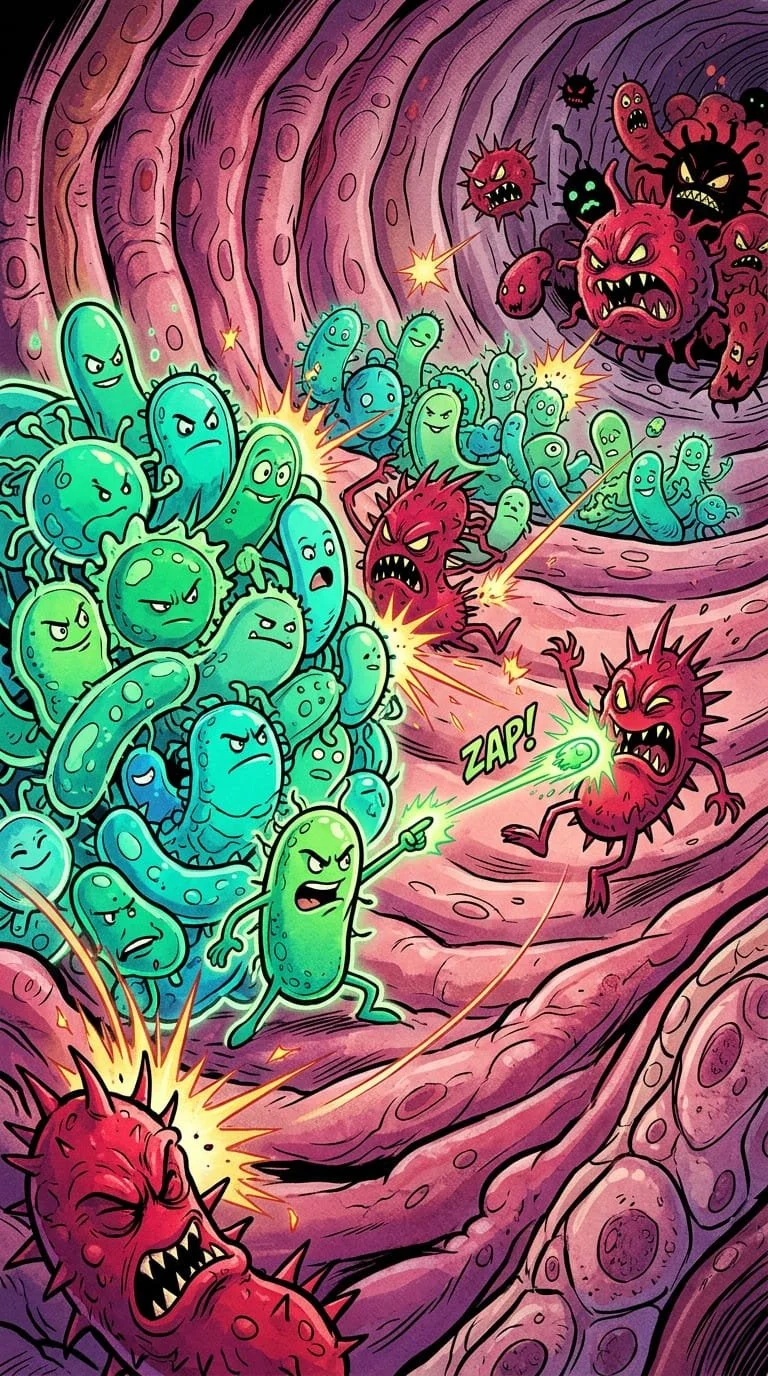
But this picture is incomplete. Your human immune cells are actually your second line of defense. The first line of defense against an invading pathogen is the dense, living shield of bacteria already occupying your body. Before an invader can attack your cells, it has to get past the locals.
The Science: Competitive Exclusion Your digestive tract, your skin, and your respiratory system are prime real estate. They are warm, moist, and nutrient-rich.
When a pathogenic bacterium (like Salmonella or C. diff) enters your body, it is looking for a place to attach to your tissue and start multiplying. This is where your healthy microbiome goes to war. The primary defense strategy is a simple biological concept called Competitive Exclusion.
No Room at the Inn: A healthy, diverse microbiome covers almost every available microscopic surface area of your intestinal lining. When a pathogen arrives, it simply cannot find physical space to attach. The "parking lot" is completely full.
Eating the Supply: The native bacteria are highly adapted to their environment. They rapidly consume all the available nutrients. The invading pathogen arrives to find no food, starving before it can establish a foothold.
Chemical Warfare: Many beneficial bacteria don't just passively block space; they actively fight. They secrete specific antimicrobial compounds called bacteriocins—essentially microscopic poisons designed specifically to kill competing bacterial strains, neutralizing the invader before your human immune system even has to react.
The Drill Sergeants: Beyond physical defense, your microbiome acts as the training academy for your human immune system.
If your immune system is bored, it becomes dangerous. Without constant low-level interaction with benign bacteria, white blood cells can become hyper-reactive, attacking harmless proteins (causing severe allergies) or attacking your own tissue (leading to autoimmune diseases).
The trillions of beneficial microbes constantly "bump" against the immune receptors in your gut lining. This continuous, low-level signaling acts like a sparring partner, training your immune cells to recognize the difference between a harmless neighbor and a deadly threat, keeping the system sharp and preventing inflammatory overreactions.
The Reality Check: A robust immune system isn't just about taking Vitamin C or having strong white blood cells. It requires maintaining a heavily guarded, fiercely competitive microbial border wall. When we strip that wall away, we leave the gates wide open.