The Municipal Stomach: Turning City Waste into Power
(03/20/2026)
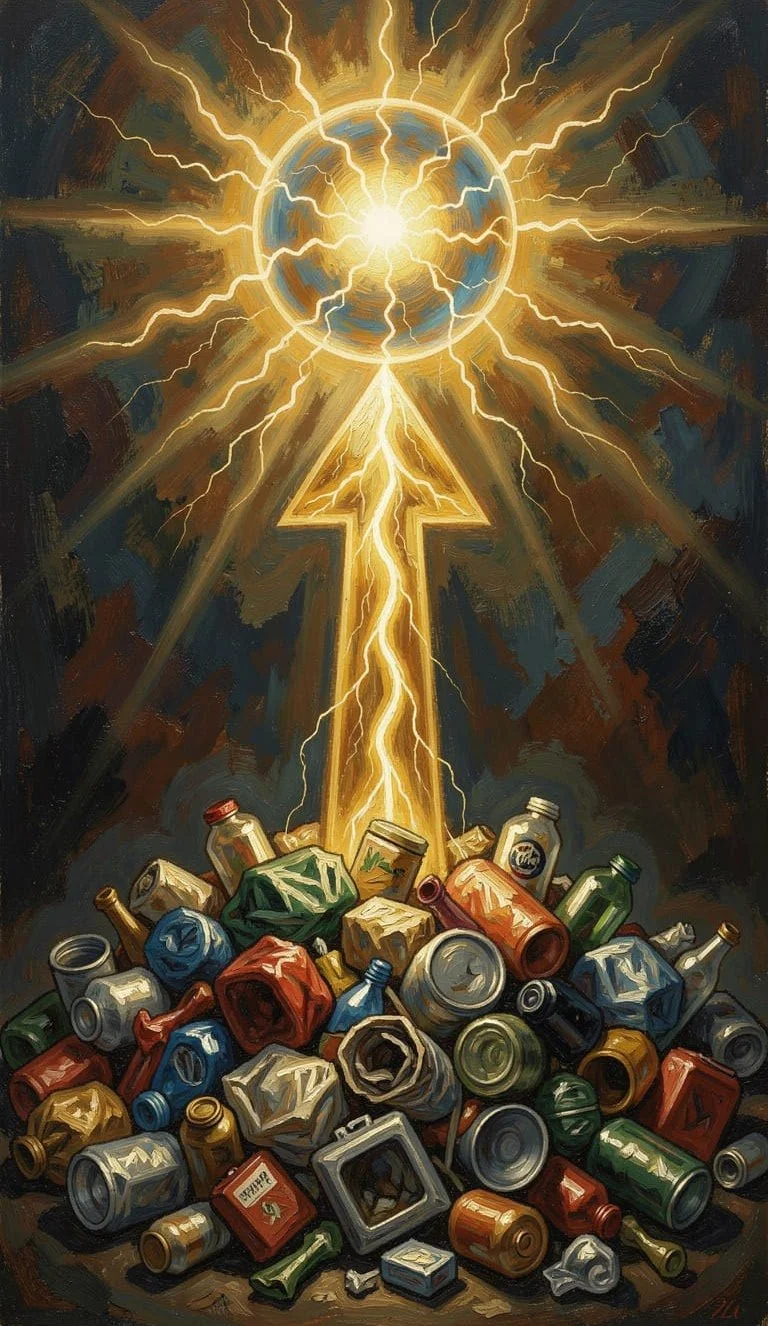
The Concept: If a landfill is a vault, an Anaerobic Digester is a stomach. Instead of trying to stop the biological breakdown process, cities, wastewater treatment plants, and large farms are increasingly building massive, sealed tanks to encourage it. By perfectly controlling the environment, they can take thousands of tons of food scraps, agricultural waste, and organic sludge, and turn it into two incredibly valuable resources: nutrient-rich fertilizer and renewable electricity.
The Science: The Four Stages of Digestion Inside these massive, heated, oxygen-free tanks, a highly choreographed microbial relay race takes place. It requires four distinct groups of microorganisms working in a precise sequence. If one group fails, the entire system crashes.
Hydrolysis (The Breakers): Raw food waste is too complex for most bacteria to eat directly. The first group of microbes secretes enzymes to break down large, insoluble polymers (like carbohydrates, fats, and proteins) into simple, soluble sugars, fatty acids, and amino acids.
Acidogenesis (The Fermenters): The next group of acid-forming bacteria takes those simple molecules and ferments them, converting them into volatile fatty acids (VFAs), ammonia, and carbon dioxide. (This is chemically similar to what happens when milk goes sour).
Acetogenesis (The Prep Crew): A third group of bacteria eats the VFAs and converts them specifically into acetic acid (the main component of vinegar), along with more carbon dioxide and hydrogen gas.
Methanogenesis (The Gas Producers): Finally, a unique group of microorganisms called methanogens (which belong to the ancient domain of Archaea, not bacteria) take the stage. They consume the acetic acid and hydrogen and produce the final prize: Methane (CH₄).
The Result: Biogas and Digestate Unlike a landfill where methane slowly leaks out over decades as a harmful greenhouse gas, a municipal digester is designed to capture the gas rapidly and efficiently. This biogas is collected at the top of the tanks and piped directly into generators to create electricity for the city grid, or it is purified into renewable natural gas (RNG) to fuel the city's garbage trucks.
What happens to the physical waste left at the bottom of the tank? It becomes a wet, nutrient-dense slurry called digestate. Because pathogens and weed seeds have been killed by the heat and lack of oxygen, this digestate is dried and sold back to local farmers as a high-grade biological fertilizer, perfectly closing the loop. We've effectively turned a municipal pollution problem into a localized power plant.