The Alchemical Loop: The Second Life of Water with Greywater Bio-filtration
(10/24/2025)
Welcome back. In our last article, we tackled the most challenging household waste stream: blackwater. By separating and processing it at the source, we turned a liability into fertilizer and energy. But what about the rest of the water? The water from our showers, sinks, and laundry, known as greywater, accounts for 60-75% of total household water use. To treat this slightly-soiled water with the same energy-intensive process as blackwater is an immense waste.
In our closed-loop city, we see greywater not as waste, but as a readily available resource. The key is to treat it intelligently, locally, and biologically.
Step 1: Separate Plumbing, Local Treatment
Just as we separated urine from solids, we separate greywater from blackwater. Every building is constructed with two distinct drain lines. While the blackwater is sent to the bioreactor, the greywater is piped to a local, building-scale treatment system. This decentralized approach saves the enormous energy cost of pumping millions of liters of water to a central plant.
Step 2: The Living Machine
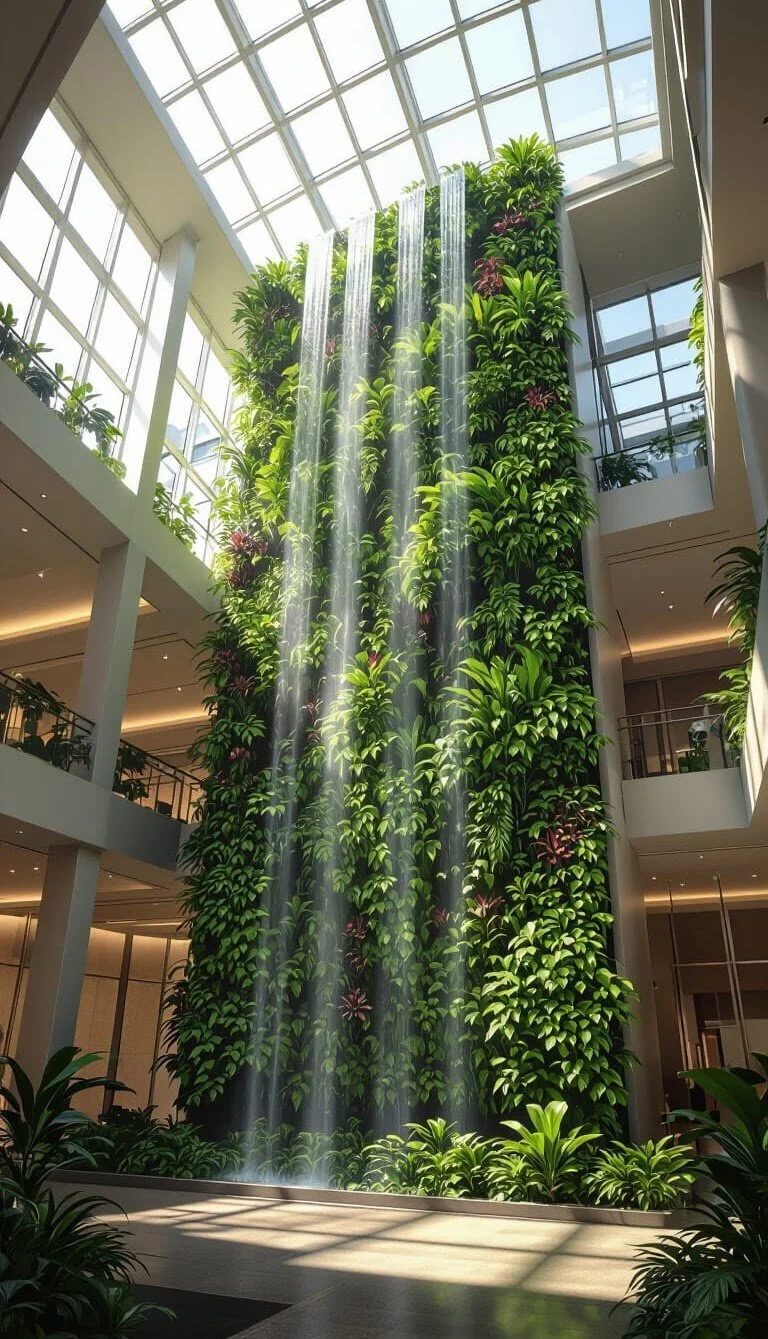
The heart of our greywater recycling is the "Living Machine" or "Water Wall." This is a self-contained, vertical, hydroponic ecosystem integrated directly into the building's architecture—often as a stunning, multi-story green wall in the central atrium.
How it Works: Greywater is first passed through a simple mechanical filter to remove hair and lint. Then, it is slowly trickled down from the top of the living wall. The water flows through a porous substrate of gravel and sand, which houses the roots of a diverse array of water-purifying plants (like reeds, canna lilies, and ferns).
The Biological Alchemy: The real work is done by a dense biofilm of beneficial microorganisms that colonize the plant roots and substrate. These microbes rapidly consume the organic matter in the water—soaps, detergents, skin cells, and other impurities—effectively cleaning the water. The plants, in turn, absorb the dissolved nutrients released by the microbes. It is a beautiful, symbiotic, and nearly silent purification process.
Step 3: Polishing and Redistribution
The water that emerges at the bottom of the living machine is clean and clear but not yet potable. It undergoes a final, simple "polishing" step.
UV Sterilization: The water is passed through a tube containing an ultraviolet (UV) lamp. The UV-C light instantly neutralizes any remaining bacteria or pathogens without adding any chemicals to the water.
This clean, non-potable water is now ready for its second life. It is stored in a dedicated tank and redistributed throughout the building for a variety of uses:
Toilet Flushing: Providing the half-liter of water needed for our vacuum-flush toilets.
Urban Agriculture: Irrigating the building's vertical farms and community gardens.
Laundry: Serving as the primary water source for washing machines.
Cleaning and Maintenance: Used for washing floors and outdoor spaces.
A System with Benefits Beyond Water
This decentralized, biological approach does more than just save water. The living walls are beautiful architectural features. They improve indoor air quality, reduce ambient noise, and provide a tangible, daily connection to the living systems that sustain the city's inhabitants.
By treating greywater as a resource to be purified on-site, we reduce the load on our potable water systems by over 50%, save immense amounts of energy, and create a healthier, more beautiful urban environment.
Having now closed the water and nutrient loops from the bathroom, we turn our attention to the kitchen. Join us next time as we tackle the challenge of organic food waste, turning every scrap and peel into a new resource.