

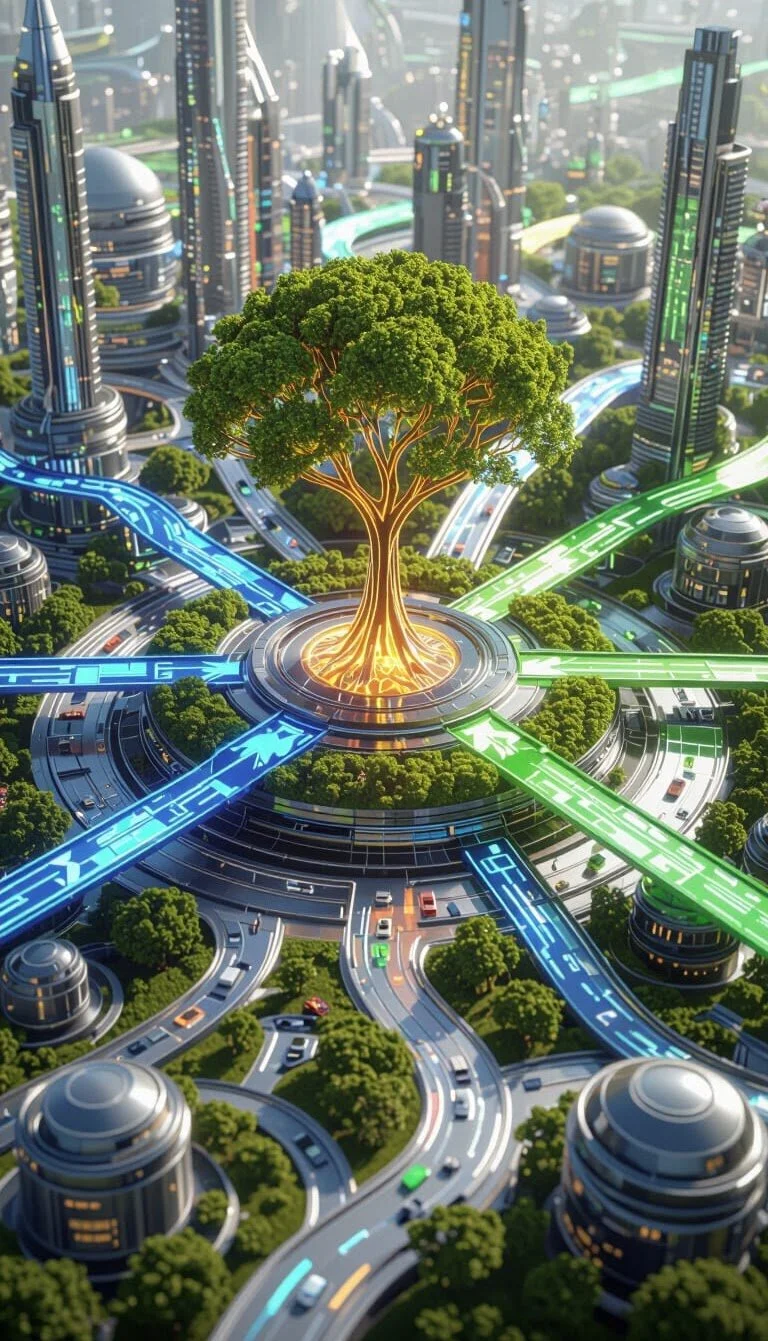
The Grand Synthesis: The Metabolism of the Closed-Loop City
Welcome to the finale of "The Alchemical Loop." Until now, we have looked at the pieces of the puzzle. Today, we put them together. When we connect the water, waste, energy, and air systems, a remarkable pattern emerges. The city ceases to be a static structure and becomes a metabolic entity. It eats, breathes, circulates, and grows, powered entirely by its own byproducts.
Here is the master blueprint of our city's metabolism:
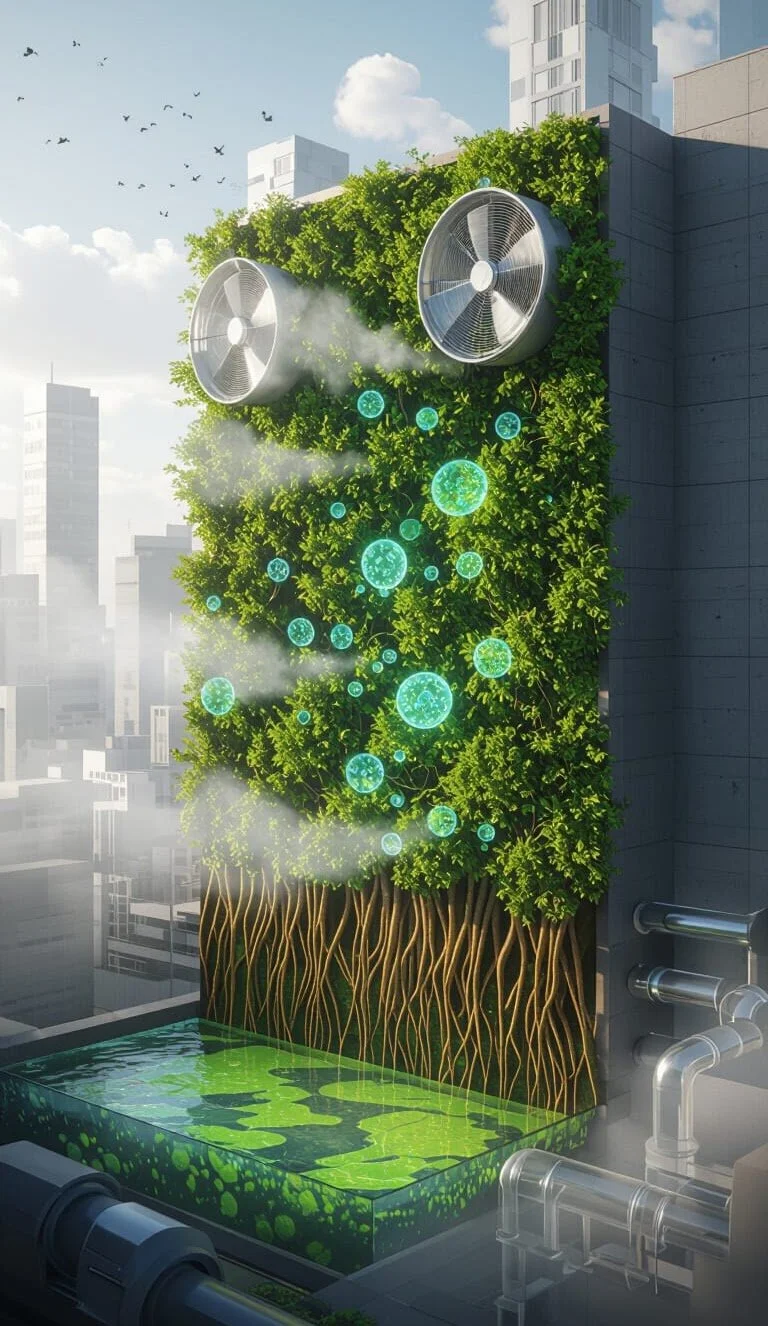
The Alchemical Loop: Mining the Air
Welcome back. Today we tackle the invisible waste: the air itself. In a closed-loop city, the atmosphere is constantly being burdened. Humans and industries exhale Carbon Dioxide (CO₂). Materials off-gas Volatile Organic Compounds (VOCs). Cooking and machinery create odors and particulates.
In the linear world, we rely on the vastness of the planetary atmosphere to dilute these poisons. In our city, we do not dilute; we capture and transform. We treat the air not just as a medium for breathing, but as a gaseous mine filled with carbon and nutrients.

The Alchemical Loop: Neutralizing the Unrecyclable
Welcome back. We have successfully designed systems to turn human waste, greywater, food scraps, and packaging into clean water, energy, fertilizer, and new materials. But what about the materials that can't be put into these loops? What about chemical solvents, biological cultures, expired pharmaceuticals, heavy-metal contaminants, and the "forever chemicals" (PFAS) in industrial lubricants?
These materials are the city's poison. They cannot be composted, recycled, or flushed. A closed loop's-integrity is defined by how it handles its most toxic components. The goal is not "safe storage"—which just passes the problem to a future generation—but complete, definitive neutralization and elemental recovery.