


Spaceship Earth: Installment 1 - The Material Ledger
Welcome to the largest closed-loop life support system known to exist.
When engineers design a spacecraft, they must pack every gram of water, oxygen, and carbon the crew will need for the journey. Earth is no different, except our journey has lasted 4.5 billion years, and the crew size is currently in the trillions.
Aside from a steady rain of micrometeorites and the slow bleeding of light gases like hydrogen from our upper atmosphere, Earth’s mass is strictly finite. We operate on a fixed atomic budget. To survive, the planet has evolved a series of perfect, automated recycling systems known as Biogeochemical Cycles. This is the planet's Material Ledger, and it never misses a fraction of a gram.
Here is how the three most critical accounts are balanced.
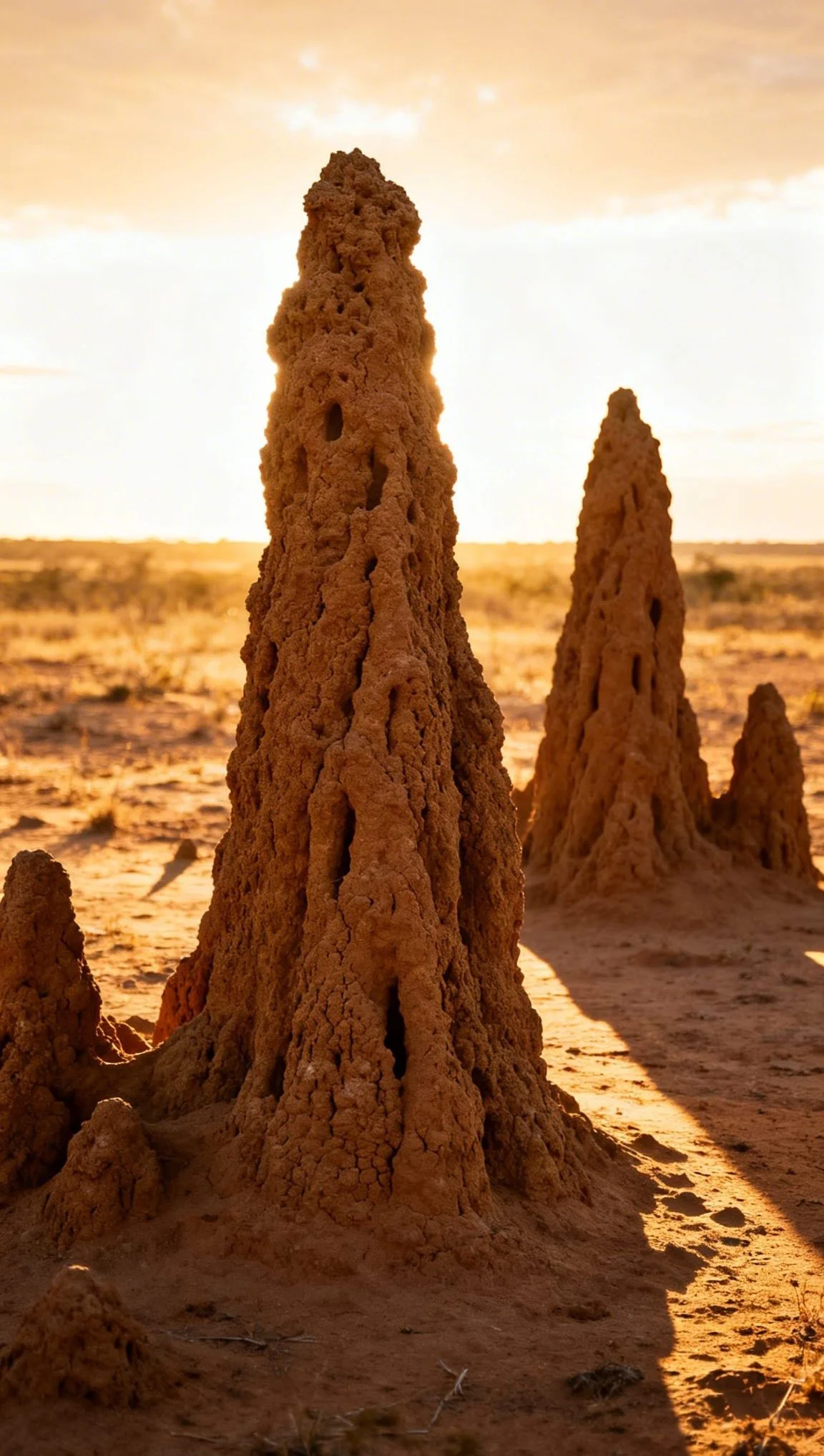
Loops in the Wild: Case Study 4 - The Termite Mound
The Subject: The mounds of the Macrotermes termite species in sub-Saharan Africa. The Analog: Biomimetic architecture and closed-loop agriculture.
To a casual observer, a termite mound is just a pile of dirt. To a structural engineer, it is a highly sophisticated, self-regulating lung and agricultural facility. The termites do not actually live in the towering spire; they live in the subterranean nest below it. The mound is an industrial organ designed to manage heat, humidity, and gas exchange for a population of millions.
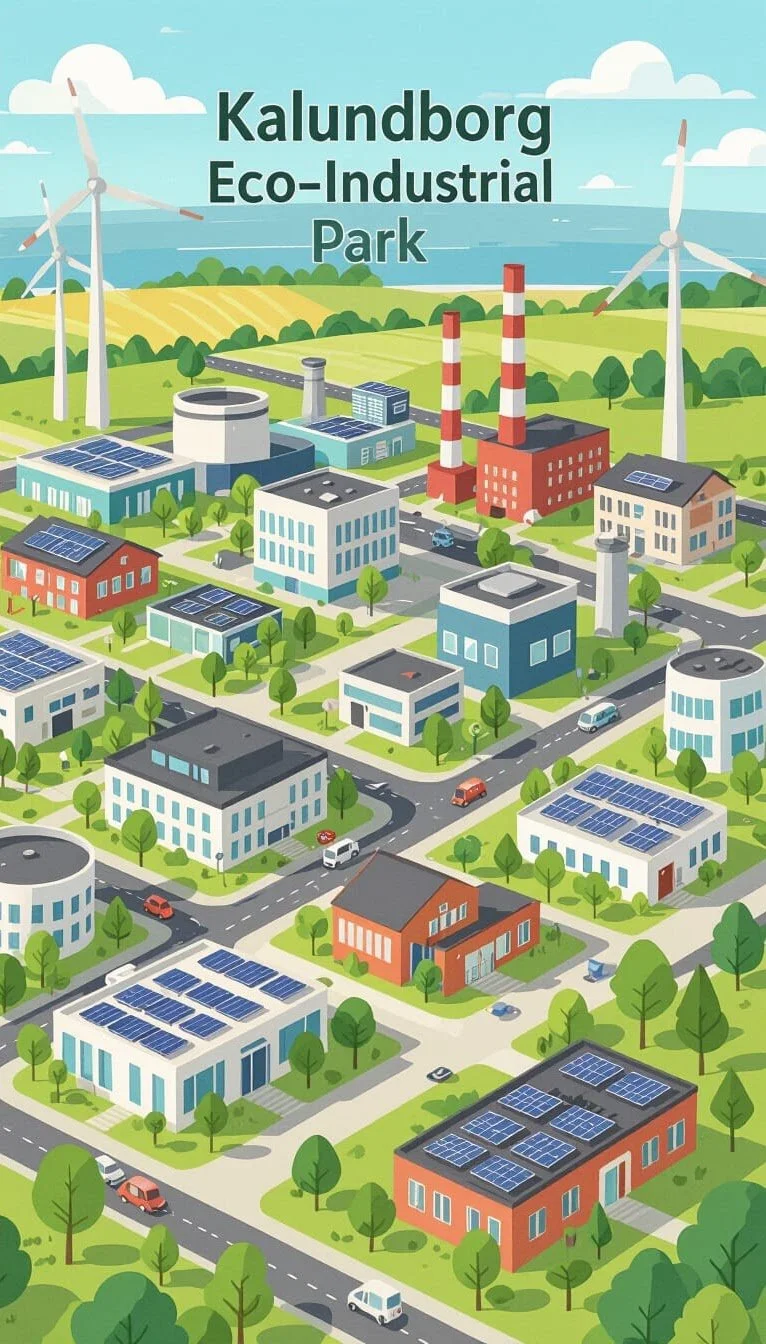
Loops in the Wild: Case Study 3 - Kalundborg Symbiosis
The Subject: Kalundborg Eco-Industrial Park, Denmark. The Analog: The "Industrial Ecology" blueprint.
Kalundborg is the world's most famous and successful example of industrial symbiosis. It is a network of separate companies—a power station, an oil refinery, a pharmaceutical plant, a plasterboard manufacturer, and the local municipality—that act like organs in a single body. They trade water, energy, and solid materials. One facility's exhaust is another facility's raw material.