Weekly Update: Project Clean Up Newsletter - Vol. 1, Issue 2
Date: June 14, 2025
Beyond "Forever": Tackling the Next Generation of Chemical Challenges
Welcome back to the Project Clean Up (PCU) weekly newsletter! Last week, we introduced our mission: to revolutionize waste management by actively developing solutions for persistent chemicals. This week, we're diving deeper into the evolving landscape of "forever chemicals," highlighting why our proactive scientific approach is more critical than ever.
The PFAS family (Per- and Polyfluoroalkyl Substances) is vast, and as awareness of their persistence and potential impacts grew, industry often sought alternatives. This led to the development of "replacement chemicals" – substances designed to achieve similar performance without the longer chain lengths of legacy PFAS like PFOA and PFOS. A prime example is GenX.
While these replacements were intended as safer options, the reality is more complex. Many still retain the incredibly stable carbon-fluorine (C-F) bonds that define PFAS, meaning they too persist in the environment. We've seen firsthand how GenX, despite being a shorter-chain compound, has become a significant contaminant in water sources globally. This underscores a crucial point: simply replacing one persistent chemical with another is not a sustainable solution.
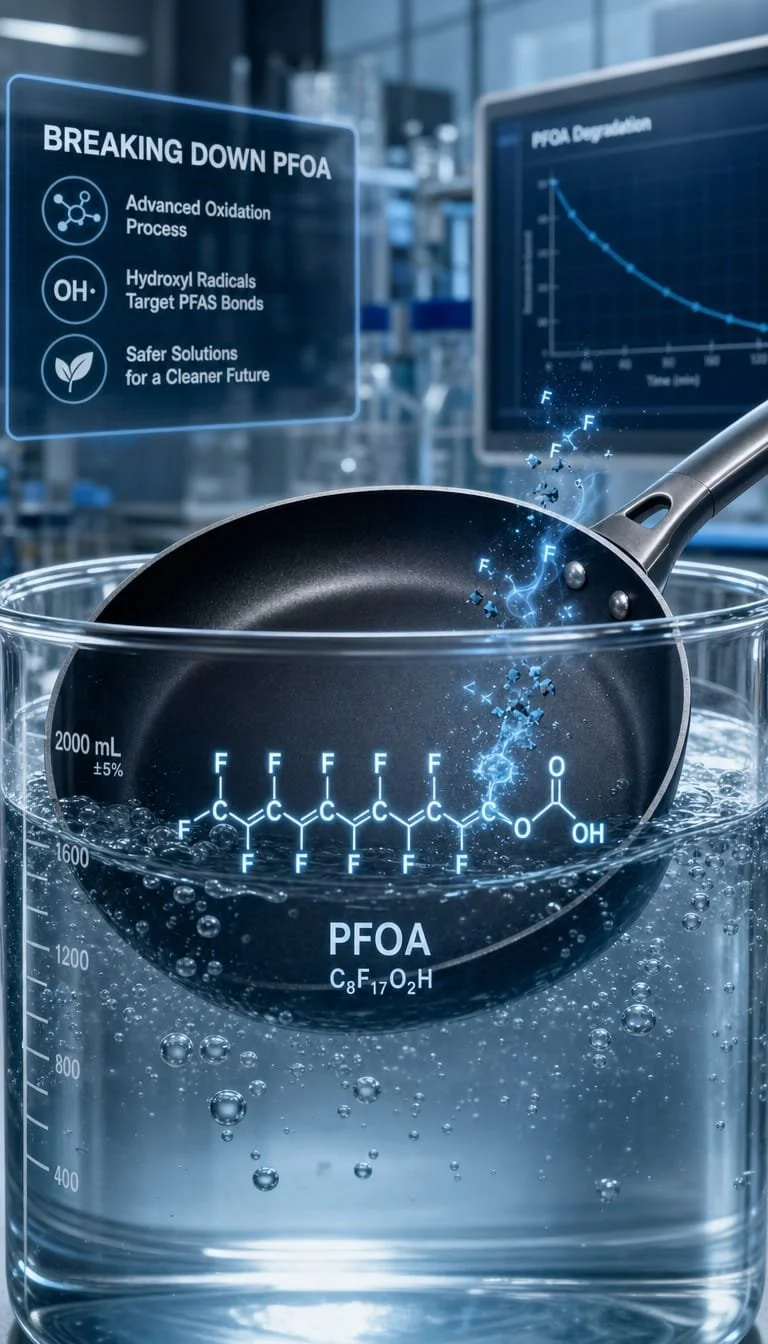
At Project Clean Up (PCU), our laboratories are dedicated to breaking this cycle. We are researching and developing methods to degrade all generations of these fluorinated compounds, including newer ones like GenX. Our advanced catalytic systems, including our Lewis acid-mediated defluorination and iron complex chemistry, are designed to tackle the fundamental challenge of the C-F bond, ensuring that even the latest iterations of these materials can be safely managed at their end-of-life.
Our commitment extends beyond just cleanup; it's about pushing for a future where materials are designed with degradation in mind from the outset. Join us at projectcleanup.com to learn more about our science and how you can be part of this vital mission. Remember, proper disposal is the first and most critical step in enabling our work to protect our planet.
Next week, we'll introduce you to another fascinating aspect of advanced materials!