Bypassing the Dumpster – The 2026 Guide to Apartment Sustainability
From the Desk of Project Clean Up (05/22/2026)
Living in an apartment often feels like being at the very end of a one-way street. Goods come in, and waste goes into the municipal bin, never to be seen again. If you don't have the luxury of a backyard compost pile or a spacious garage for sorting recyclables, the system is designed to make you fail.
Fortunately, the market has responded. Several innovative organizations are building the "invisible infrastructure" we need, offering services that intercept waste at your front door before it ever reaches the landfill.
1. The Interceptors: Ridwell and Doorstep Recovery
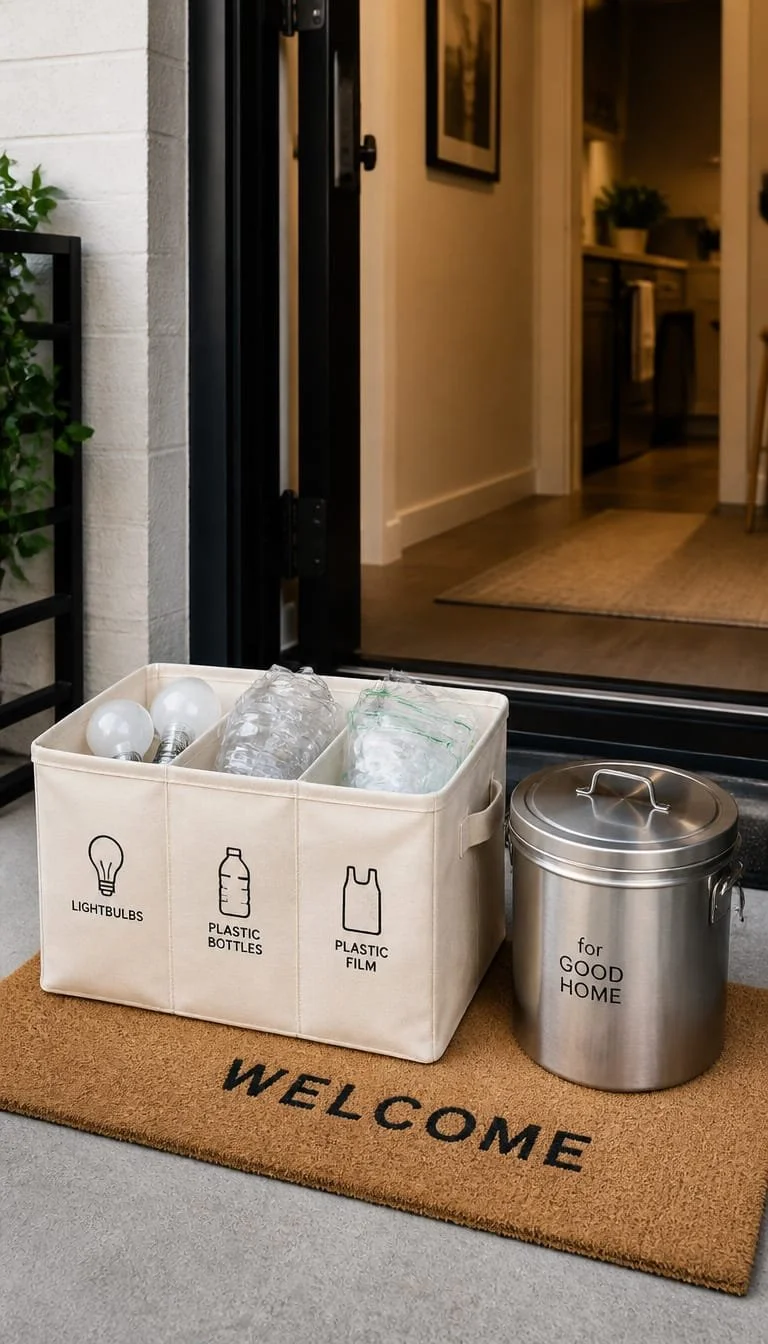
Standard municipal recycling is notoriously limited, often rejecting plastic films, batteries, textiles, and clamshell packaging. For an apartment dweller, these "hard-to-recycle" items quickly consume space and inevitably end up in the trash. Companies like Ridwell operate as doorstep interceptors. For a subscription fee, they provide you with designated bags for these specific, difficult materials and pick them up directly from your door. They bypass the inefficient municipal sorting facilities entirely, routing materials directly to vetted partners who turn plastic film into composite decking or safely recover heavy metals from batteries. It is Point-of-Origin sorting without the spatial burden.
2. The Upstream Solution: Loop and Circular Packaging
As we discussed in previous issues, the best way to handle synthetic packaging is to prevent it from entering your apartment in the first place. Loop (created by TerraCycle) is pioneering the circular delivery model. Instead of buying shampoo or detergent in single-use plastic, Loop partners with major brands to deliver everyday goods in durable, reusable containers. When you are finished, you return the empty containers (via pickup or drop-off points). The containers are professionally cleaned and refilled. By treating packaging as an asset rather than trash, Loop effectively removes the "volume equation" from the apartment entirely.
3. The Biological Network: ShareWaste and Community Composting
Wet organic waste is the primary source of apartment odors and landfill methane. If you cannot compost on a balcony, the solution is crowdsourcing. Platforms like ShareWaste act as a matchmaking service for biological output. The app connects apartment dwellers (who have food scraps) with local neighbors, community gardens, or urban farmers who have active compost bins or chickens. You simply freeze your scraps in a container to prevent odor, and drop them off locally once a week. It transforms biological waste from a domestic nuisance into a valuable community resource.
The Power of the Network
We are still pushing for the day when the apartment itself manages its own output via advanced materials and ambient chemistry. But until that infrastructure is built, we must rely on logistics. By utilizing doorstep recovery, circular packaging, and community networks, the modern apartment tenant can successfully construct a functioning Micro-Loop today. The tools are available; we simply have to plug into them.