The Virtual Power Plant – Orchestrating the Decentralized Grid
From the Laboratories of Project Clean Up (07/03/2026)
Imagine an apartment building with a fully charged Sodium-Ion battery in the basement. It is 5:00 PM on a blistering summer day. Across the city, millions of people come home and turn on their air conditioning. The traditional utility company panics as demand spikes, preparing to burn thousands of gallons of fossil fuels to keep the grid from collapsing.
This is where the Virtual Power Plant (VPP) steps in.
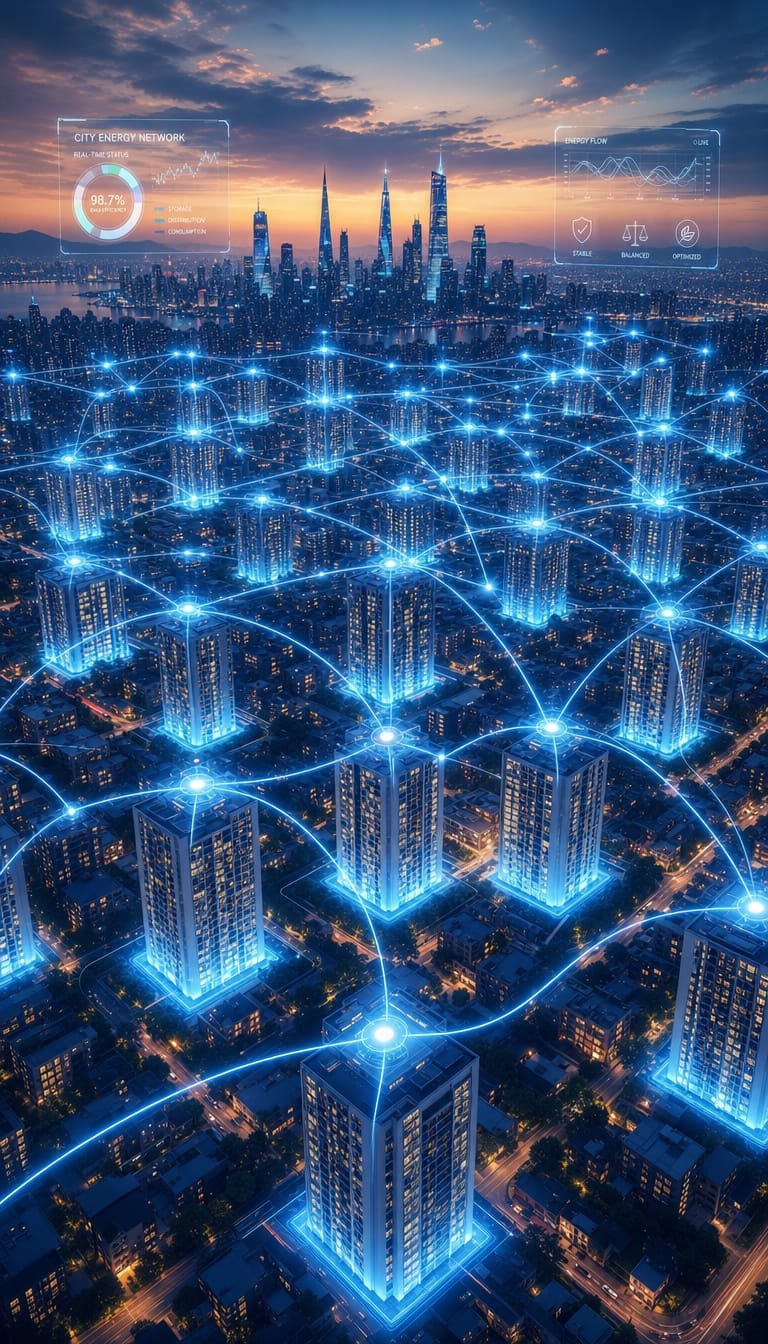
A VPP is not a physical building with smokestacks. It is a cloud-based artificial intelligence system that aggregates Decentralized Energy Resources (DERs)—which include apartment battery banks, rooftop solar arrays, and even plugged-in electric vehicles.
The Orchestration of the Swarm
Instead of turning on a gas plant, the utility sends a digital signal to the VPP. In a fraction of a second, the VPP communicates with thousands of participating apartment buildings across the city. It tells Building A to stop pulling power from the grid and run exclusively on its basement battery. It tells Building B, which has excess solar power, to instantly discharge a few kilowatts back into the grid.
By pulling a tiny amount of energy from thousands of localized points simultaneously, the VPP effectively "generates" the exact same amount of power as a massive coal plant, but it does so silently, instantly, and with zero carbon emissions.
The Economic Flip: From Consumer to Supplier
For the apartment tenant and the building owner, the VPP changes the fundamental economics of housing.
Historically, you pay the utility company for the energy you consume. Under a VPP agreement, when the utility draws power from your building’s battery during a peak event, they pay you. The building is compensated for providing a critical stabilizing service to the grid.
This revenue stream fundamentally alters the capital expenditure equation we discussed earlier this spring. The cost of installing a Sodium-Ion bank in the basement is no longer just an "emergency backup" expense; it is a revenue-generating asset that pays for itself over time by engaging in energy arbitrage—storing power when it is cheap (nighttime) and selling it back when it is expensive (peak hours).
The 2026 Vision: The Symbiotic City
At Project Clean Up (PCU), we view the VPP as the ultimate expression of the Micro-Loop philosophy applied at scale. We are taking isolated, decentralized units and linking them into a resilient, symbiotic network. If one neighborhood is damaged by a storm, the VPP routes stored power from the surrounding un-damaged blocks to keep critical infrastructure alive. We are building a grid that cannot be broken because it has no single center to break.