

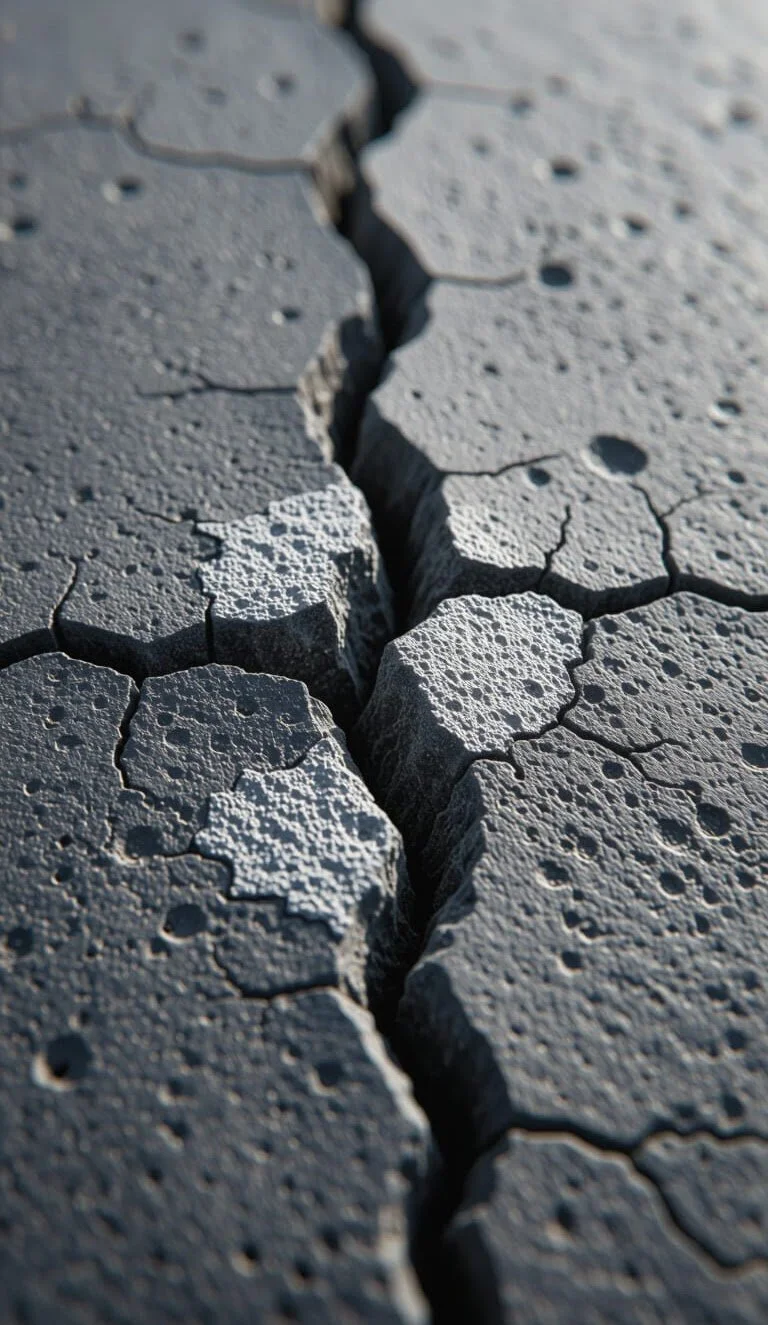
Self-Healing Concrete – The Future of Durable and Sustainable Infrastructure
As the foundation of our modern world, concrete is indispensable. Its durability, however, is compromised by inevitable cracking caused by environmental stress, traffic loads, and temperature fluctuations. These micro-cracks allow water, oxygen, and corrosive agents to penetrate, leading to the decay of internal steel reinforcement and, eventually, structural failure. Self-healing concrete offers an ingenious solution: a material engineered to autonomously repair its own damage. This is often achieved through bio-mineralization, where specialized, dormant bacteria, embedded within the concrete, activate upon contact with water and oxygen in a new crack, producing calcium carbonate (limestone) to seal the flaw. This process arrests deterioration, extends the life of the structure, and prevents costly repairs.
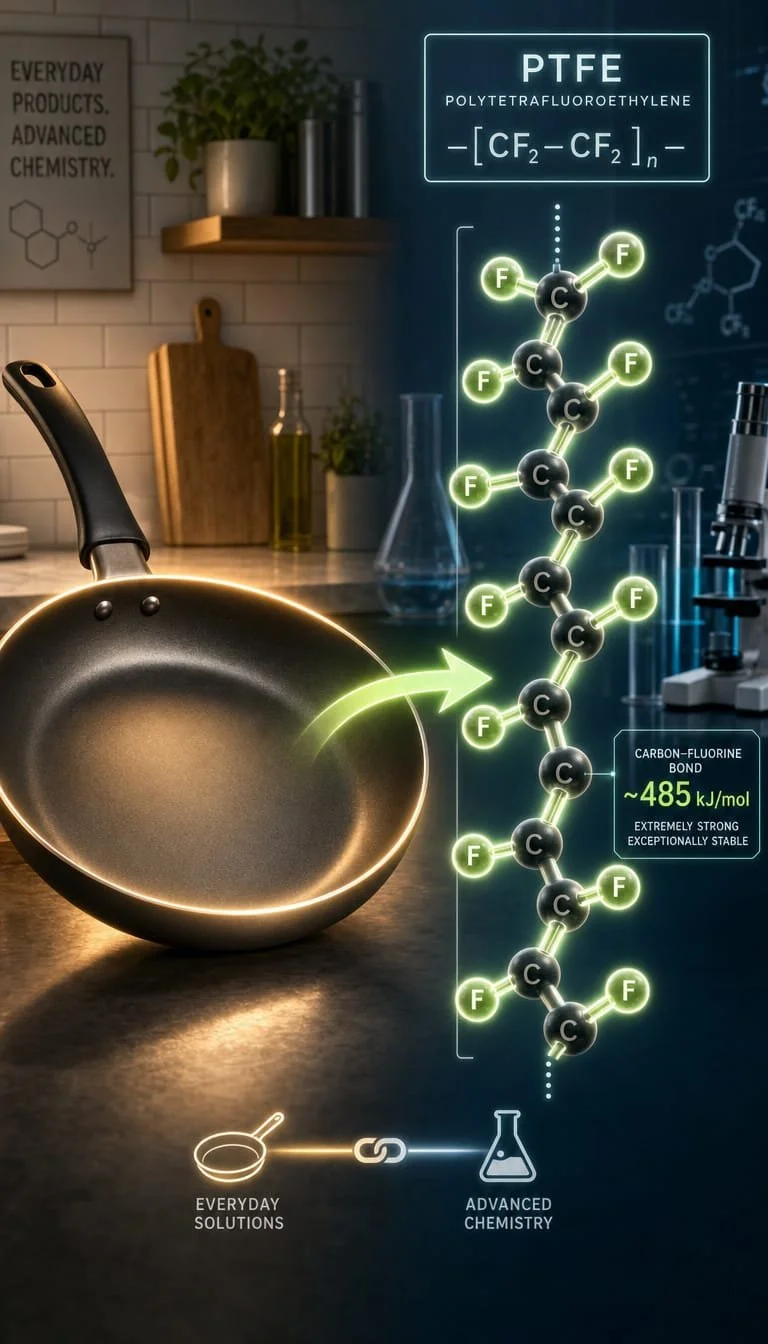
Teflon (PTFE) – The Non-Stick Revolution and Its End-of-Life Challenge
When we think of a "forever chemical," we often picture something insidious and invisible. But Polytetrafluoroethylene (PTFE), most famously known as Teflon, is a tangible example of a fluoropolymer that has been a part of our daily lives for decades. Discovered by accident, PTFE's unique properties—its extremely low friction coefficient, exceptional chemical inertness, and high heat resistance—made it a revolutionary material. It is a polymer of repeating tetrafluoroethylene units, forming a highly durable, non-stick, and waterproof surface. This innovation transformed industries, from the simple convenience of non-stick cookware to critical applications in aerospace, medical devices, and industrial machinery where a low-friction, non-reactive surface is essential.
PFAS – The Chemical Class That Demands a Universal Solution
When we think of "forever chemicals," we often picture a specific compound, like PFOA in non-stick pans or PFOS in firefighting foam. However, these are just two members of a massive family of over 12,000 synthetic chemicals known as PFAS. These compounds share a common backbone of a carbon-fluorine (C-F) bond, which is one of the strongest in organic chemistry. This bond provides exceptional thermal stability and resistance to water and oil, making PFAS invaluable for a wide array of applications, from medical devices and semiconductors to food packaging and textiles. Their ubiquity and utility are staggering, but their shared chemical strength also makes them incredibly persistent in the environment.