

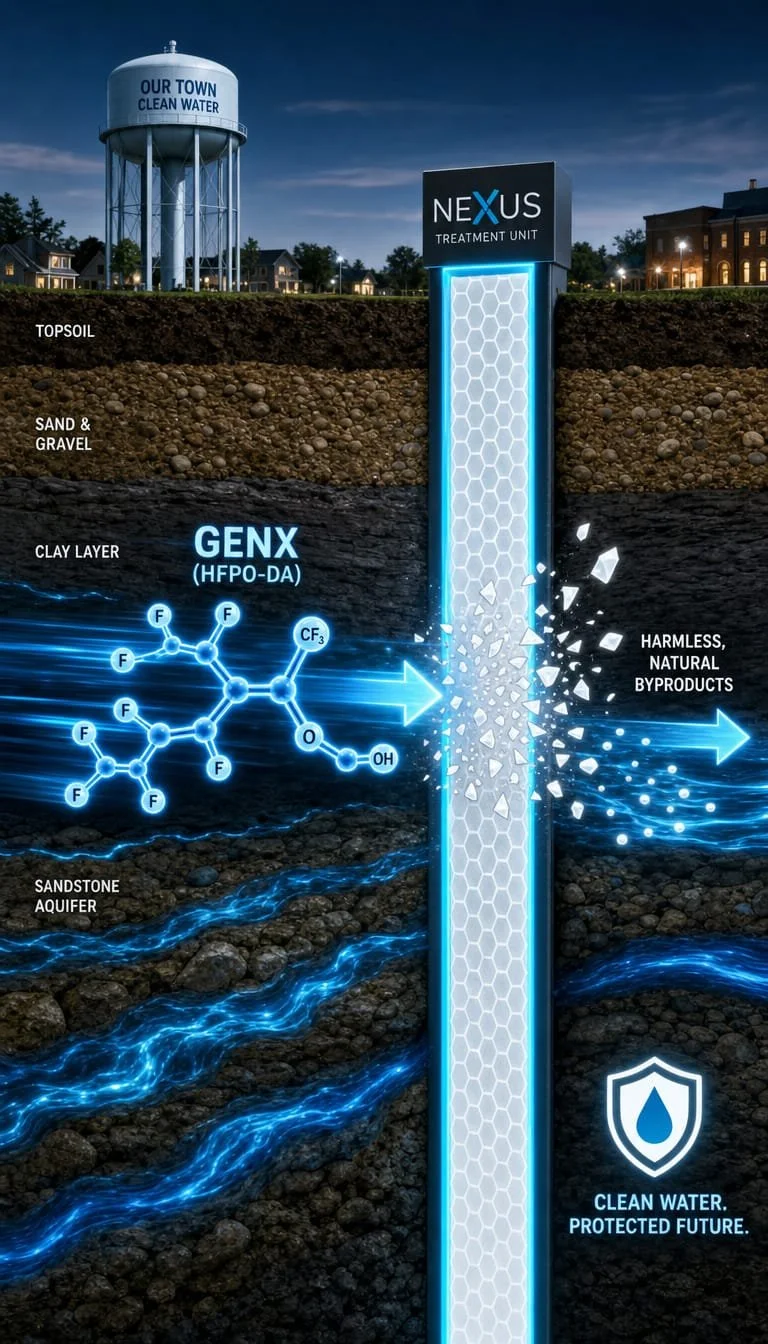
GenX – The Legacy of Regrettable Substitutions
For years, the chemical industry signaled a shift toward safety by phasing out long-chain PFAS like PFOA. In their place came GenX, a trade name for the processing aid HFPO-DA. While GenX was marketed as a more environmentally friendly option because it was thought to be eliminated from the human body more quickly, its fundamental chemistry tells a different story. Like its predecessors, GenX is built on a backbone of carbon-fluorine bonds—the strongest bonds in organic chemistry—making it a "forever chemical" that resists natural breakdown in the environment.
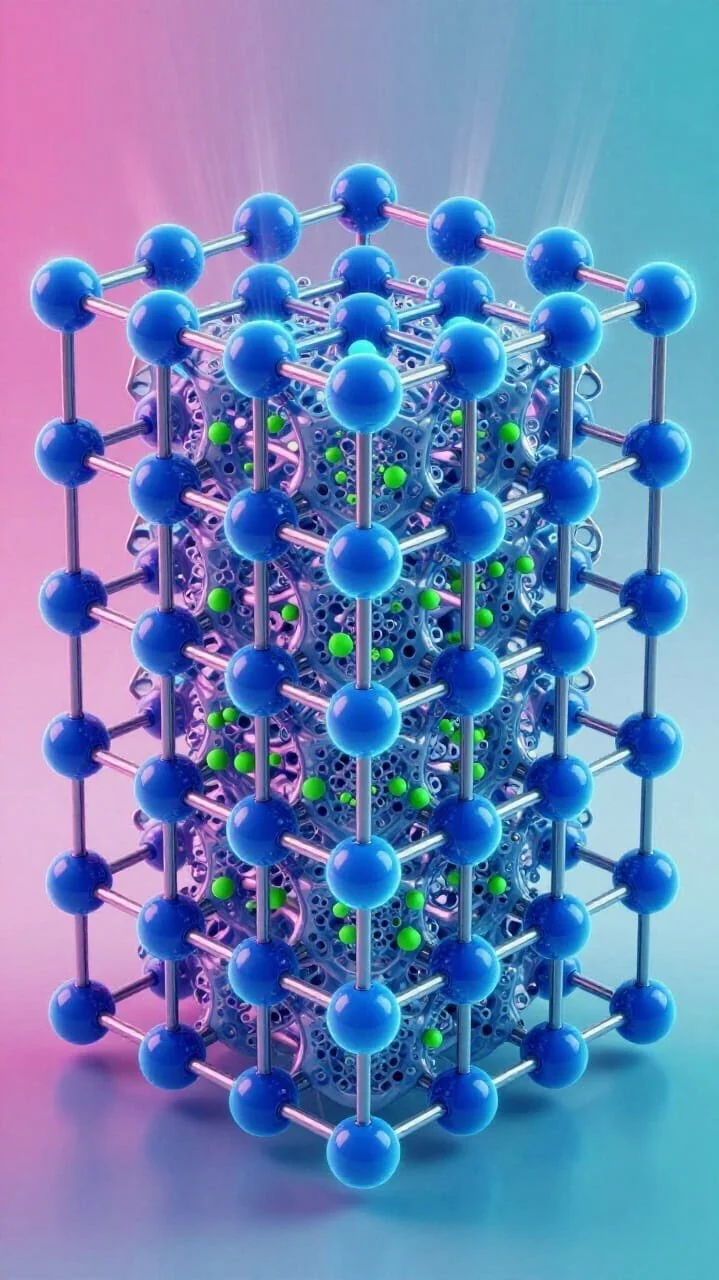
Metal-Organic Frameworks – Building a Better Filter
Metal-Organic Frameworks (MOFs) represent the pinnacle of "reticular chemistry"—the art of linking molecular building blocks into predetermined, rigid structures. By combining metal nodes with organic "struts," scientists can create 3D lattices with internal voids that are perfectly uniform in size. This allows MOFs to act as highly selective molecular sieves. Unlike traditional filters that work primarily through physical trapping, MOFs can be chemically functionalized to "grab" specific pollutants, making them incredibly effective for capturing greenhouse gases, harvesting water from desert air, or removing trace contaminants from industrial waste streams.
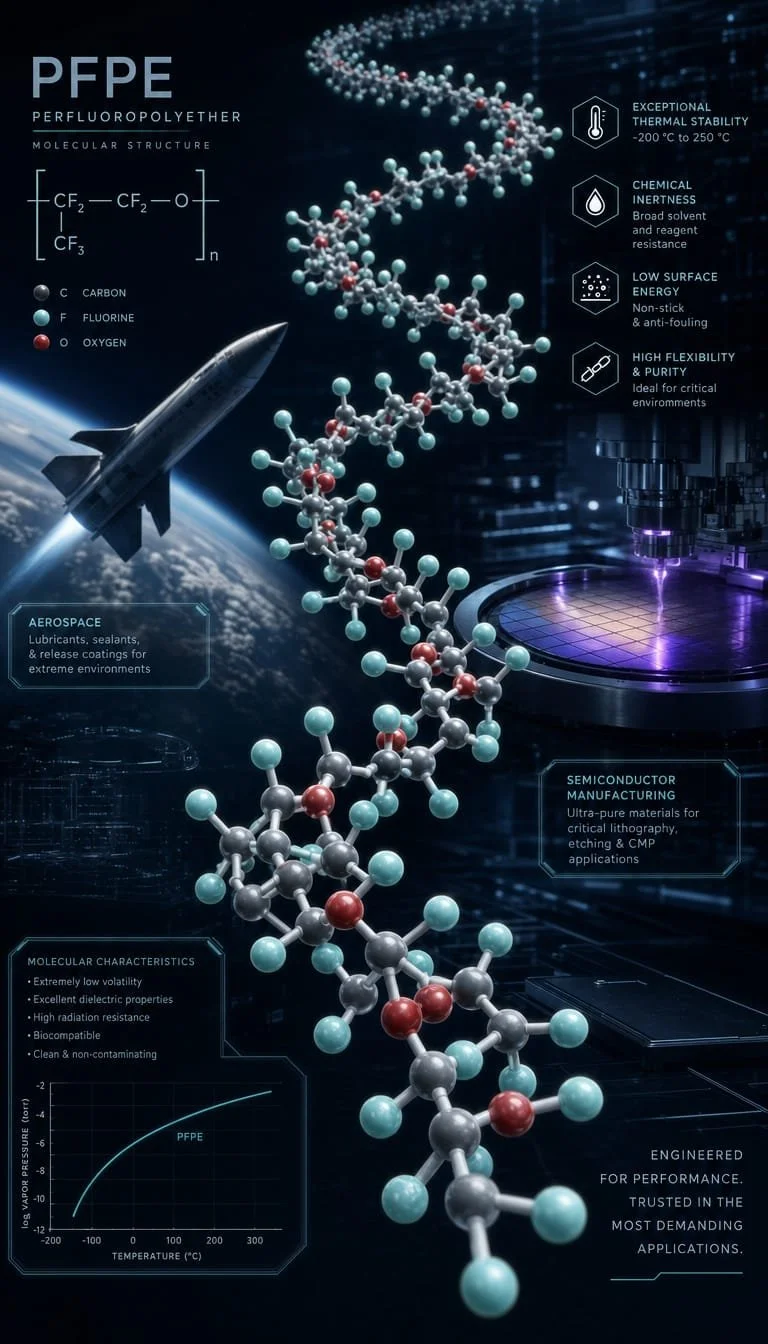
Perfluoropolyethers (PFPEs) – The Ultimate Lubricant and the Catalytic Solution
Perfluoropolyethers (PFPEs) are a complex class of high-molecular-weight fluorinated polymers characterized by chains containing carbon, fluorine, and oxygen atoms linked by ether bonds (-CF2O-). For over three decades, PFPEs have been the gold standard in high-performance applications where conventional lubricants fail. Their chemical inertness, high dielectric strength, resistance to radiation, and exceptional thermal stability make them indispensable for extreme environments, including thin-film lubrication on computer hard drives, vacuum pump oils in semiconductor and pharmaceutical manufacturing, and fluid media in critical aerospace and military systems. Their structure can vary (K-type, Z-type, Y-type), but their performance is uniformly superior.