

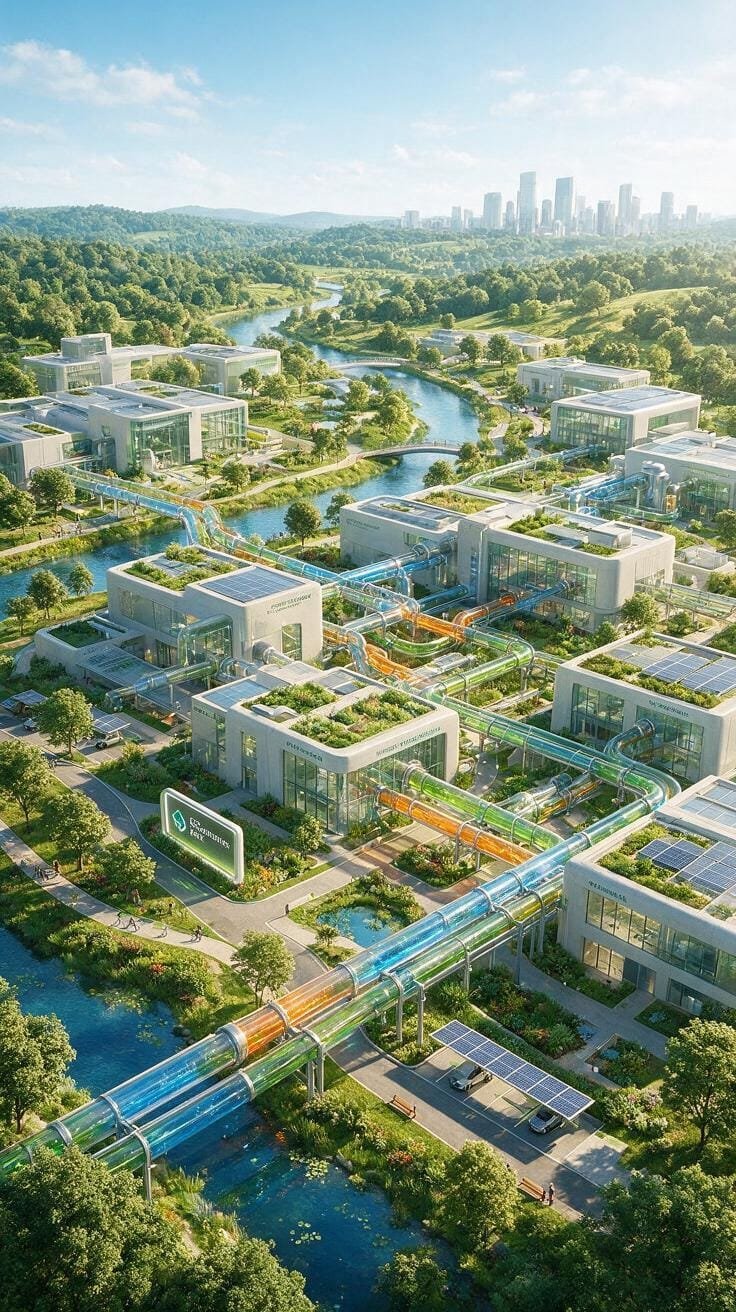
The Symbiotic Web – Engineering the Zero-Waste Industrial Park
The concept of Industrial Symbiosis isn't entirely new—the famous Kalundborg Symbiosis in Denmark proved decades ago that factories could share steam, water, and gas. However, those early models were rigid, requiring decades of physical infrastructure planning. If one factory closed, the whole web collapsed.
In 2026, we are upgrading this concept from a rigid physical pipeline to a dynamic, chemically agile network.
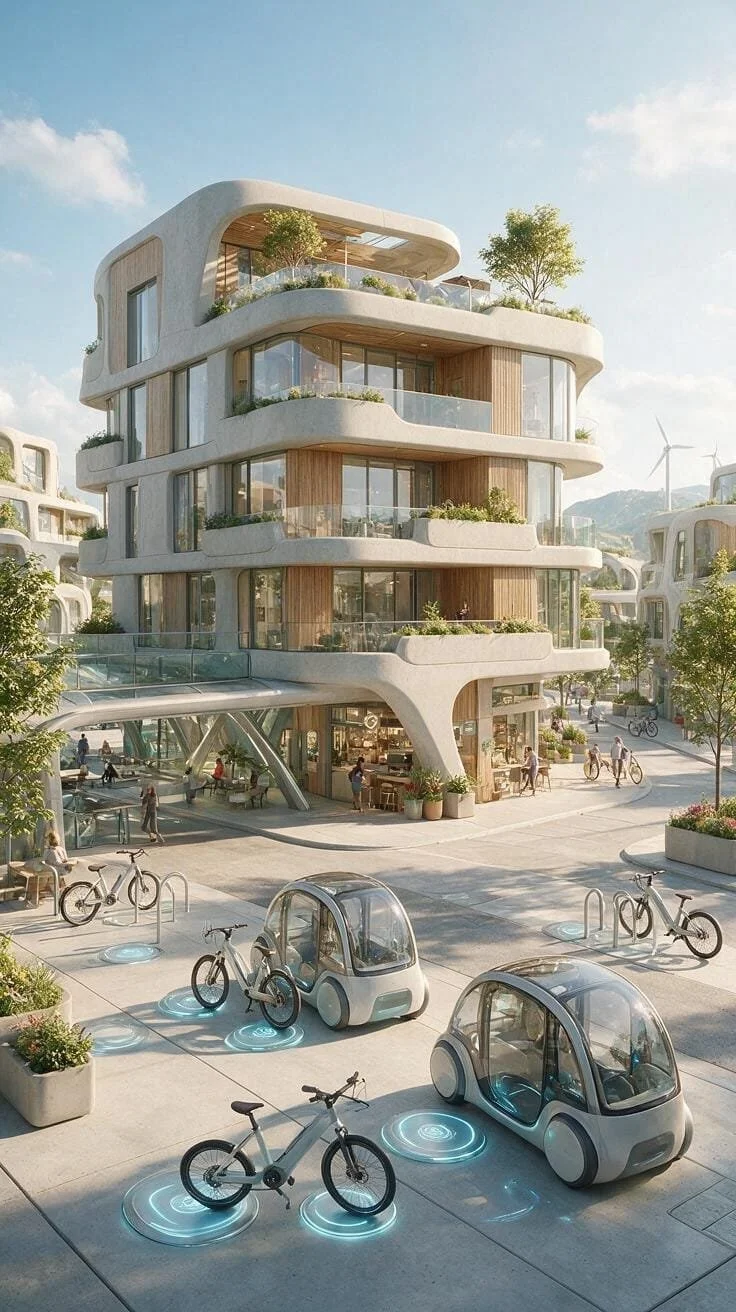
Solid-State Mobility – Engineering the Frictionless City
To connect our biogenic buildings, we need a transportation network that is lightweight, continuous, and integrated directly into the architecture. The barrier to this has always been battery technology. Traditional liquid-electrolyte lithium-ion batteries are too heavy, take too long to charge, and carry inherent fire risks.
In 2026, the key to urban mobility is the Solid-State Battery (SSB).
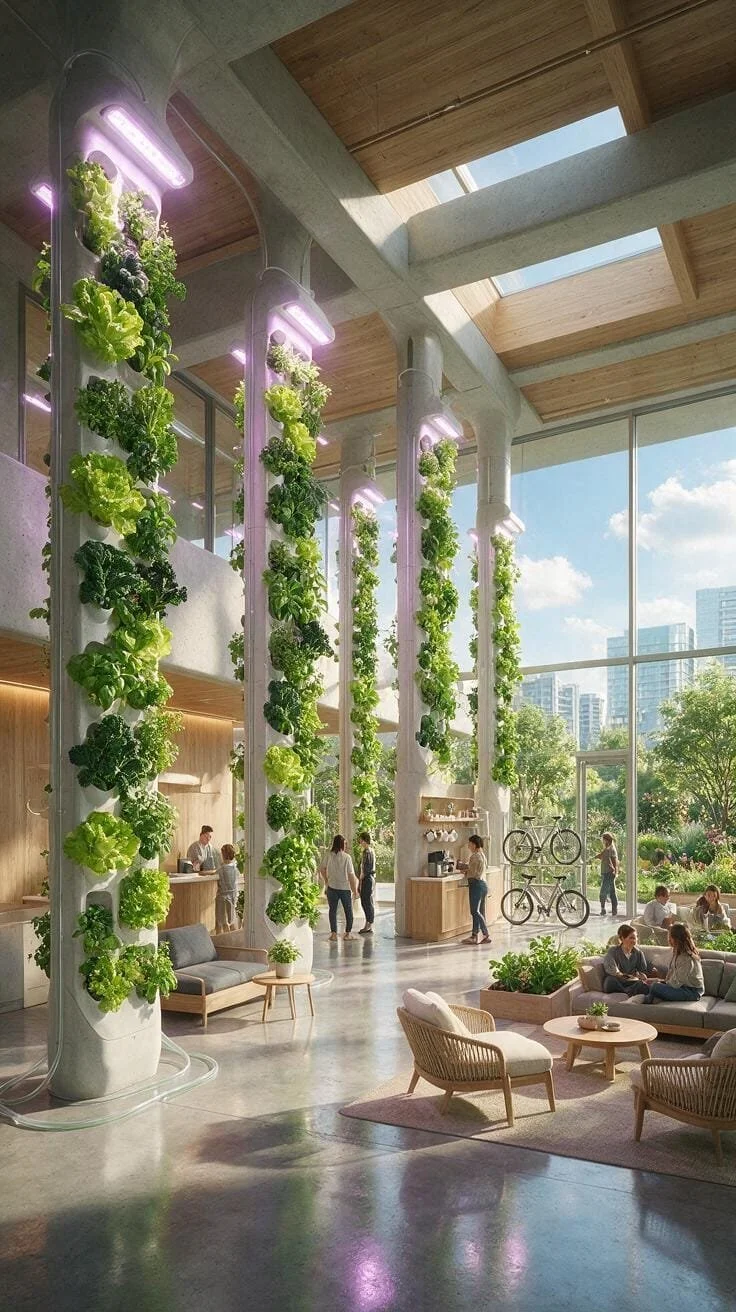
Vertical Aeroponics – The Hyper-Local Urban Harvest
The traditional agricultural model is breaking under the strain of climate change and logistics. It requires massive acreage, consumes 70% of the world's freshwater, and demands a carbon-heavy fleet of trucks and planes to transport perishable goods to urban centers.
To achieve a true "Micro-Loop" at the neighborhood level, we must bring the farm into the building. The 2026 solution is not traditional soil farming, nor is it standard hydroponics (which requires heavy tanks of water). The solution is Aeroponics.