

The Extremophiles: Thriving in the Toxic Zone
(10/09/2026)
The Concept: In our last article, we programmed standard E. coli bacteria to act as living sensors, glowing when they detect unseen toxins. But what happens when the environment we need to clean is actively trying to kill the cleanup crew?
Many of our worst environmental disasters—like highly acidic mine drainage (such as the infamous Berkeley Pit in Montana), boiling industrial wastewater, or radioactive cooling ponds—are completely inhospitable to normal life. If we drop our engineered, plastic-eating E. coli into a vat of boiling, acidic chemical runoff, their cell walls will rupture and their DNA will instantly melt.
To clean the toxic zone, we can't use standard microbes. We have to hijack nature's ultimate survivors: the extremophiles.
The Science: The Unkillables Extremophiles are organisms that have evolved to thrive in the most hostile environments on Earth.
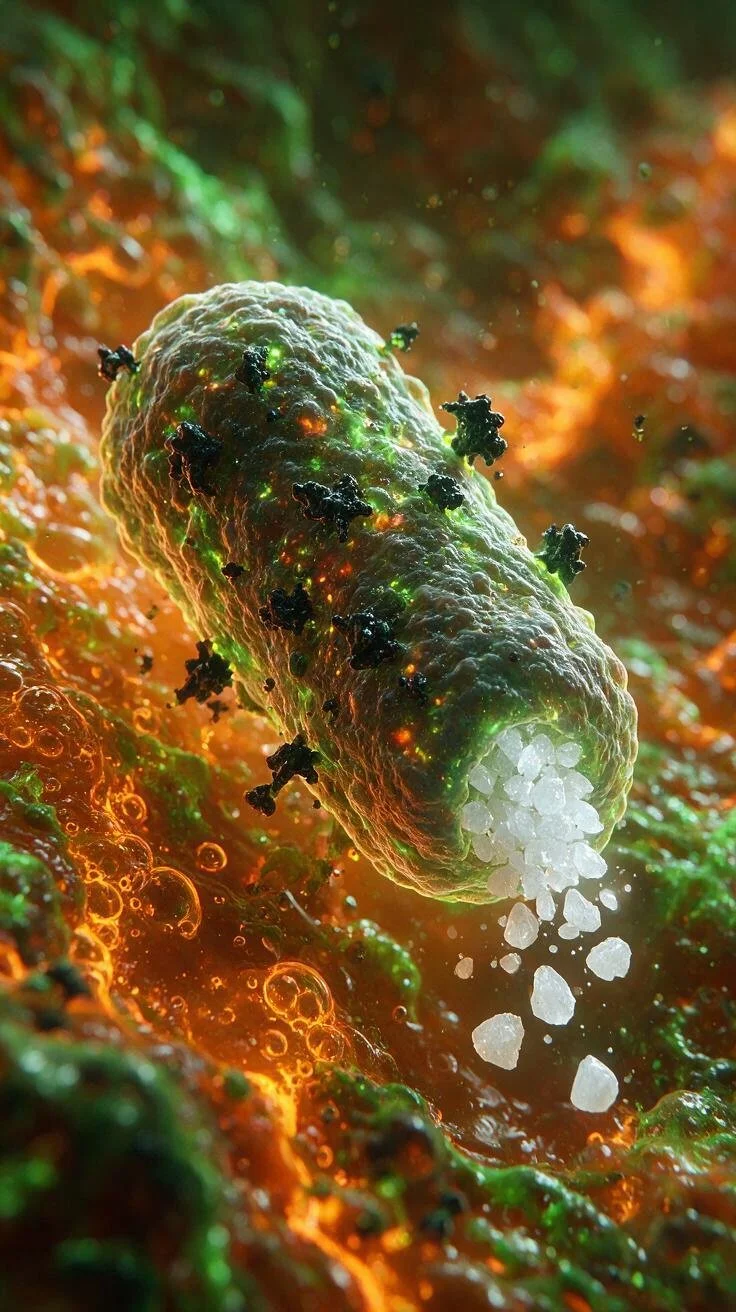
Take Deinococcus radiodurans, playfully nicknamed "Conan the Bacterium." It holds the Guinness World Record as the world's toughest bacterium. It can survive cold, dehydration, vacuum, and acid. Most incredibly, it can survive radiation doses thousands of times higher than what would be lethal to a human. Radiation shatters DNA into thousands of fragments, but D. radiodurans possesses an astonishing, hyper-active DNA repair mechanism that can flawlessly stitch its shattered genome back together in a matter of hours.
Other extremophiles, like Acidithiobacillus, thrive in pools of sulfuric acid that would dissolve human skin. They survive by constantly pumping protons out of their cells and utilizing highly armored, specialized cell membranes.
The Protocol: Armoring the Assassins Synthetic biologists realized that these extremophiles represent the perfect "chassis" (the physical body) for our biological factories. We just need to update their software.
By merging the technologies from our last series with whole-cell engineering, scientists are now loading custom designer enzymes into these unkillable microbes:
The Host: We start with a highly resilient extremophile, like Deinococcus radiodurans. It can survive the environment, but it doesn't naturally know how to clean it up.
The Software Update: We splice in the genetic code for a specific designer enzyme. For example, researchers have successfully engineered D. radiodurans to produce enzymes that can digest toluene (a toxic industrial solvent) and precipitate ionic mercury.
The Deployment: We drop these engineered super-microbes directly into a radioactive waste site or a highly acidic mining runoff pool.
The Result: The extremophile's natural armor keeps it perfectly safe from the radiation and acid, allowing it to happily swim through the toxic sludge. Meanwhile, its newly programmed genetic software kicks in, actively hunting down the heavy metals and chemical solvents, digesting them, and converting them into safe, inert byproducts.
We are taking the toughest, most unkillable organisms on the planet and turning them into unstoppable environmental janitors.
