(11/06/2026)
The Concept: When it comes to materials, humanity has essentially relied on two methods: we either take it from an animal, or we drill it out of the ground.
Take leather, for example. Traditional cowhide requires massive amounts of land, water, and feed, and the chemical tanning process (which prevents the skin from rotting) relies heavily on chromium, turning rivers near tanneries into toxic wastelands.
So, we invented "vegan leather." But vegan leather is almost always just polyurethane—a synthetic plastic derived from fossil fuels that will sit in a landfill for a thousand years. We replaced a biological hazard with a petrochemical one.
We desperately need a material that looks and feels like premium leather, but is grown efficiently and biodegrades completely. The answer, surprisingly, is floating at the top of a jar of kombucha.
The Science: Spinning Nanocellulose If you have ever brewed kombucha, you are familiar with the SCOBY (Symbiotic Culture of Bacteria and Yeast). It looks like a thick, rubbery, floating pancake. While it might look unappetizing, it is an absolute marvel of biological engineering.
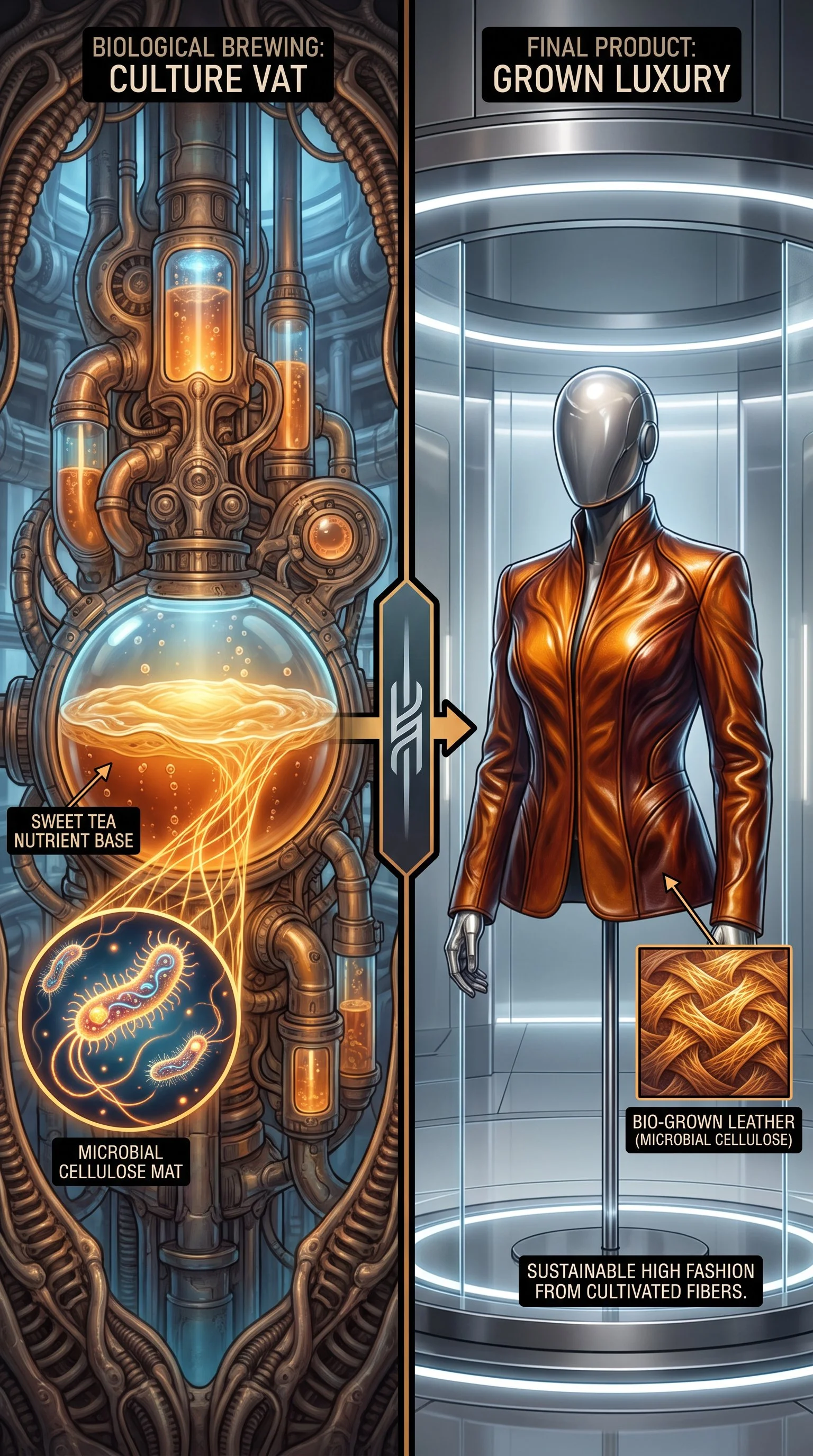
When you feed a SCOBY sugar and tea, the yeast ferments the sugar into alcohol, and the bacteria eat the alcohol. But as the bacteria eat, they don't just multiply—they act like microscopic spiders. They extrude microscopic threads of pure nanocellulose.
Cellulose is the structural fiber that makes trees and plants strong. But plant cellulose is mixed with lignin and other organic matter. The nanocellulose spun by these bacteria is 100% pure. As millions of bacteria spin these nano-threads simultaneously, the threads tangle and bind together, weaving a dense, highly durable, floating mat at the surface of the liquid.
The Application: Brewing Fashion Material scientists and fashion designers realized that if you take this bacterial mat out of the vat, wash it, and dry it, it doesn't turn into a crumbly mess. It transforms into a tough, flexible, translucent material that acts remarkably like animal skin.
By scaling up this process in massive, shallow bioreactors, companies are now brewing sheets of nanocellulose.
The Treatment: Once harvested, the bacterial mat is treated with natural oils and waxes to make it water-resistant and supple, completely bypassing the toxic heavy-metal tanning process.
The Dyeing: Because pure nanocellulose is highly absorbent, it takes natural, plant-based dyes beautifully without the need for harsh chemical mordants.
The Lifecycle: The resulting "bacterial leather" can be stitched into jackets, wallets, and shoes. It has the premium feel of calfskin, but it is grown in a matter of weeks using agricultural sugar waste. Best of all, when the jacket finally wears out, you can throw it in your garden compost bin, where it will safely return to the soil in a few months.
We are no longer extracting materials; we are brewing them. Want to make your own. Try the DIY project.