(11/20/2026)
The Concept: If you have ever bought a "compostable" plastic cup at a coffee shop, you have likely encountered PLA (polylactic acid), a bioplastic made from cornstarch. It sounds like a dream solution, until you read the fine print. PLA only breaks down in high-heat industrial composting facilities. If a PLA cup blows out of a trash can and lands in the ocean, it behaves almost identically to conventional petroleum plastic, lingering for decades and shattering into microplastics.
The reason traditional plastics—and even many bioplastics—pollute our oceans is simple: nature doesn't recognize them as food. Marine microbes didn't evolve alongside petrochemicals, so they don't know how to eat them.
To truly solve plastic pollution, we don't just need a plastic made from plants. We need a plastic made by nature, for nature. We need PHA.
The Science: Bacterial Body Fat PHA stands for Polyhydroxyalkanoates, and it is one of the most remarkable polymers on Earth. Unlike traditional plastic, which is synthesized in roaring oil refineries, PHA is brewed inside living bacteria.
The biological mechanism is surprisingly relatable. When humans eat more calories than we burn, our bodies store that excess energy as fat for later use. Certain species of bacteria do the exact same thing, except instead of storing fat, they store pure plastic.
Here is how bio-engineers harvest it:
The Feast: Scientists place specialized bacteria (such as Cupriavidus necator or rugged marine strains) into a fermentation tank and feed them an abundance of cheap carbon. This can be waste sugars, leftover vegetable oils, or even captured methane gas from landfills.
The Stress: While flooding the bacteria with carbon, the engineers intentionally starve them of an essential growth nutrient, like nitrogen or phosphorus.
The Stockpile: Because the bacteria lack the nutrients to divide and reproduce, they panic and go into survival mode. They furiously consume the excess carbon and pack it away inside their cell walls as dense, microscopic granules of PHA. In some optimized strains, up to 80% of the bacterium's dry weight becomes pure, natural polymer.
Once the bacteria are completely stuffed with plastic, they are harvested. The cells are gently broken open, and the PHA granules are washed and dried into a fine white powder or pellets. From there, it can be melted, extruded, and injection-molded using the exact same factory equipment already used for petroleum plastics.
The Application: A Plastic That Nature Eats What makes PHA revolutionary isn't just how it is made—it is how it dies.
Because PHA is literally a biological energy reserve, microbes everywhere on Earth—in your backyard compost pile, in freshwater rivers, and in the freezing depths of the open ocean—have evolved over millions of years to eat it.
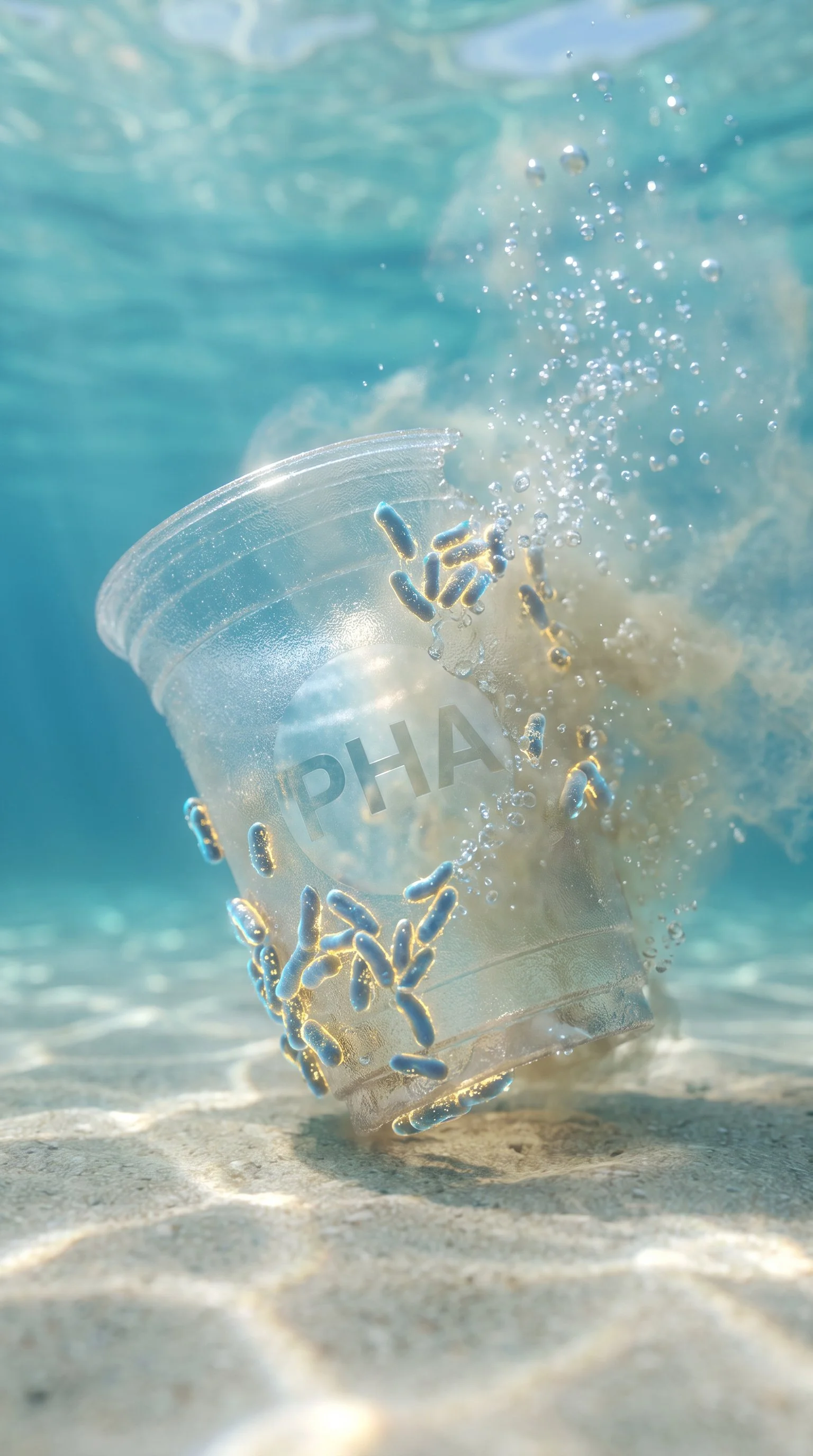
True Marine Biodegradability: If a PHA drinking straw, food wrapper, or fishing net falls into the ocean, native marine bacteria immediately swarm it. They recognize the polymer as a calorie-rich meal, secrete natural enzymes to dissolve it, and digest it completely back into water, carbon dioxide, and harmless biomass. Within weeks or months, it vanishes without leaving a single microplastic behind.
Everyday Durability: Despite being edible to ocean bacteria, PHA is completely stable on your kitchen counter. It doesn't dissolve in water on its own; it requires active microbial enzymes to break down. That means it can hold a cold drink, wrap your groceries, or line a coffee cup without falling apart in your hands.
Medical Miracles: Because PHA is completely non-toxic and biocompatible, medical engineers are using it to create dissolvable surgical sutures, tissue scaffolds, and internal meshes that safely melt away inside the human body as a wound heals.
By tapping into the survival instincts of microscopic bacteria, we are replacing permanent petrochemical trash with a material that seamlessly rejoins the circle of life.
Would you like to try your hand at growing your own materials? Try our DIY Cultured Textiles - Synthesizing Bacterial Nanocellulose (Bio-Leather)!