

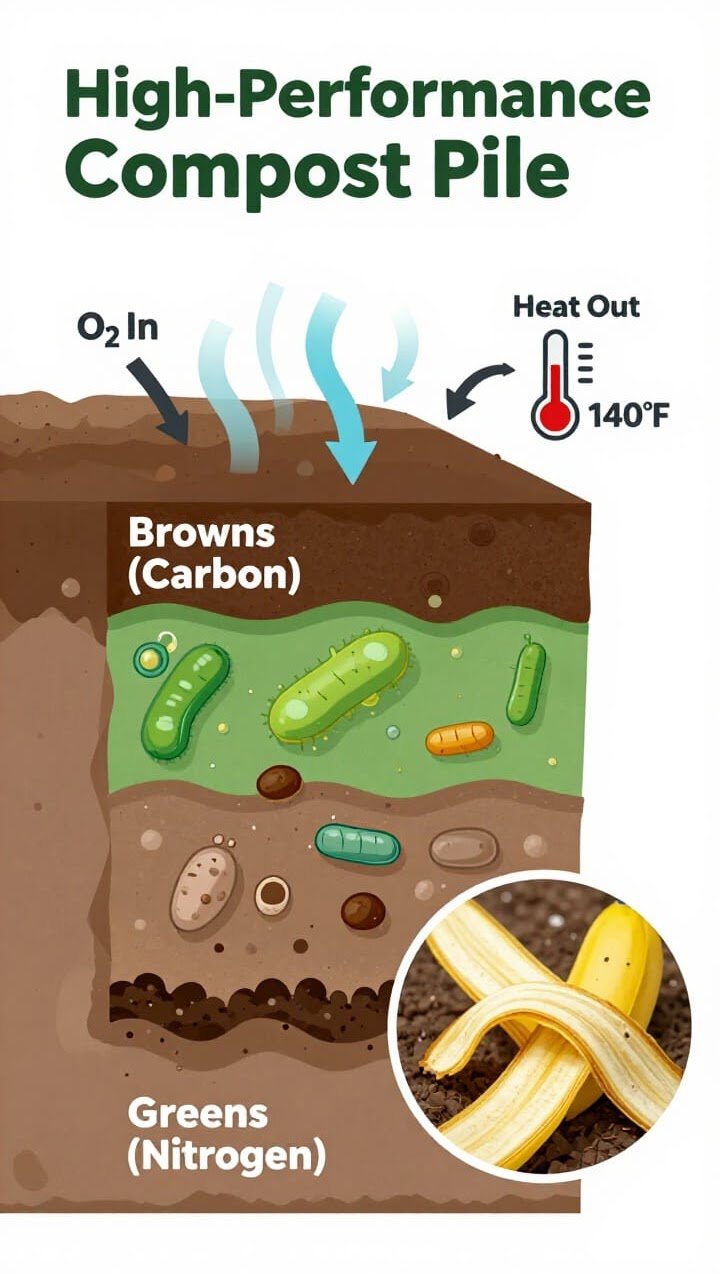
Level 1: The Master Bioreactor in Your Backyard
When you hear the word "bioreactor," you probably picture a gleaming steel tank in a pharmaceutical lab. But you can build one of the most effective bioreactors on Earth using nothing but scrap wood and wire mesh. We call it a compost pile, but today, we are going to look at it like scientists.
The Mission: Your household produces a stream of organic waste—food scraps, paper, cardboard, and yard trimmings. Sending this to a landfill is a waste of energy. Your mission is to harness the power of thermophilic (heat-loving) bacteria to break this complex waste down into humus, a nutrient-rich soil amendment that restores the earth.
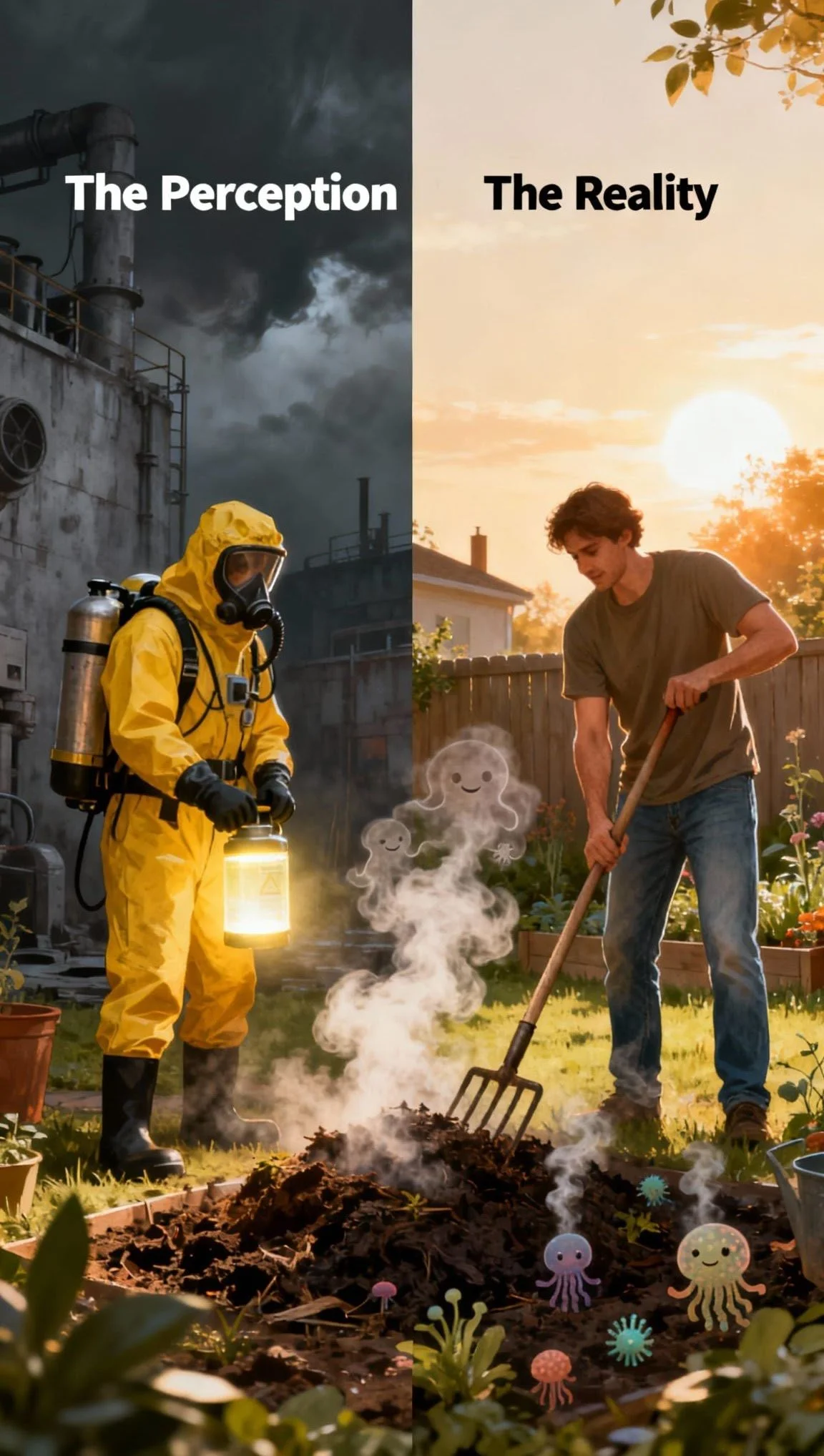
Myth #5: "Bioremediation is Only for Hazmat Suits and Super-Labs"
The Myth: The final barrier to understanding bioremediation is the belief that it is exclusively an industrial technology—something that requires million-dollar budgets, government contracts, and teams of scientists in full hazmat gear. The average person thinks, "This is too high-tech for me."
The Reality: Bioremediation is just a fancy word for composting on steroids. You are likely already doing a form of it in your backyard.
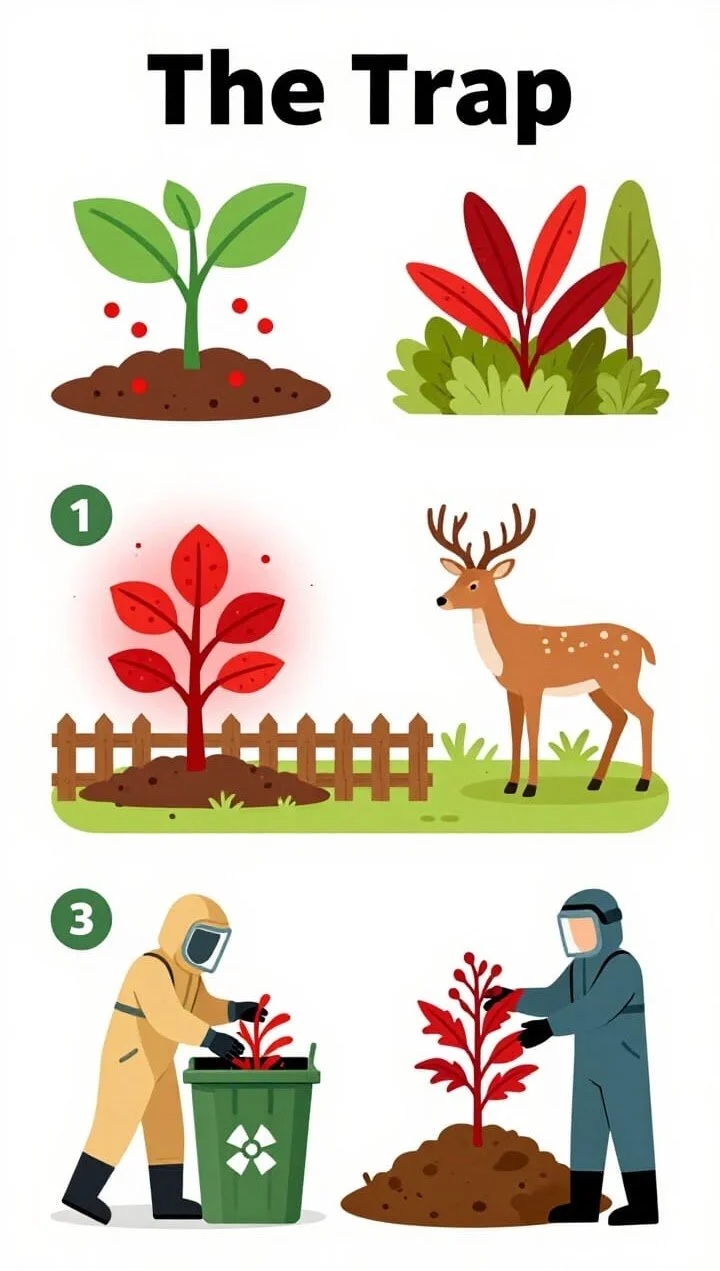
Myth #4: "Plants Make Pollution Vanish"
The Myth: When people hear about phytoremediation (using plants to clean soil), they often imagine a beautiful field of sunflowers or mustard plants that suck up toxins and magically convert them into harmless plant tissue. The assumption is that once the plants grow, the problem is gone, and you can simply mow the lawn or let the leaves fall naturally.
The Reality: For many contaminants, plants do not destroy the pollution; they simply move it. The plant itself becomes hazardous waste.