

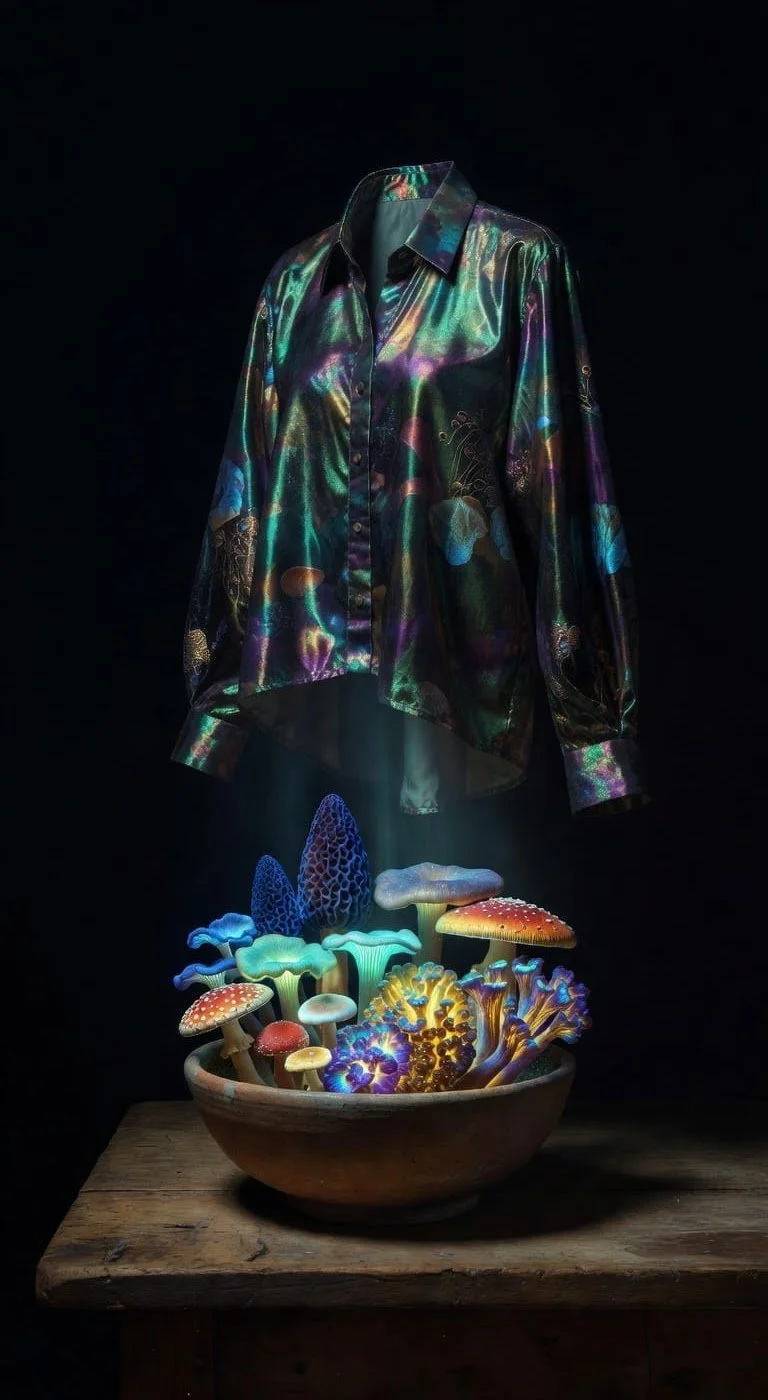
The Fast Fashion Burden: Fungi vs. Fabric
The Concept: The rise of "fast fashion" has created a quiet, monumental waste crisis. Millions of tons of clothing are thrown into landfills every year. You might think, “It’s just cloth, won't it break down?” If it were a 100% pure wool sweater or a 100% cotton t-shirt, yes, eventually. But modern clothing is almost never pure. Look at the tag on your shirt. It likely says something like "60% Cotton / 40% Polyester."
This is a blended fabric, a microscopic knot of natural organic fibers woven directly into synthetic plastic threads. Mechanically, it is impossible to "un-weave" a shirt to separate the cotton from the plastic. Because of this, blended fabrics are generally considered unrecyclable. If you try to compost it, the cotton rots, leaving a ghostly skeleton of microplastics behind. If you try to melt it down to recycle the plastic, the cotton burns and ruins the batch.
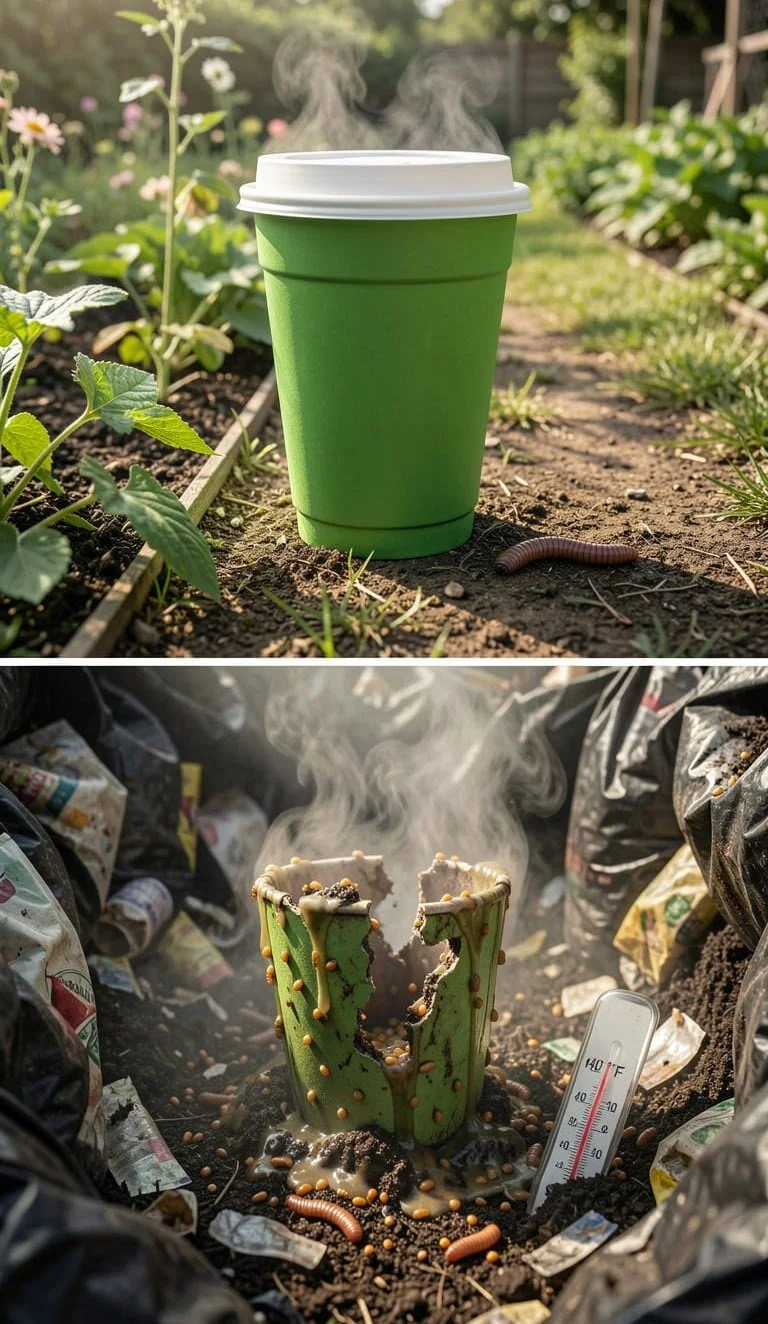
The "Bioplastic" Loophole: What Does Compostable Really Mean?
The Concept: You are at a coffee shop and you are handed an iced coffee in a clear cup that says "100% Compostable" or "Made from Plants" in bright green letters. It feels like a win. The natural assumption is that if this cup blows out of your car window or gets tossed into your backyard garden, it will harmlessly dissolve into dirt just like an apple core.
Unfortunately, this is one of the biggest misunderstandings in modern waste management. Dropping a "compostable" cup in a forest is still littering, and it might sit there for decades.
The Plastic Eaters: The Hunt for a Biological Eraser
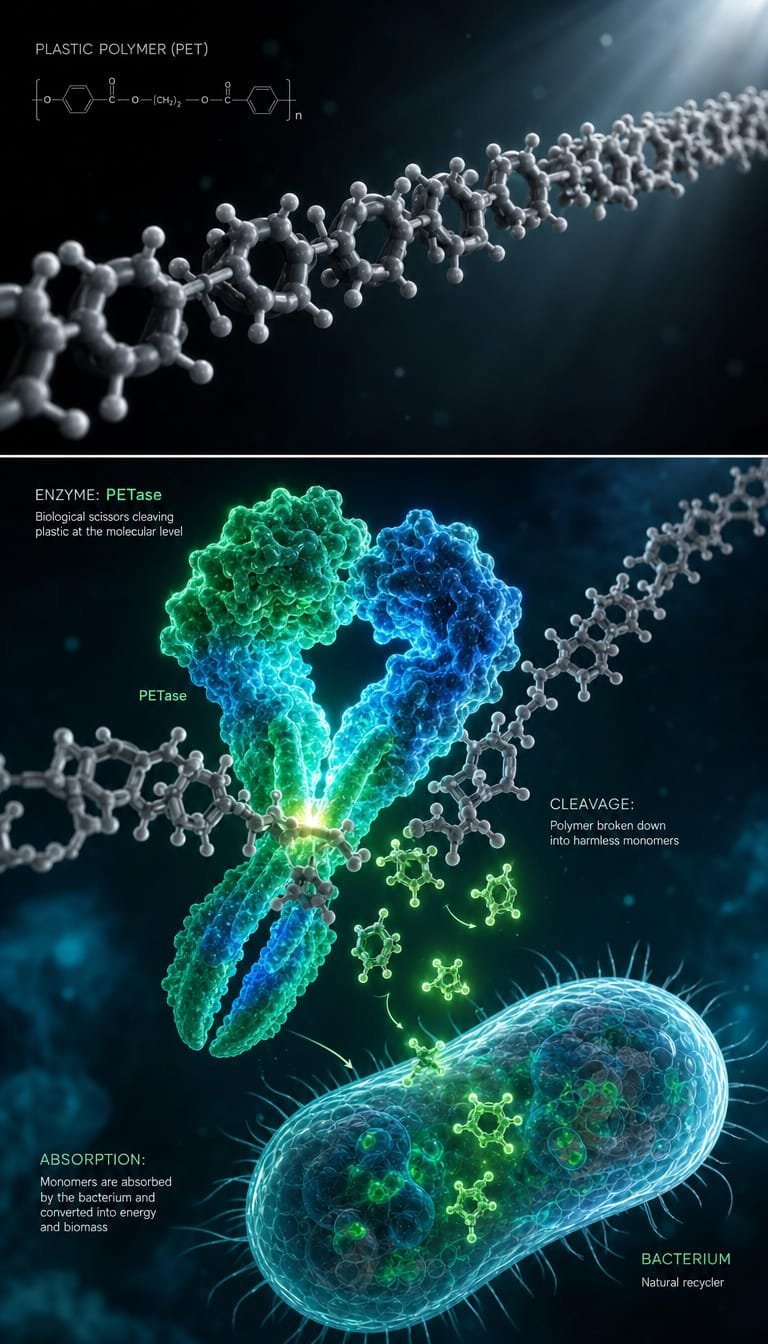
The Concept: For decades, the environmental narrative around plastic has been a story of permanence. Because synthetic plastics like PET (polyethylene terephthalate—the clear stuff used for water bottles) were invented in a laboratory, nature had never seen them before. The assumption was that since microbes hadn't evolved alongside plastic, they had no biological tools to digest it. Every piece of plastic ever made, we thought, would exist forever.
But biology is infinitely adaptable. In 2016, a team of scientists sifting through the sludge outside a plastic bottle recycling facility in Sakai, Japan, discovered something impossible: a bacterium that was actively eating the plastic.