

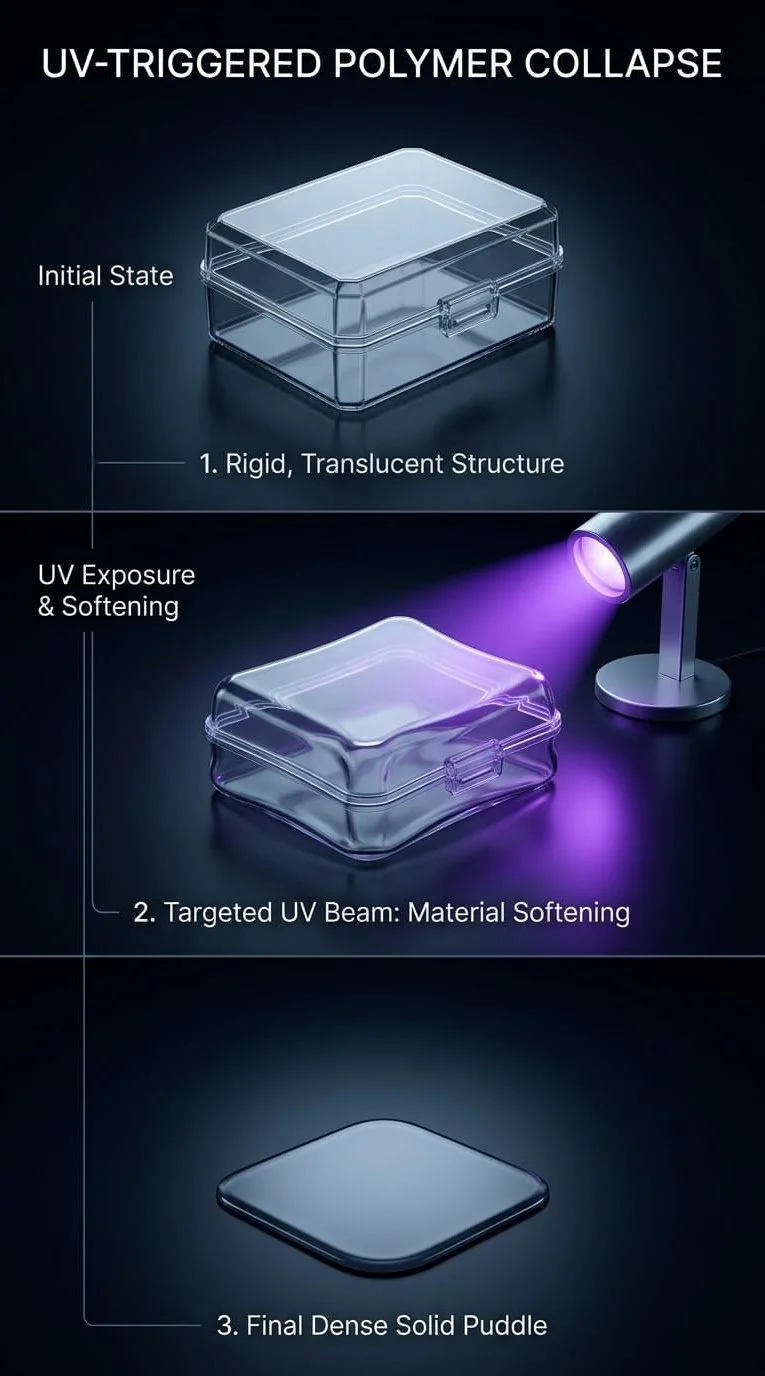
Metastable Polymers – Erasing the Spatial Footprint
To eliminate the mechanical trash compactor, we must engineer packaging that wants to fall apart, but is temporarily held in a "metastable" state. A metastable polymer is a material trapped in an energy valley; it is perfectly strong and functional for its intended use, but it is chemically primed to degrade the moment it receives a specific activation energy.
This is the key to solving the spatial footprint of synthetic packaging in a small apartment. We do not crush the box; we command the box to let go of its structure.

Nano-Desiccants – Arresting Decay Without the Cord
For the innovators answering the Point-of-Origin Challenge, the first hurdle is biological stabilization. How do you take an apple core or leftover vegetables in a sealed apartment drawer and stop them from rotting without plugging a loud, hot appliance into the wall?
The answer lies in manipulating Water Activity. Microorganisms require available water to survive and multiply. By dropping the water activity of organic output below a critical threshold, you effectively hit the "pause" button on biological decay, rendering the material inert, odorless, and vastly reduced in volume.
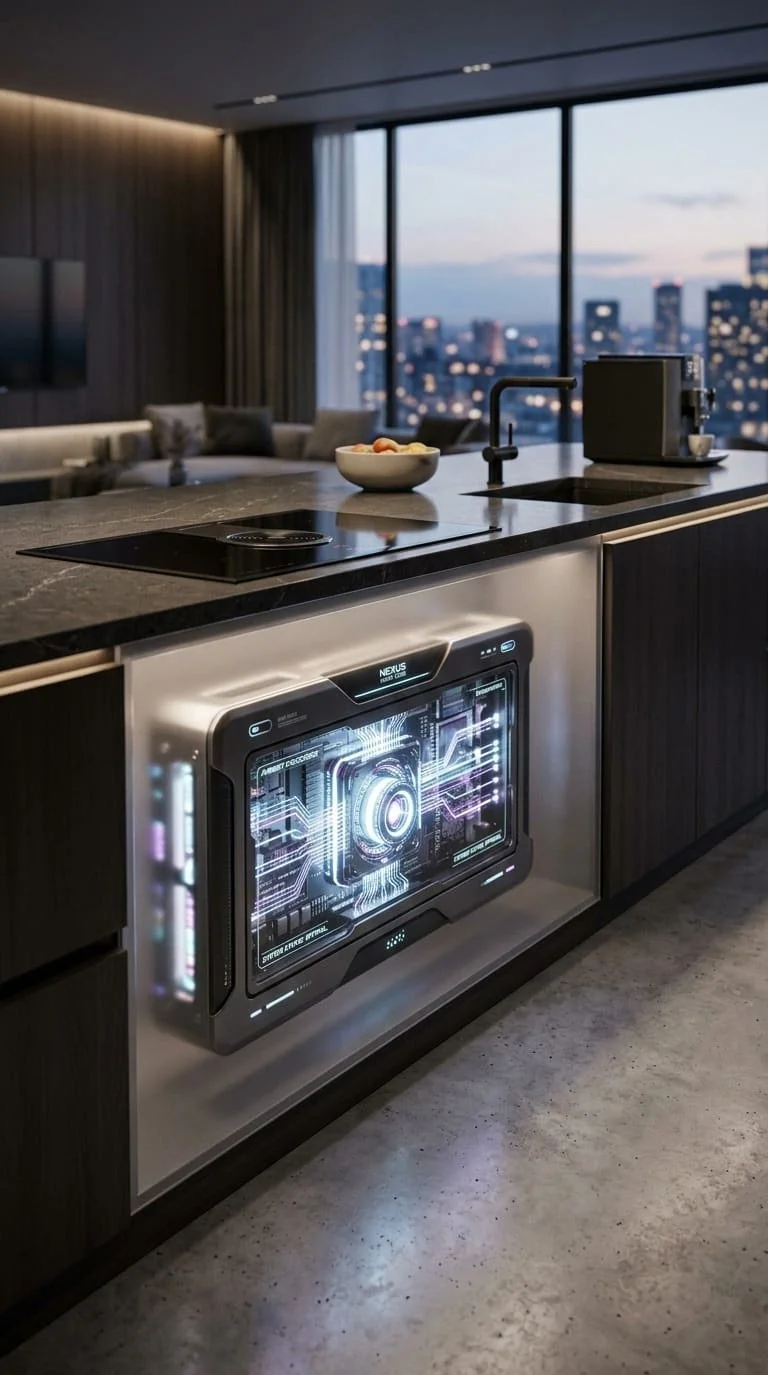
The Apartment Void – A Call for Point-of-Origin Innovation
Consider the modern apartment. Floorplans are mathematically optimized for density and spatial yield. Every square inch is calculated to maximize habitation capacity, but this design philosophy completely ignores the daily entropy of human life. The tenant is left with an invisible burden: managing the constant, unavoidable accumulation of biological and synthetic output in a sealed box with no balcony, no access to earth, and no infrastructure beyond a plastic bag and a long walk to a communal bin.
This is not a failure of the tenant; it is a profound failure of in-house industrial design.