

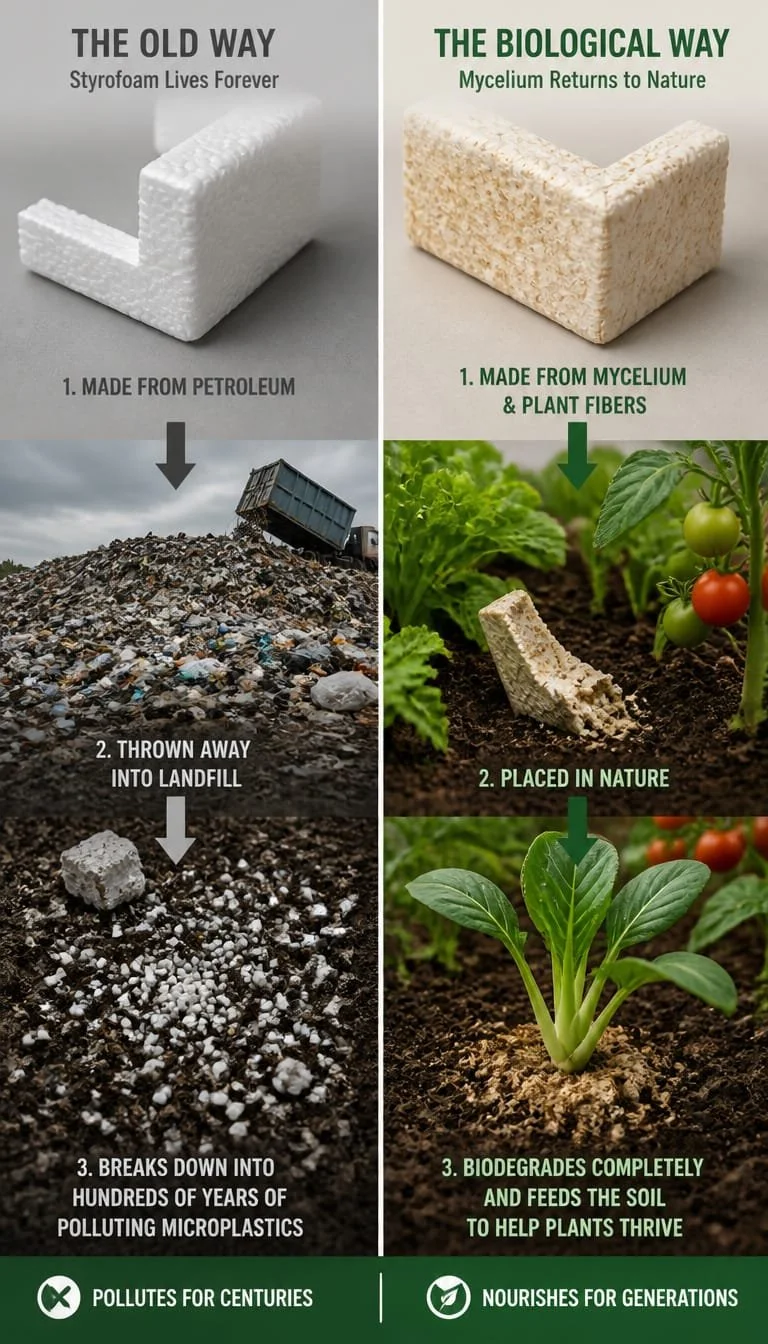
Packaging from the Earth: Mycelium "Styrofoam"
The Concept: Expanded Polystyrene (EPS), commonly known as Styrofoam, is an environmental nightmare. It is brilliant for its intended purpose—it is incredibly lightweight, shock-absorbent, and cheap. But because it is 95% air and 5% rigid synthetic plastic, it is virtually impossible to recycle economically. It ends up in landfills where it will sit for centuries, or worse, it breaks apart into millions of microplastic beads that choke terrestrial and marine ecosystems.
We need a material that protects our televisions and wine bottles during shipping, but completely disappears the moment we are done with it. To find it, we are once again turning to the fungal kingdom.
Coloring the World: Microbial Dyes
The Concept: Take a look at the shirt you are wearing. Whether it is a vibrant blue, a deep black, or a bright red, that color almost certainly came from a petroleum-based synthetic dye.
The textile industry is currently one of the largest water polluters globally. To bind those synthetic colors (often "azo dyes") to fabric, factories use harsh chemicals and heavy metal mordants (like chromium and lead). Much of this toxic chemical soup is flushed directly into local waterways. In some manufacturing hubs, you can literally tell what colors are trending in fast fashion by looking at the color of the toxic rivers flowing outside the factories.
We need clothes, and we want them to be colorful, but we cannot keep poisoning our water to do it. The solution? We stop synthesizing colors from oil, and start growing them with bacteria.
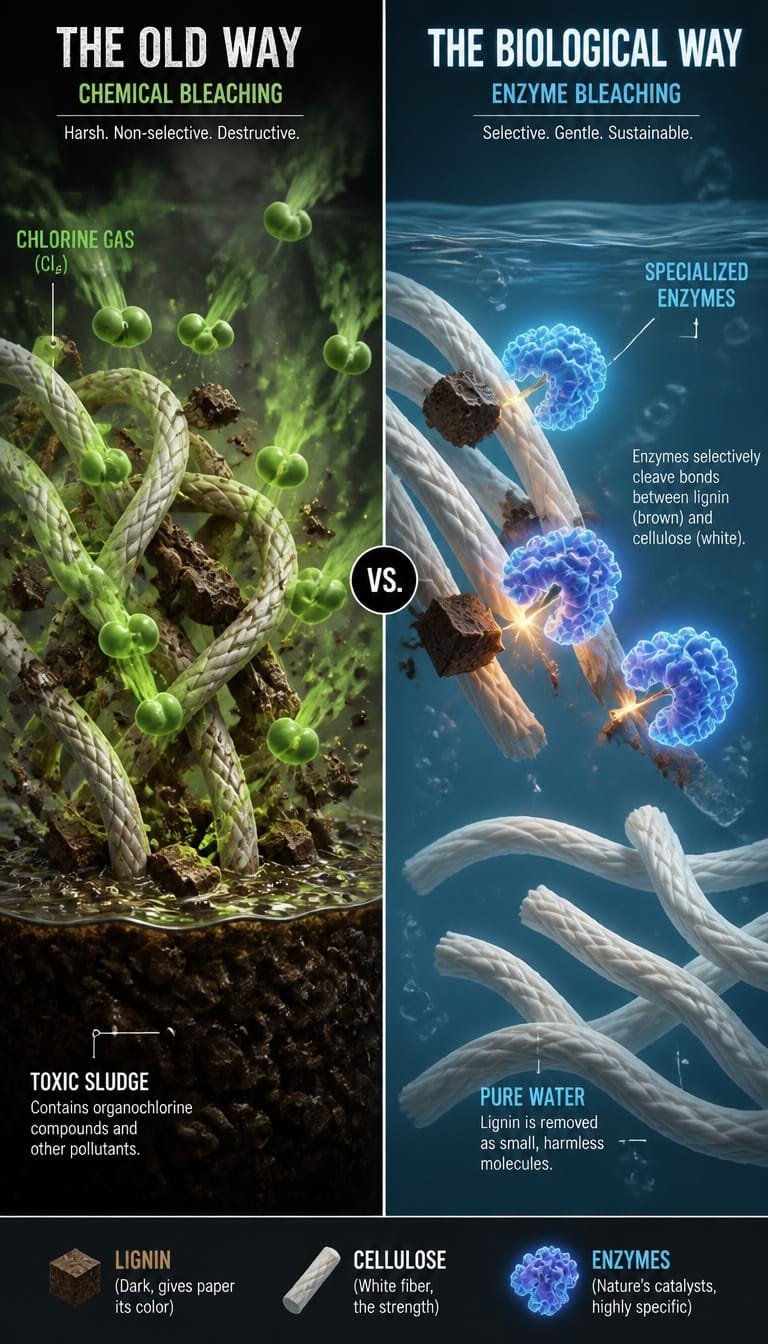
The End of Chlorine: Enzymatic Paper Bleaching
The Concept: Take a look at a piece of standard printer paper. It is perfectly, brilliantly white. But paper comes from wood, and wood is brown. To get from a brown tree to a white sheet of paper, the pulp must be bleached.
Historically, the pulp and paper industry relied heavily on elemental chlorine gas to achieve this. While chlorine is an incredibly effective bleach, it comes with a devastating environmental cost. When chlorine reacts with the organic compounds in wood pulp, it creates highly toxic byproducts, including dioxins. For decades, paper mills dumped millions of gallons of this chlorinated wastewater into rivers, causing massive dead zones and severe mutations in aquatic ecosystems. We needed a way to whiten paper without poisoning the water.