

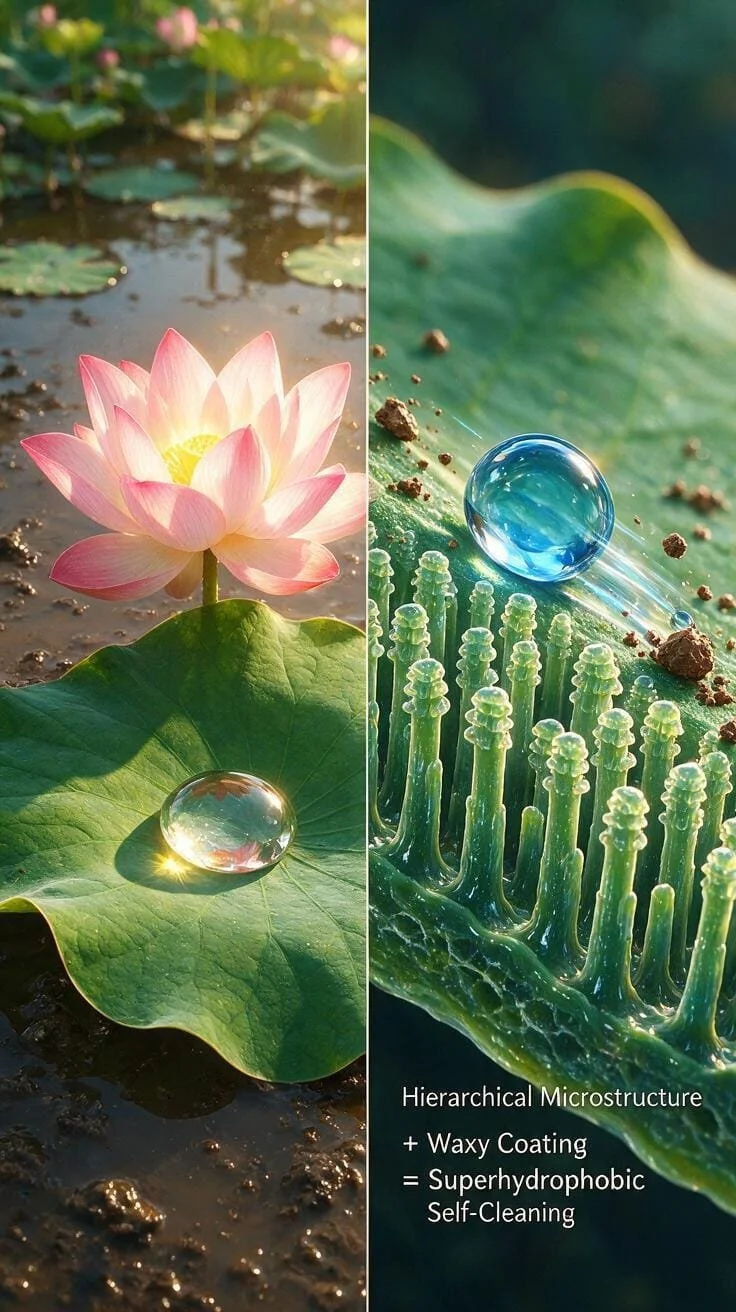
The Lotus Effect: Self-Cleaning Biology
The Concept: In many Eastern cultures, the lotus flower is a sacred symbol of purity and enlightenment. This symbolism is rooted in a striking biological paradox: the lotus naturally grows in the deepest, muddiest, most stagnant swamps on Earth, yet its broad green leaves and brilliant white and pink petals emerge completely immaculate. They never look dirty.
If you take a handful of thick swamp mud and throw it directly onto a lotus leaf, it won't stick. The mud simply rolls off, leaving the leaf perfectly clean and dry. For a long time, scientists assumed the leaf was just very smooth and waxy. But when they finally put it under an electron microscope, they discovered the exact opposite was true.

Living Light: The Chemistry of Bioluminescence
The Concept: If you have ever seen a firefly pulse in a dark forest, or paddled through a bioluminescent bay where the water glows neon blue with every stroke of your oar, you have witnessed one of nature's most enchanting magic tricks.
For centuries, this glowing water was steeped in folklore and mystery. How can a living creature produce light? Human-made light, historically, comes from fire. Whether it is a candle, a gas lantern, or a traditional incandescent lightbulb, we produce light by burning something or heating a filament until it glows.
But fire is hot, and if a firefly used heat to make light, it would incinerate itself. Nature had to invent a completely different mechanism: "cold light."
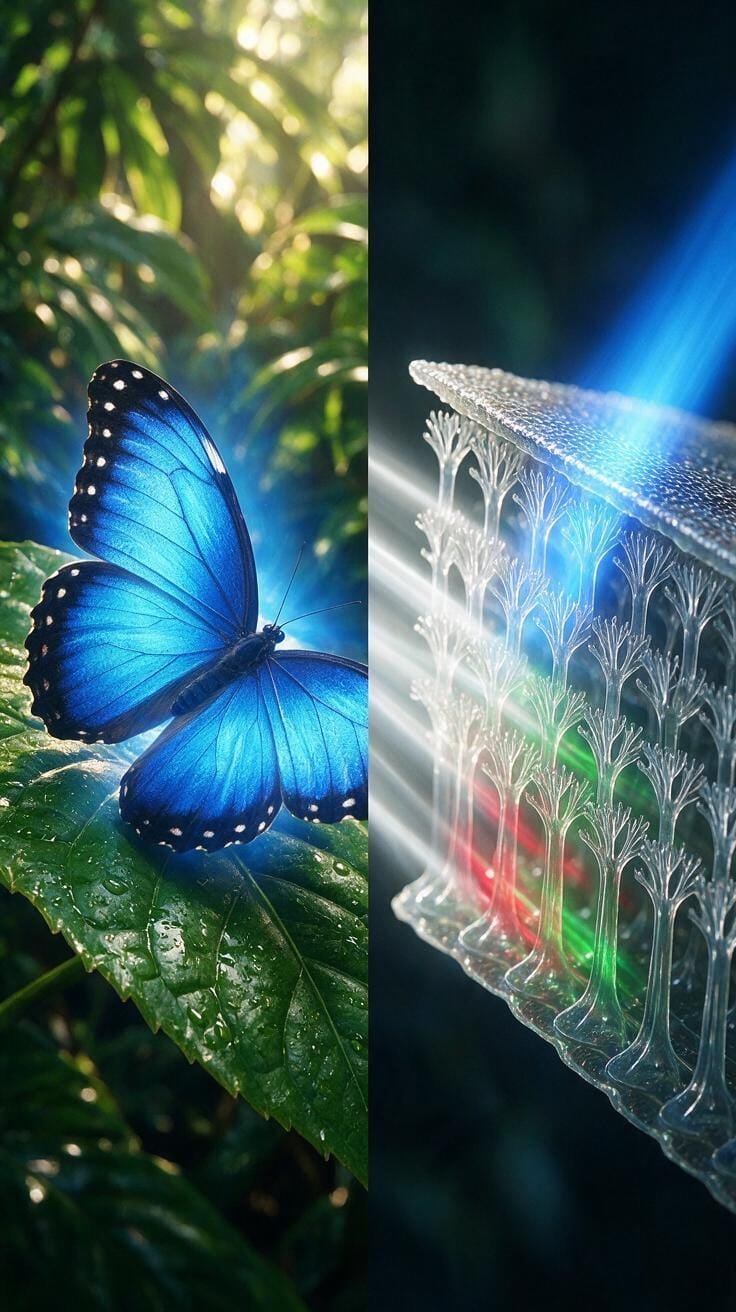
The Blue Morpho: The End of Pigment
The Concept: If you walk through the dense, shadowed understory of the Amazon rainforest, you might see a flash of electric, iridescent blue that is so bright it almost looks artificial. This is the Blue Morpho butterfly. Its wings are arguably the most vibrant blue found anywhere in nature.
Naturally, you would assume that the butterfly's wings are packed with a highly concentrated blue dye. But if you were to take that magnificent wing and grind it into a fine powder, the blue would vanish entirely. You would be left with a dull, translucent grey dust.
The Blue Morpho contains absolutely zero blue pigment. Its color is an optical illusion, created not by chemistry, but by microscopic architecture.