

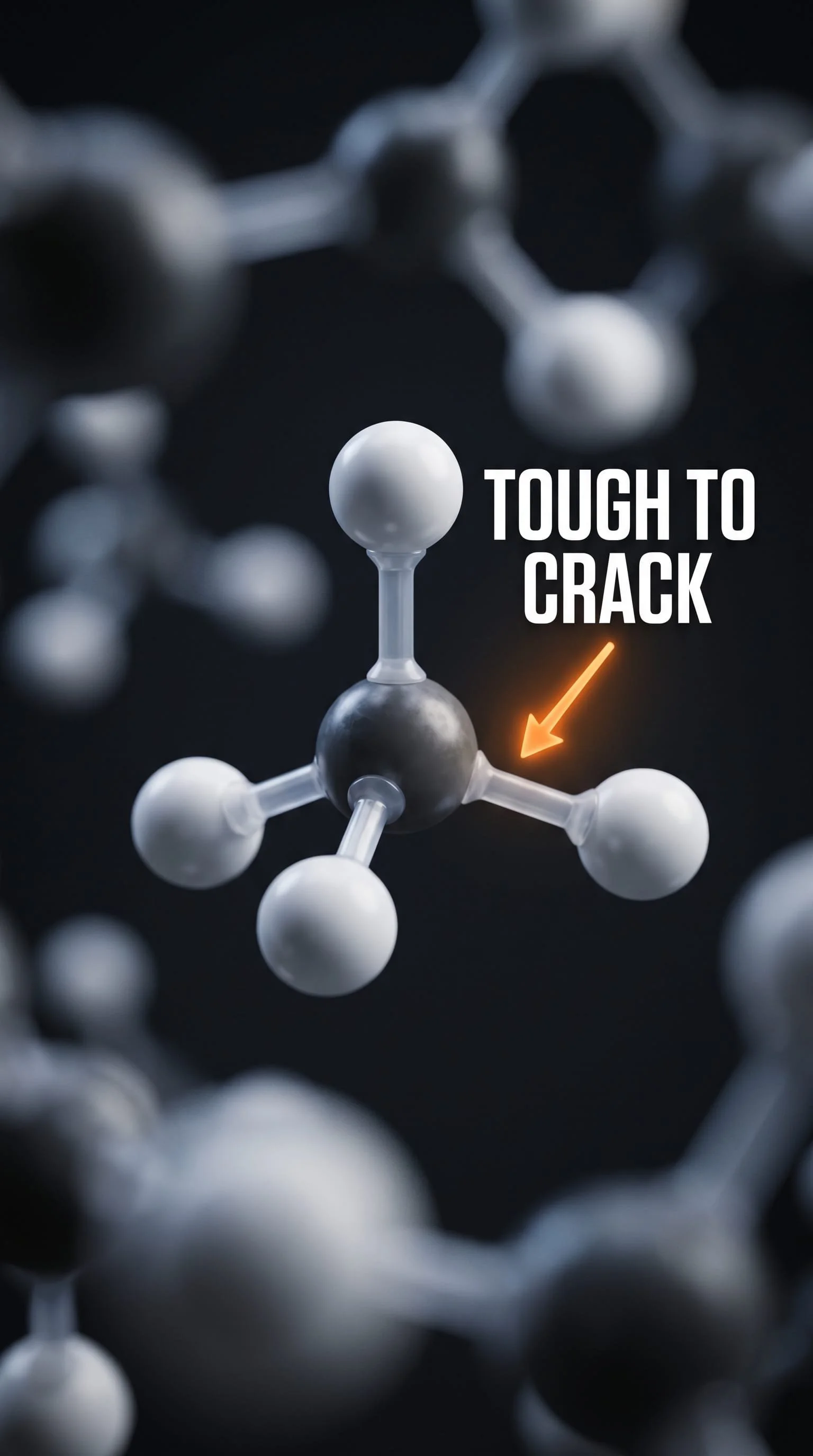
The Engines of Negentropy: Installment 3 - The Methane Tamer
The global carbon ledger is currently bleeding methane (CH4). It is a greenhouse gas with a warming potential roughly 30 times greater than carbon dioxide over a century. In human industry, when we capture stranded methane, we usually just flare it (burn it into CO2) because it is incredibly difficult to transport or chemically upgrade.
The difficulty lies in the chemistry. Methane is perfectly symmetrical, non-polar, and heavily fortified. Its C-H bond possesses a bond dissociation energy of roughly 104 kcal/mol. To break that bond and attach a functional group in a chemical plant—typically through steam reforming—requires brutal force: massive pressures and temperatures exceeding 800°C.
Yet, beneath the soil and in the oceans, a family of bacteria known as methanotrophs use methane as their sole source of carbon and energy. They break this notoriously inert bond in water, at neutral pH, at room temperature.
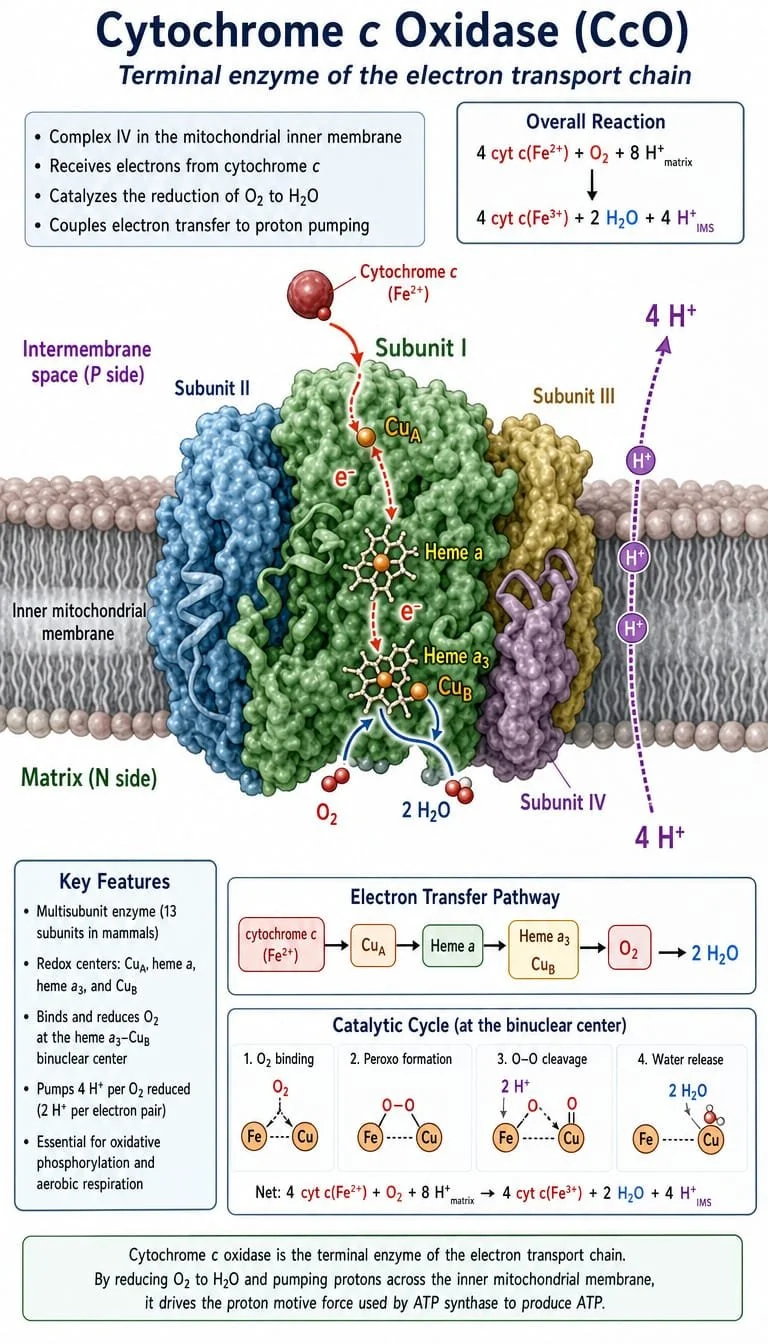
The Engines of Negentropy: Installment 2 - The Safe Burn
If you mix hydrogen and oxygen gas and apply a spark, the result is a violent, explosive release of heat and energy, leaving behind water as the thermodynamic ash. This is combustion.
To run a complex organism—or a closed-loop city—you need the massive energy yield of that combustion. But you cannot detonate a fire inside a living cell, nor can a highly efficient industrial loop rely on the brute-force, chaotic thermal loss of an open flame. You must achieve the burn without the fire.
Biology solved this problem through the terminal enzyme of the electron transport chain: Cytochrome c Oxidase (CcO). This is the engine of the safe burn.
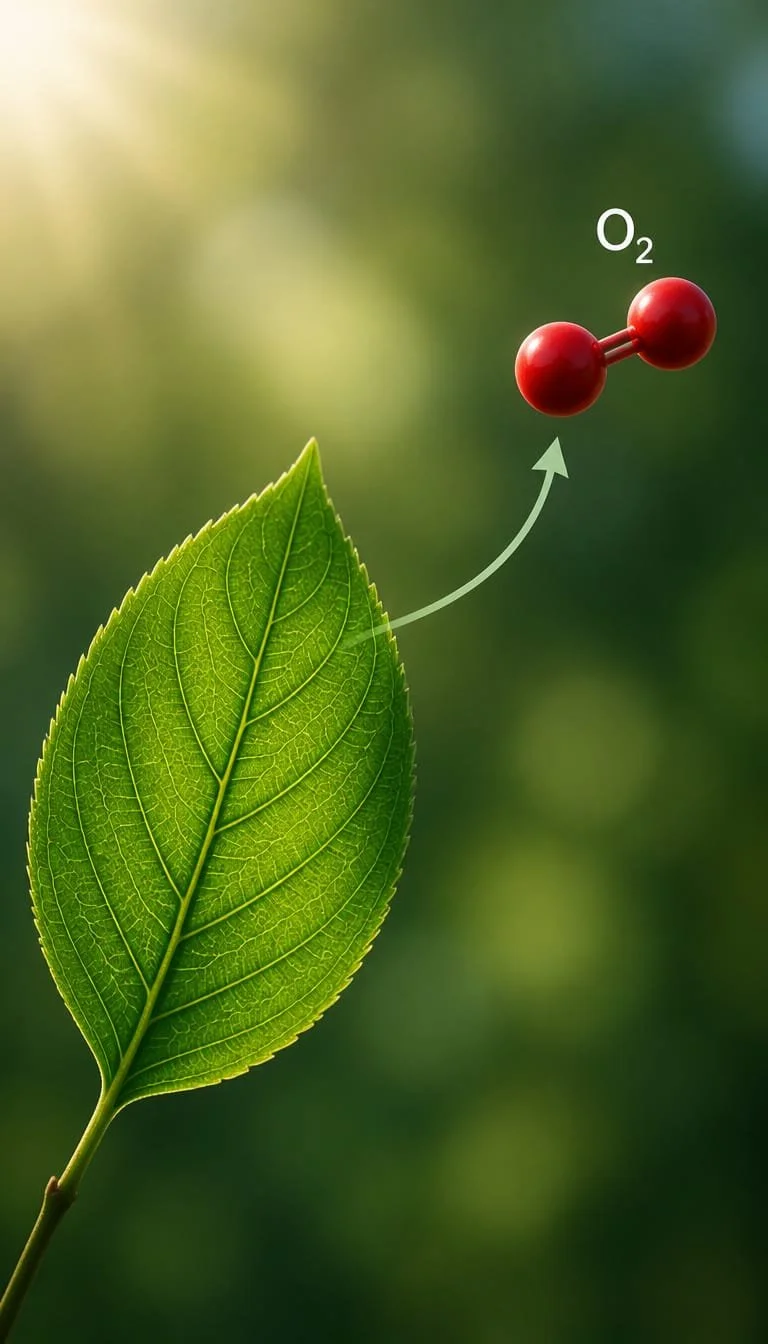
The Engines of Negentropy: Installment 1 - The First Cleavage
To build a closed-loop civilization, we must master the art of generating clean, high-energy fuel and recovering oxygen. In human industry, splitting water to achieve this requires massive electrolyzers, rare-earth metals, and significant electrical input.
Nature solved this problem 2.5 billion years ago. It performs this thermodynamic miracle every second of every day, using ambient temperature, neutral pH, and abundant earth metals. The machine that does this is Photosystem II (PSII), and its catalytic heart is the Oxygen Evolving Complex (OEC).
This is the genesis of the biological energy loop. This is the first cleavage.