

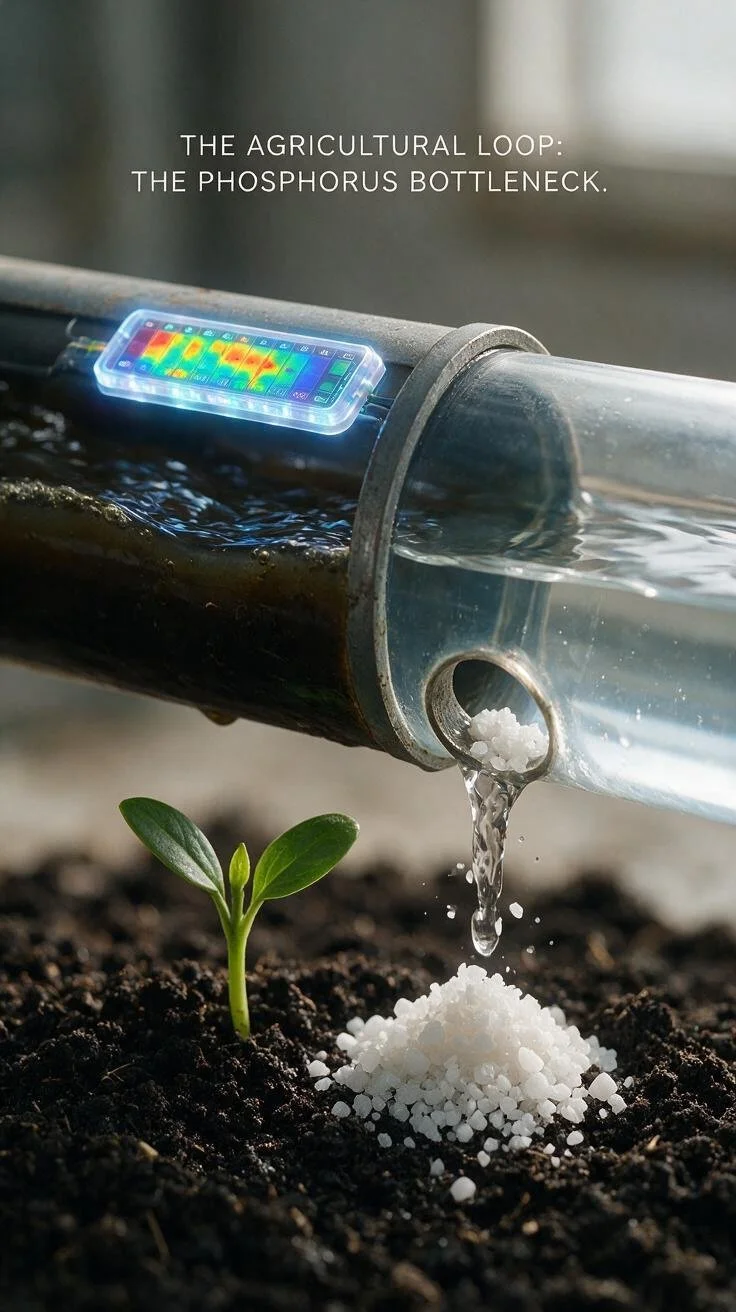
The Synthetic Metabolisms - The Phosphorus Bottleneck
When we look at the agricultural ledger that feeds eight billion people, we often focus on nitrogen. But as we established in our study of Nitrogenase, nitrogen is abundant. It makes up 78% of the atmosphere. With enough energy and the right catalyst, we can pull an infinite supply of nitrogen directly out of the sky.
Phosphorus is entirely different. It is the structural backbone of DNA and the core of ATP, the energy currency of the cell. But unlike nitrogen, there is no atmospheric phosphorus. It is strictly terrestrial, and it is strictly finite.
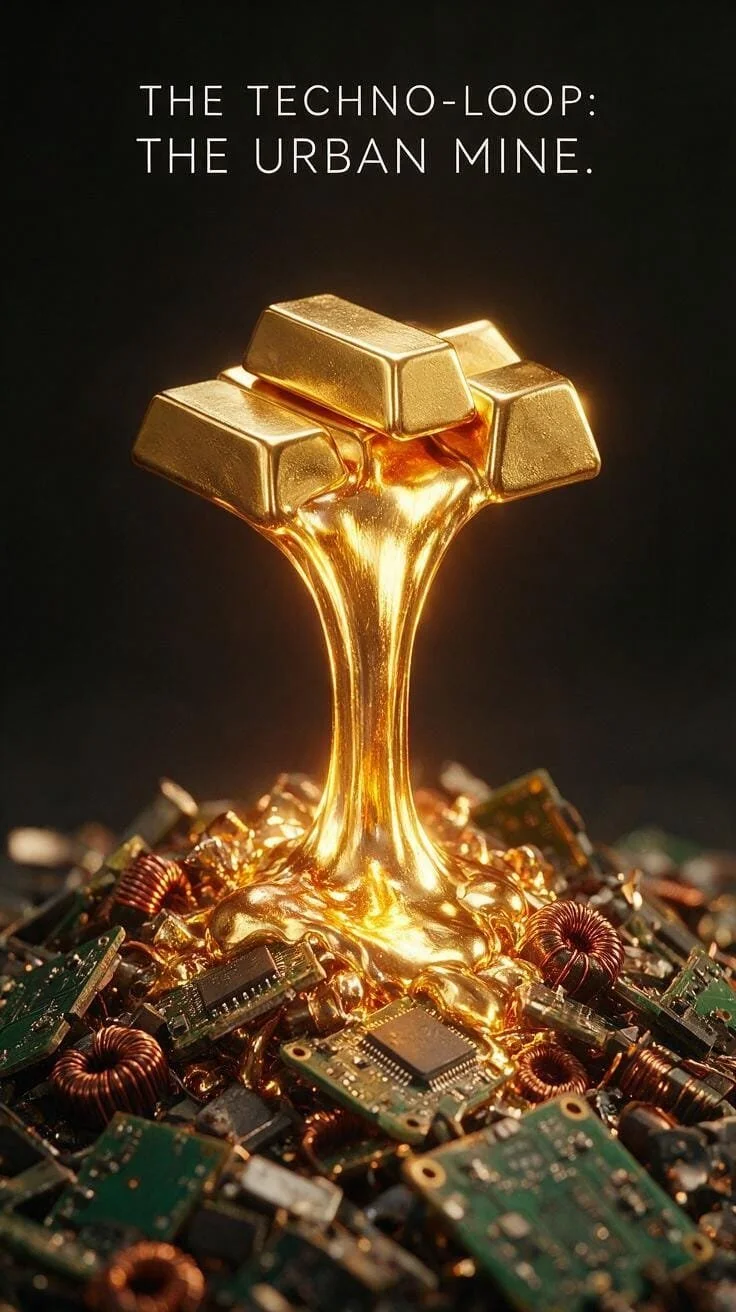
The Synthetic Metabolisms - The Urban Mine
For thousands of years, human civilization has operated under a single, defining assumption about materials: wealth comes from the ground. We dig massive holes in the lithosphere to extract copper, silver, gold, and rare earth elements, refine them at immense energetic cost, and forge them into the architecture of our daily lives.
But the Earth’s crust is a finite ledger. The highest-grade ores were exhausted a century ago. Today, traditional mining operations must move mountains of dirt to extract a mere fraction of a percent of usable metal, leaving behind toxic tailings and scarred ecosystems. The linear model of extraction is reaching its thermodynamic limit.
Yet, we are not actually running out of metals. We have simply relocated them.

The Glass Vault - The Long Equilibrium
When you build a terrarium, carefully placing the moss, the ferns, and the microscopic detritivores, the system looks perfect on day one. But the moment you seal the lid, the perfection ends. The system does not immediately settle into a quiet, harmonious loop. It enters a period of biological violence known as the "break-in."
Because the atmospheric boundary has suddenly shifted, the organisms inside must aggressively renegotiate their thermodynamic ledgers.