

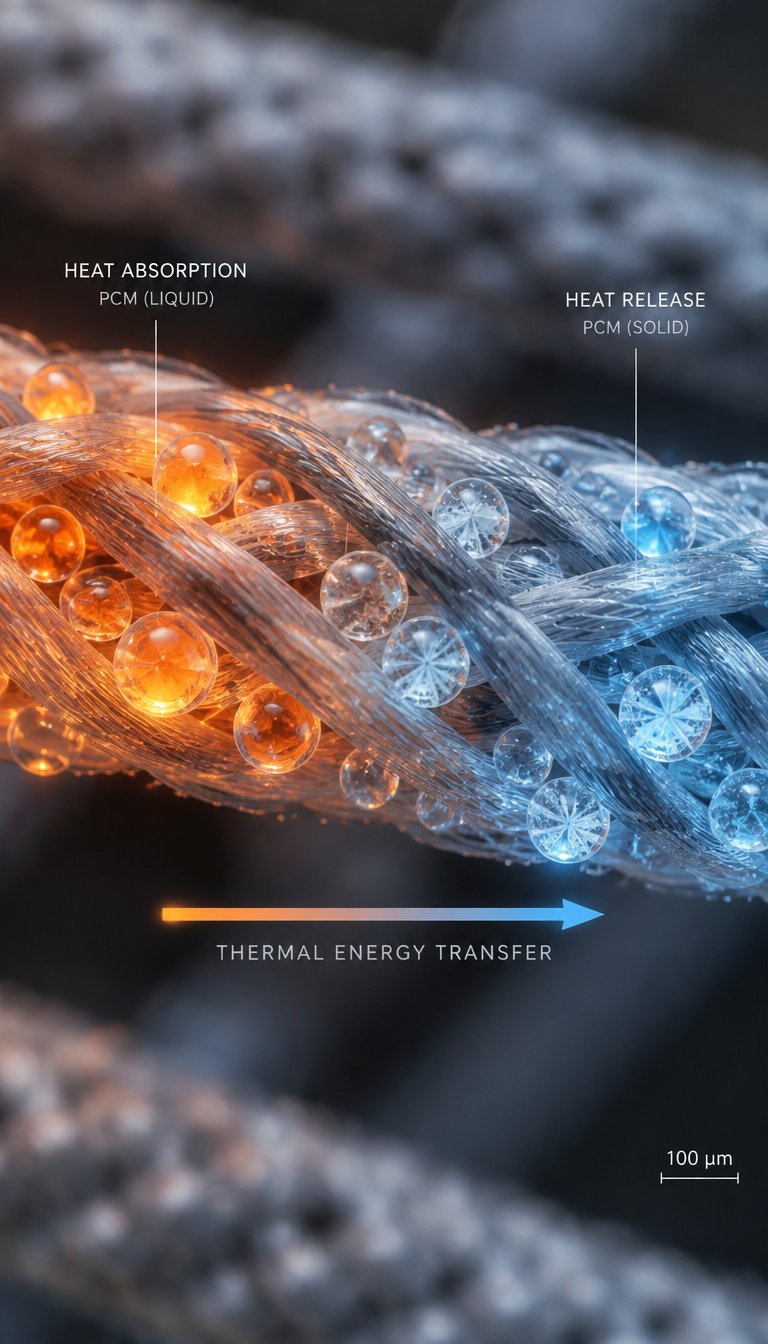
The Passive Thermostat – The Physics of PCM Textiles
From the Laboratories of Project Clean Up
The human body is an engine that constantly produces heat. When we get too hot, we sweat to cool down. When we get too cold, we shiver to generate warmth. Our clothing has historically been "dumb"—it traps heat (like a winter coat) or breathes (like a linen shirt), but it cannot actively respond to changing conditions.
In 2026, materials science has given fabrics a brain, utilizing a concept known as Latent Heat.
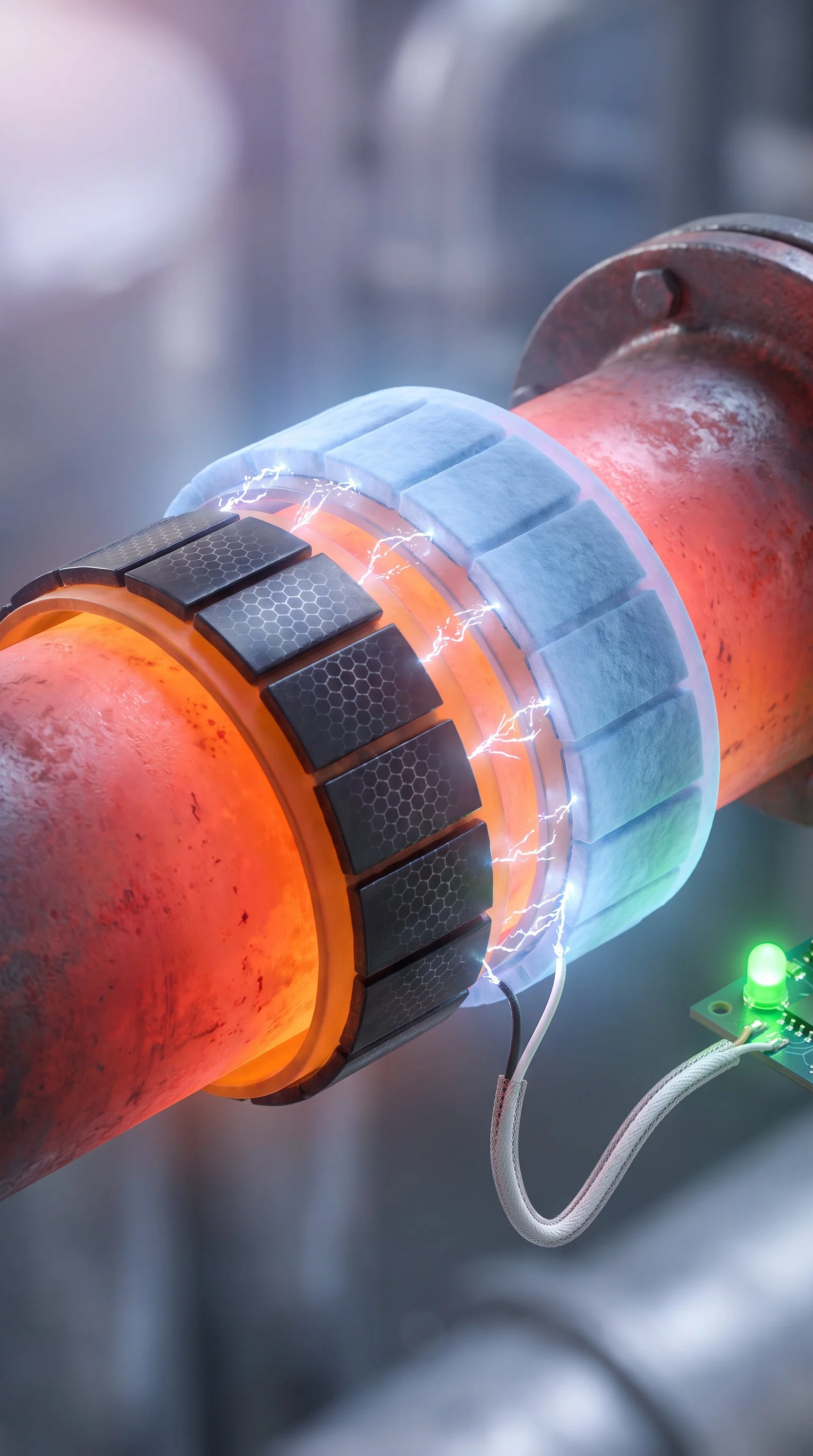
The Seebeck Revolution – Advanced Thermoelectric Alloys
The concept of turning heat into electricity is not new. In 1821, physicist Thomas Johann Seebeck discovered that if you take two different metals, join them together, and make one side hot while the other stays cold, an electrical current flows between them.
For decades, this "Seebeck Effect" was used primarily in deep-space probes (like the Voyager spacecraft) where conventional solar panels were useless. But the materials were too expensive, toxic, and rigid for everyday commercial use. In 2026, materials science has finally broken the bottleneck.
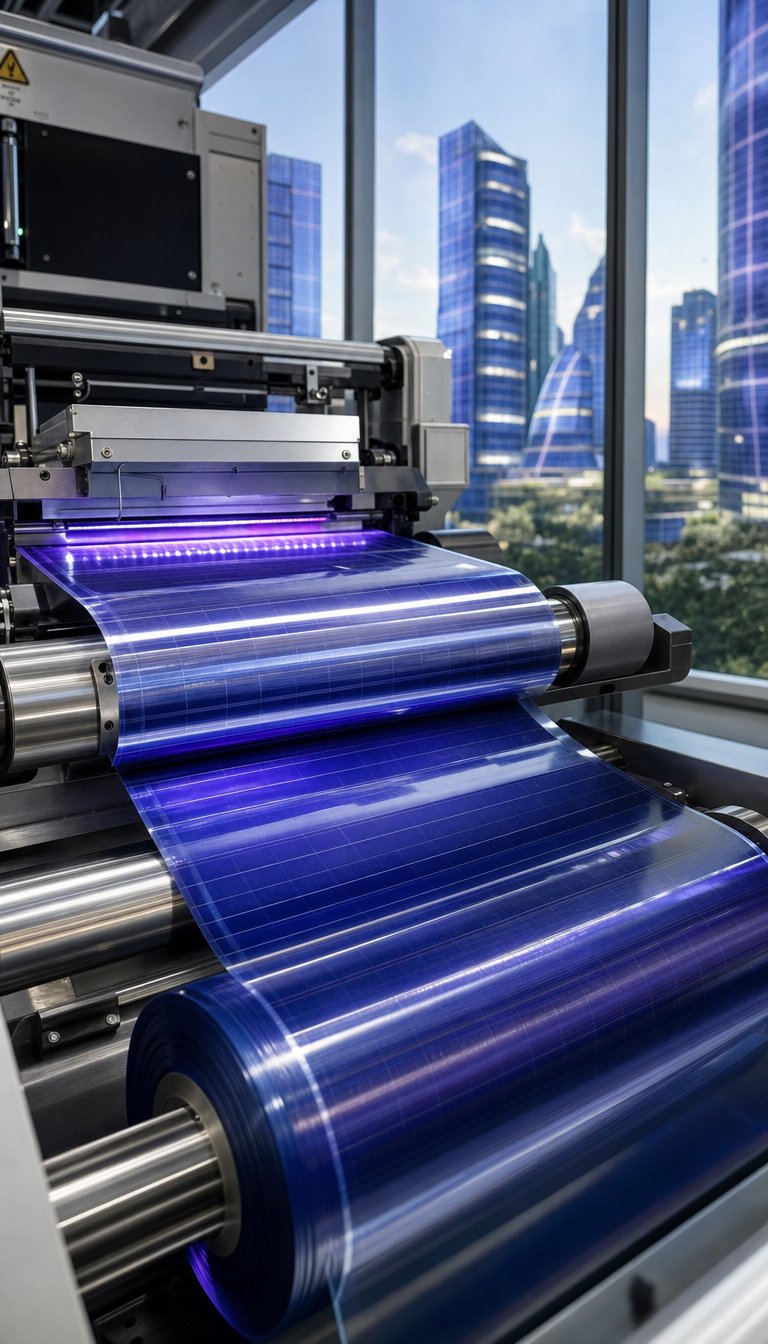
Perovskite Photovoltaics – The Efficiency Ceiling Shatters
From the Laboratories of Project Clean Up
The year 2026 is rapidly becoming known as the turning point for Perovskite technology. After a decade of academic promise, the technology is officially making the leap from the lab to the commercial grid.